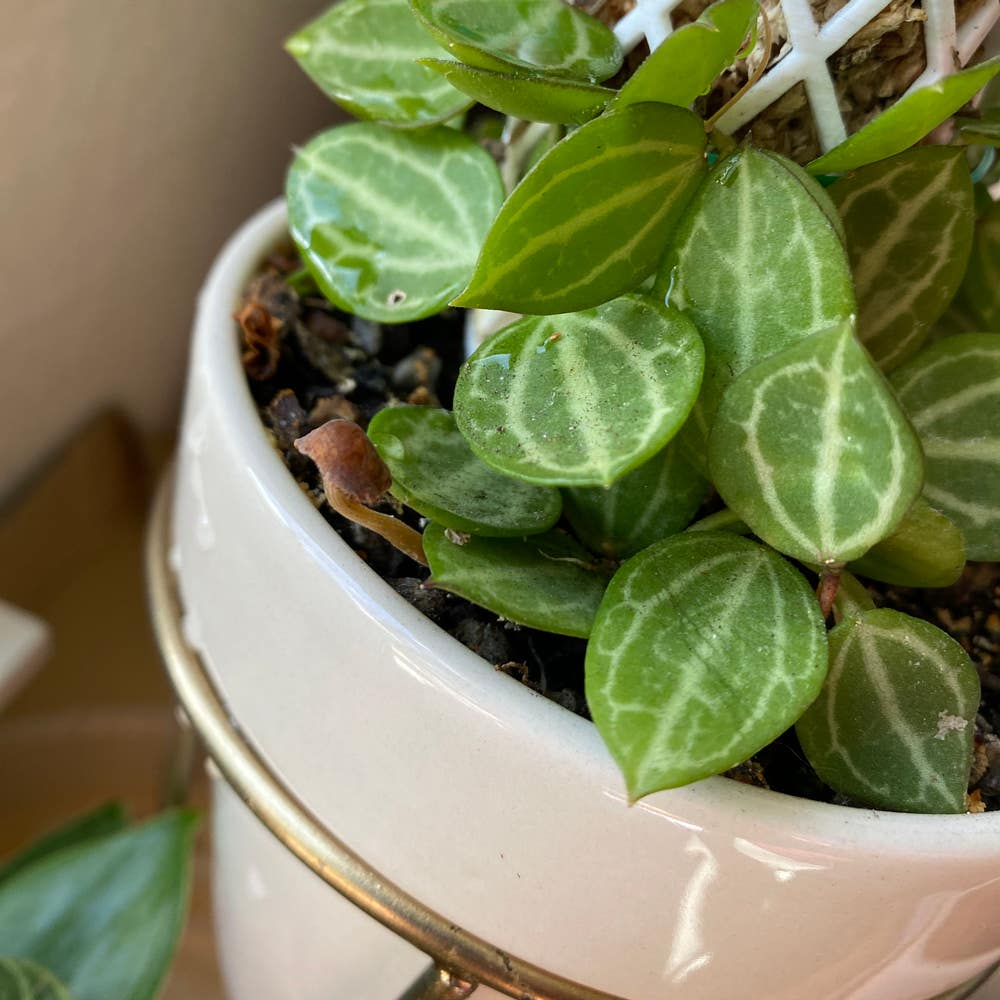
🍉 Why Are My Watermelon Dischidia Leaves Mushy?
Dischidia ovata
By the Greg Editorial Team
Jun 18, 2024•2 min read
This article was created with the help of AI so we can cover more plants for you. May contain errors. See one? Report it here.
Prevent mushy Dischidia leaves 🍉 and ensure plant health with these essential care tips!
- 🚿 Overwatering and poor drainage lead to mushy leaves; check for yellowing and smell.
- 🍄 Fungal infections show as white spots or brown splotches; use targeted fungicides.
- 💧🌱 Adjust watering and soil mix with perlite or sand for optimal plant health.
Spotting the Trouble: Identifying Mushy Leaves
🚩 Visual Cues: Spot the Rot
Leaves turning a sickly yellow or brown are waving the red flag of distress. If your Dischidia's leaves look like they've been through a rough night and can't hold their shape, you've got visual confirmation of mushiness.
👉 Tactile Signs: The Squish Test
A healthy leaf snaps back; a mushy one feels like a soggy marshmallow. Gently poke the leaves. If they cave under pressure, they're too soft, and it's time to take action.
🆘 Other Symptoms: The Plant's SOS
Watch for leaves that drop like they've given up on life or roots that feel like they've seen better days. A musty smell or soil that's still wet long after watering are your plant's way of crying out for an intervention.

The Usual Suspects: Common Causes of Mushiness
🌊 Overwatering Woes
Overwatering is like a love letter gone wrong; it's the top reason your Watermelon Dischidia's leaves are more mush than marvel. Yellowing leaves and a stench that's anything but rosy are your plant's way of saying, "Ease up on the affection, will ya?"
🚱 Drainage Disasters
Poor drainage is the silent saboteur of root health. If your Dischidia's pot is more waterlogged than a sunken ship, you've got a drainage disaster on your hands. Roots drowning in excess moisture scream for a life raft.
🍄 Fungal Foes
Fungi are the uninvited guests at the party in your pot. White powdery spots or brown splotches on leaves are the telltale signs of a fungal free-for-all. It's time to show these party crashers the door with some antifungal muscle.

Turning the Tide: Fixing and Preventing Mushy Leaves
💧 Fine-Tuning Your Watering Technique
Watering is a balancing act. Check the soil's dryness before watering; think of it as the plant's thirst meter. Consistency is crucial—establish a routine that caters to the plant's needs, not your schedule.
🚰 Upgrading Your Plant's Drainage System
Terracotta pots and well-draining soil aren't just trendy; they're your Dischidia's lifelines. Ensure your pot has drainage holes—no compromises here. Consider adding perlite or sand to your soil mix to boost drainage efficiency.
🦠 Fungus Among Us: Getting Rid of the Bad Guys
Fungicide selection is like choosing the right superhero for the crisis—targeted and effective. Increase airflow around your plant; think of it as giving your Dischidia its personal space to breathe and thrive.

⚠️ Safety First
This content is for general information and may contain errors, omissions, or outdated details. It is not medical, veterinary advice, or an endorsement of therapeutic claims.
Always consult a qualified healthcare professional before using any plant as food, medicine, or supplement.
Never eat any plant (or feed one to pets) without confirming its identity with at least two trusted sources.
If you suspect poisoning, call Poison Control (800) 222-1222, the Pet Poison Helpline (800) 213-6680, or your local emergency service immediately.
Spotted an error? Please report it here.
Prevent mushy leaves on your Watermelon Dischidia with Greg's custom care plans 🚿, ensuring just-right watering and drainage for your plant's health.