🟡 Why Are My Paphiopedilum venustum Leaves Turning Yellow?
Paphiopedilum venustum
By the Greg Editorial Team
Mar 06, 2024•5 min read
This article was created with the help of AI so we can cover more plants for you. May contain errors. See one? Report it here.
- 🍂 Yellow leaves signal aging or issues; check patterns and root health.
- 💧 Balance watering; overwatering and underwatering can both cause yellowing.
- 🌡️🌿 Consistent environment is crucial; manage light, temperature, and humidity.
Spotting the Signs: Yellow Leaves on Your Orchid
🚩 Recognizing Abnormal Yellowing vs. Natural Aging
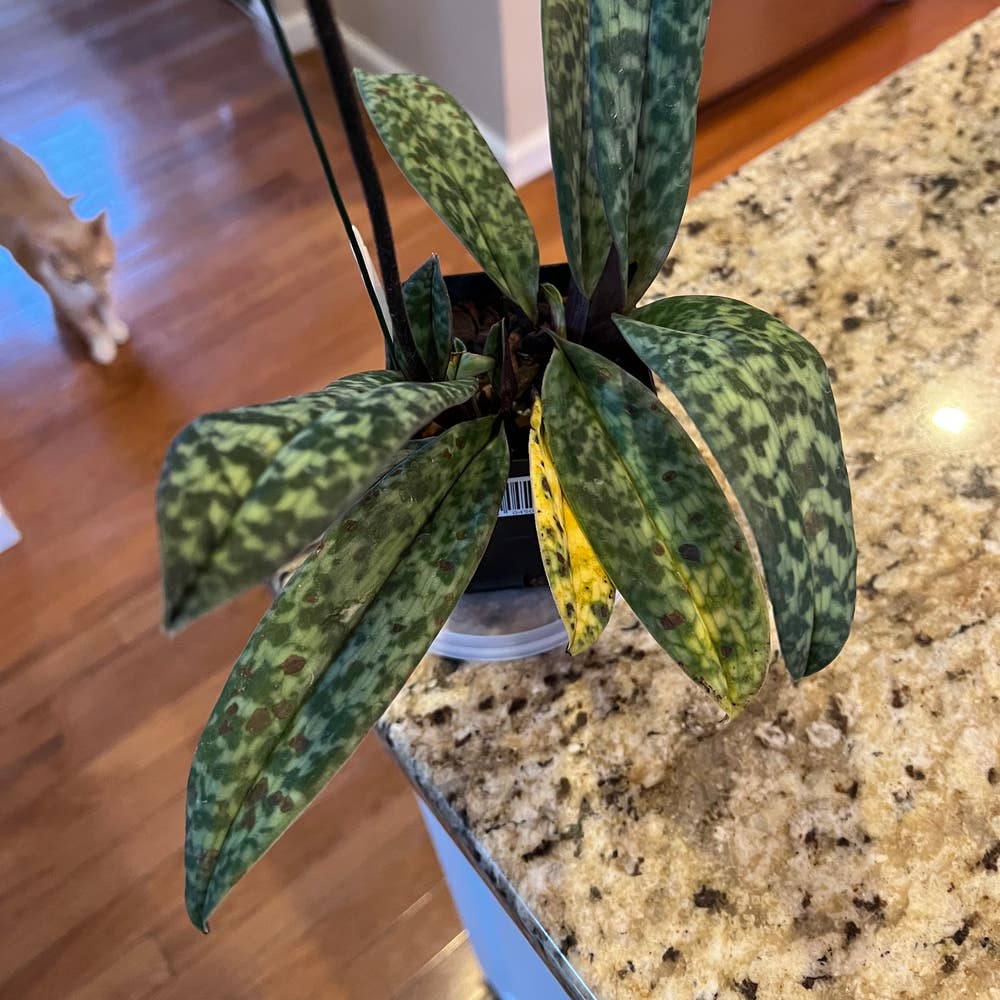
Aging in Paphiopedilum venustum is like a dignified gray in human hair: natural and expected. When older, lower leaves gradually turn yellow and drop, it's the orchid's way of saying goodbye to its past. But when multiple leaves or those higher up start to yellow, it's time to sit up and take notice.
🌀 Deciphering Patterns of Discoloration
Yellowing that begins at the tips or spreads unevenly across the leaf is your orchid waving a red flag. Rapid changes or a pattern that doesn't fit the benign bottom-leaf-yellowing scenario should prompt a closer examination. It's like your orchid is texting you an SOS—don't ignore it.
🌱 Checking Root Health and Other Vital Signs
Roots are the lifeline of your orchid. Healthy roots are firm and green, like a fresh pickle. If they're brown and mushy, like overcooked squash, you've got problems. Check for other signs of distress—leaves that are too dry or too soft, stunted growth, or a general look of malaise. These symptoms, coupled with yellow leaves, can indicate more serious issues like root rot. Remember, catching issues early is like finding a needle in a haystack before it pricks you—it's a small victory, but a victory nonetheless.
Water Woes: Finding the Balance for Your Paphiopedilum
💧 The Perils of Overwatering and How to Fix It
Overwatering is the bane of many Paphiopedilum venustum owners. Yellow leaves can scream "too much love!" If the soil feels more like a swamp than a moist haven, you've gone overboard. Root rot is a silent killer; it sneaks up like a ninja in the night. To fix this, first, stop the waterworks. Let the soil dry out a bit. If the roots are brown and mushy, it's time for surgery—trim the dead parts and repot with fresh, well-draining media.
💦 Signs of Thirst: Addressing Underwatering Correctly
On the flip side, underwatering turns your Paphiopedilum into a drama queen with droopy leaves. The soil shouldn't be as dry as a stand-up comedian's wit. If it's pulling away from the pot edges, your plant is parched. Wilted leaves are a cry for hydration. But don't just flood the stage; water gradually until you see drainage from the bottom. Consistency is key—check the top inch of soil and water when it feels dry. Remember, it's a balance, not a guessing game.
Feeding Your Flower: Tackling Nutrient Shortfalls
💡 Spotting the Signs of Nutrient Deficiency
Your Paphiopedilum venustum is a diva when it comes to nutrients, and yellow leaves might be its way of throwing a tantrum for more food. Nitrogen deficiency often shows up as yellowing of older leaves, while a lack of potassium might give you leaves with brown edges. If the foliage looks more like a sad, washed-out version of its former glory, it could be crying out for magnesium.
🍽️ Choosing the Right Fertilizer and Application Frequency
Choosing fertilizer is not unlike picking a multivitamin; you want a balanced mix. Look for options that offer the holy trinity of N-P-K (nitrogen, phosphorus, potassium), plus essential trace elements. Your Paphiopedilum venustum isn't a garbage disposal—don't just throw any old fertilizer at it. Go for a water-soluble type and use it sparingly, at half-strength every few weeks during active growth periods. It's like seasoning food; a little goes a long way.
Remember, overfeeding is the fast track to nutrient burn. It's better to underfeed than turn your orchid's home into a toxic wasteland. And if you're ever in doubt, a soil test is like a GPS for lost nutrients—it'll point you in the right direction.
Crafting the Perfect Environment
🛡️ Shielding from Stress: Temperature, Light, and Humidity
Creating the perfect environment for Paphiopedilum venustum is non-negotiable for its well-being. Let's get down to brass tacks: temperature, light, and humidity are the trifecta of plant comfort.
🌡️ Temperature: Keep it Consistent
Consistency is key. These orchids aren't fans of surprises. Aim for a stable temperature range, generally between 65-75°F (18-24°C). Think of it as setting the thermostat for a guest who's always slightly chilly.
🌞 Light: Bright but Shaded
Bright, indirect light is the sweet spot. Direct sunlight? A surefire way to cook your orchid's leaves to a crisp. Too little light and it's like living in a cave—depressing and growth-stunting. Use shades or sheer curtains to manage the light, adapting to the sun's mood swings throughout the year.
💧 Humidity: Just Right
Aim for a humidity level that makes your skin feel like it's taking a gentle sigh of relief—not too dry, not a tropical storm. Around 40-70% humidity is ideal. If your air is drier than a stand-up comedian's wit, consider a humidifier or a pebble tray to up the ante.
Tailoring Your Care Routine to Prevent Yellowing
Now, to prevent those yellow leaves, it's all about tailoring your care routine like a bespoke suit.
🕰 Regular Monitoring
Check on your orchid like it's a sourdough starter—regularly and with an eye for detail. Is the light too intense? Is the room feeling like a sauna? Adjust as needed.
🌱 Seasonal Adjustments
Remember, seasons change and so should your care. Winter's gloom might call for supplemental grow lights, while summer's blaze necessitates more shade.
💨 Air Circulation
Keep the air moving but not like a hurricane. A gentle fan can discourage pests and disease, keeping your orchid's leaves dancing happily.
By nailing down these environmental factors, you're setting the stage for a Paphiopedilum venustum that stays as green and serene as a zen garden.
⚠️ Safety First
This content is for general information and may contain errors, omissions, or outdated details. It is not medical, veterinary advice, or an endorsement of therapeutic claims.
Always consult a qualified healthcare professional before using any plant as food, medicine, or supplement.
Never eat any plant (or feed one to pets) without confirming its identity with at least two trusted sources.
If you suspect poisoning, call Poison Control (800) 222-1222, the Pet Poison Helpline (800) 213-6680, or your local emergency service immediately.
Spotted an error? Please report it here.
Ensure your orchid's leaves stay lustrous 🌿 with Greg's custom watering plan that adapts to your plant's unique needs and seasonal changes.