What Temperature Does My Paphiopedilum venustum Need?
Paphiopedilum venustum
By the Greg Editorial Team
Mar 06, 2024•5 min read
This article was created with the help of AI so we can cover more plants for you. May contain errors. See one? Report it here.
- Day 20-25°C, night 13-14°C for healthy Paphiopedilum venustum growth.
- Avoid extremes below 10°C or above 29°C to prevent damage.
- Stable location, consistent temperatures key for blooming and health.
Dialing in the Perfect Temperature
🌡️ Day vs. Night: Understanding the Daily Temperature Dance
Daytime temperatures for Paphiopedilum venustum should hover between 20-25°C. As the sun dips, so should the thermometer, with night temps ideally falling to 13-14°C. Remember, your orchid's comfort zone shrinks at night—aim for a 4°C drop from day to night.
📅 Seasonal Shifts: Adapting to the Plant's Calendar
Summer can turn up the heat, but your Paphiopedilum venustum isn't looking for a sauna. Keep it cool, away from the wrath of direct sunbeams. Winter whispers for warmth; don't let your green buddy shiver—move it away from drafty windows. This isn't just about comfort; it's about survival. Temperature plays a maestro in the orchestra of dormancy and growth. Get it right, and watch your orchid thrive through the seasons.
Spotting a Temperature Tantrum
🌡️ Telltale Signs Your Plant is Feeling the Heat (or Chill)
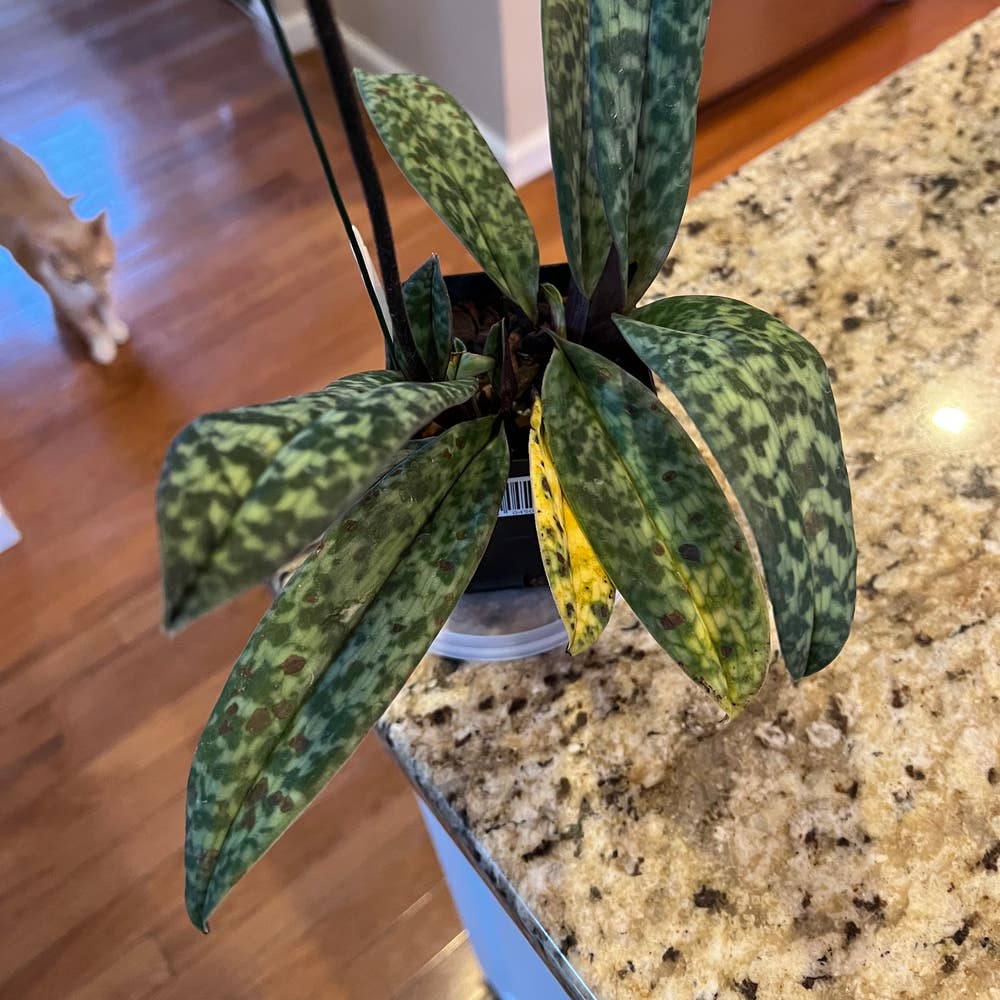
Wilted leaves are the first red flag; your Paphiopedilum venustum is likely too hot. Conversely, stunted growth can mean it's too cold for comfort. Yellowing leaves might suggest a chill, while brown patches indicate cold damage. If leaves are dropping, it's a clear sign that your orchid is not happy with the current temperature.
🚨 Quick responses to prevent long-term damage
Act fast to mitigate temperature stress. Move your plant away from heat sources or cold drafts. Ensure consistent temperatures to avoid further stress. If overheating, provide shade and hydration. In case of cold, consider gentle warming with a heating mat or relocating to a warmer spot.
🥶 From Brrr to Blistering: The Extremes to Avoid
Keep Paphiopedilum venustum away from temperatures below 50°F (10°C) and above 85°F (29°C). These are the absolute no-go zones. Extreme temperatures can cause irreversible damage to your orchid, leading to a sad, wilted, or even a dead plant.
Keeping the Climate Just Right
🌡️ Tools of the Trade: Gadgets for Gauging and Regulating Temperature
Thermostats are orchid bodyguards, keeping temperatures in check. Heating mats? They're like personal suns for those cooler roots. And don't forget thermometers—they're the silent sentinels of the temperature realm. A fan can be a lifesaver, but it's not about creating a hurricane; think gentle zephyrs that whisper across your orchid's leaves.
🏡 Home Sweet Home: Finding the Ideal Spot for Your Orchid
Location is everything. Your Paphiopedilum venustum craves stability, so keep it away from the fickleness of drafts and the scorch of direct heat sources. Think of your home's microclimates—those cozy nooks that offer a consistent environment. Avoid the seesaw temperatures near windows or radiators. Remember, your plant's comfort zone is a sanctuary, not a battleground for the elements.
When Flowers Shiver: Temperature's Role in Blooming
🌡️ Warmth and Wonders: Encouraging Your Orchid to Flower
Orchids are not just pretty faces; they're temperature tacticians. The sweet spot for coaxing Paphiopedilum venustum into bloom lies in a day-night temperature dance. During the day, aim for a cozy 70°-85°F (21°-29.4°C). When night falls, think cool thoughts and drop the mercury to 60°-68°F (15.5°-20°C).
Managing these temperatures isn't just about hitting the right numbers; it's about consistency. Like a barista perfecting your morning coffee, precision is key. A steady day-night temperature variance of 5 to 10 degrees can be the nudge your orchid needs to strut its stuff with flowers.
🌡️ Managing Temperatures to Maximize Flower Quality and Frequency
To get the most bang for your bloom, don't just set it and forget it. Monitor indoor temperatures like a hawk and adjust accordingly. Keep your orchid away from drafts and vents that could throw a wrench in its temperature tango.
Remember, your orchid's not just playing hard to get. It's following its natural rhythm, and you're the conductor. Keep the temperature steady as she goes, and your Paphiopedilum venustum will reward you with a floral encore.
A Quick Nod to Humidity
💃 The Humidity-Temperature Tango
Humidity and temperature are inseparable when it comes to plant care. For Paphiopedilum venustum, this duo performs a delicate dance that can make or break its health. Too dry or too damp, and you're asking for trouble.
Humidity's Backstage Role
While temperature often steals the spotlight, humidity works quietly behind the curtains. It's the unsung hero that ensures your orchid's leaves stay supple and its roots, rot-free.
Monitoring Made Easy
Keep a hygrometer on standby. It's your backstage pass to knowing exactly what's going on in the air around your precious Venus Slipper.
The Balancing Act
Aim for around 50% humidity. It's the sweet spot where Paphiopedilum venustum thrives without the drama of leaf curl or the tragedy of fungal diseases.
Seasonal Shifts
As seasons change, so does indoor humidity. Stay vigilant. Use a humidifier or group plants to stabilize the microclimate and keep your orchid from wilting under the pressure of sudden shifts.
Temperature's Influence
Remember, warm air holds more moisture. As you dial in the temperature for your orchid, consider how it might affect the humidity. It's not just about the heat; it's about creating a consistent environment where your Paphiopedilum venustum can put down roots and flourish.
⚠️ Safety First
This content is for general information and may contain errors, omissions, or outdated details. It is not medical, veterinary advice, or an endorsement of therapeutic claims.
Always consult a qualified healthcare professional before using any plant as food, medicine, or supplement.
Never eat any plant (or feed one to pets) without confirming its identity with at least two trusted sources.
If you suspect poisoning, call Poison Control (800) 222-1222, the Pet Poison Helpline (800) 213-6680, or your local emergency service immediately.
Spotted an error? Please report it here.
Achieve the perfect bloom 🌸 for your Paphiopedilum venustum by leveraging Greg's environment tracking to nail those tricky temperature sweet spots.