How to Know When to Repot a Paphiopedilum venustum?
Paphiopedilum venustum
By the Greg Editorial Team
Mar 06, 2024•4 min read
This article was created with the help of AI so we can cover more plants for you. May contain errors. See one? Report it here.
- Roots coiling or escaping? Time to repot your orchid.
- Funky, soggy media means a fresh potting start is needed.
- Spring repotting aligns with orchid's growth cycle.
Spotting the Telltale Signs It's Time to Repot
🐙 Root Tango in a Tiny Pot
When your Paphiopedilum venustum's roots start mimicking an octopus in a jar, it's time to repot. Overcrowded roots that coil around the pot or sneak through drainage holes are screaming for space.
🌱 Media Meltdown
Potting media should be your plant's comfort zone, not a decomposing mess. If it smells funky or feels too soggy, your orchid is begging for a fresh start.
🦥 Growth Grumbles
If your orchid's growth is more sluggish than a sloth on a lazy Sunday, take the hint. Stunted growth and a sad bloom count mean your Paphiopedilum venustum is yearning for a new pot to call home.
The Repotting Rundown: A Step-by-Step Guide
🌱 Prepping for the Big Move
Before you dive in, timing is everything. Spring, when your Paphiopedilum venustum is gearing up for growth, is ideal. Gather your materials: a new pot, fresh potting mix, sterilized pruning shears, and a sense of adventure. Make sure everything is clean to avoid any unwanted microbial stowaways.
🌿 The Gentle Uproot
First, water your orchid to make the roots more pliable. Ease the plant out of its pot with a firm, yet tender touch. If it plays hard to get, coax it out by tapping the pot's sides. Inspect the root ball like it's a rare treasure; snip away any dead or overlong roots, but treat the healthy ones with kid gloves.
🏡 Home Sweet New Home
Now, introduce your orchid to its new abode. Ensure the pot has drainage holes to prevent soggy disasters. Add a layer of potting mix, position your orchid, and gently fill in the gaps with more mix, using a chopstick to eliminate air pockets. Secure the plant with a rhizome clip if needed. Finally, label your pot because memory is fickle, and orchids don't come with name tags.
Picking the Perfect Pot
💨 Breathability and Drainage: The Dynamic Duo
Breathability and drainage are the power couple in the world of Paphiopedilum venustum pots. These orchids need air circulation around their roots like we need oxygen. And just like a bad relationship, poor drainage can suffocate the life out of your plant's roots, leading to root rot.
Material Matters
Clay vs. Plastic vs. Terracotta
When it comes to pot materials, it's a showdown of characteristics. Terracotta pots are the breathable yoga pants for your orchid's roots, allowing air in and excess water out. Plastic pots, on the other hand, are like rain boots; they hold water in, which can be a no-go unless you're into the whole root rot scene.
Clay pots are the middle ground, offering a decent amount of breathability and moisture control. But remember, no matter the material, your pot must sport drainage holes—non-negotiable. It's like having a fire exit; you hope you never need it, but you better have it just in case.
Post-Repotting Pampering
💧 The First Few Days
After repotting your Paphiopedilum venustum, watering should be like a cautious first date—minimal yet meaningful. Aim for a gentle mist rather than a downpour; think of it as quenching a subtle thirst. Light should be soft and indirect, like a warm smile rather than a spotlight. As for humidity, maintain it like a good reputation—steady and favorable.
🚨 Stress Signals
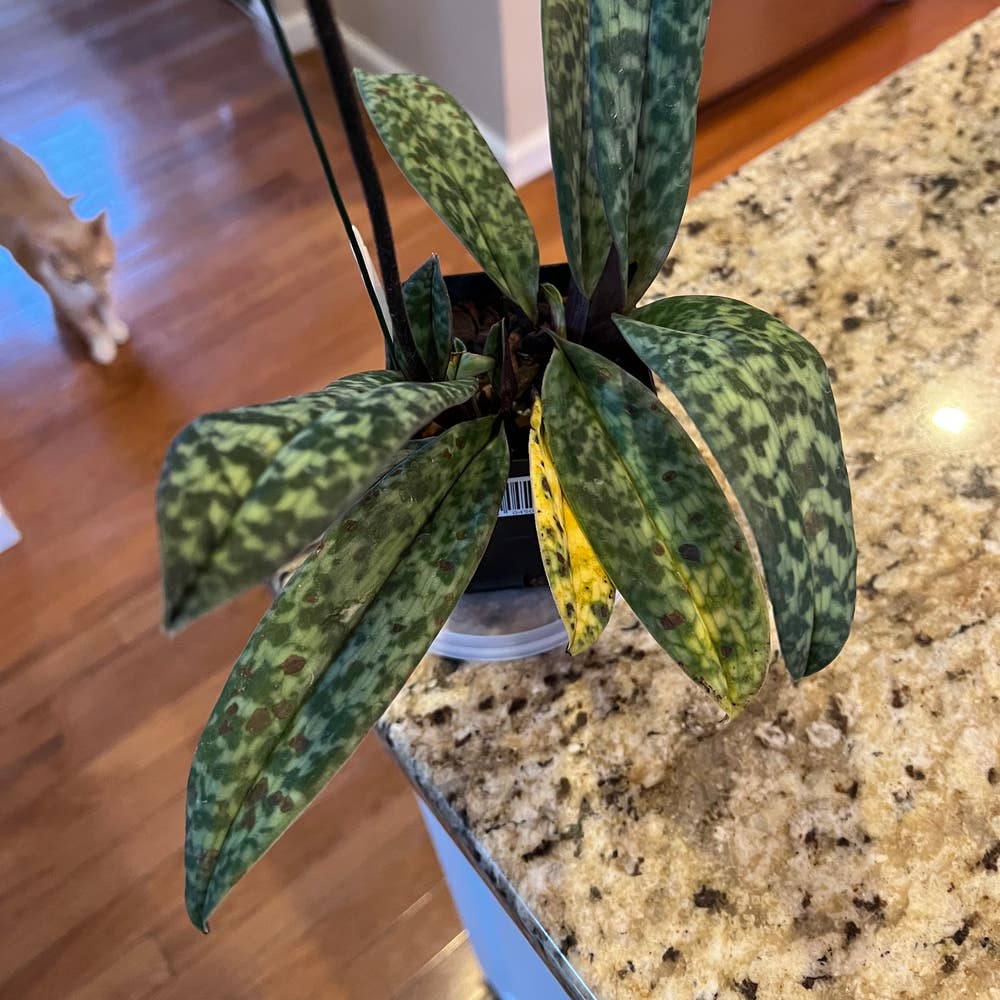
Your orchid's leaves are like mood rings, with yellowing or drooping signaling a cry for help. Adjust your care as you would your sails in a shifting wind. If the roots seem shy, pulling back into the pot, it's a sign they're not quite ready to party in their new home. Keep an eye out for these changes, and respond with the precision of a seasoned orchid whisperer.
⚠️ Safety First
This content is for general information and may contain errors, omissions, or outdated details. It is not medical, veterinary advice, or an endorsement of therapeutic claims.
Always consult a qualified healthcare professional before using any plant as food, medicine, or supplement.
Never eat any plant (or feed one to pets) without confirming its identity with at least two trusted sources.
If you suspect poisoning, call Poison Control (800) 222-1222, the Pet Poison Helpline (800) 213-6680, or your local emergency service immediately.
Spotted an error? Please report it here.
Ensure your Paphiopedilum venustum thrives 🌱 by using Greg's custom reminders to repot at the perfect time, following the signs and steps from this guide!