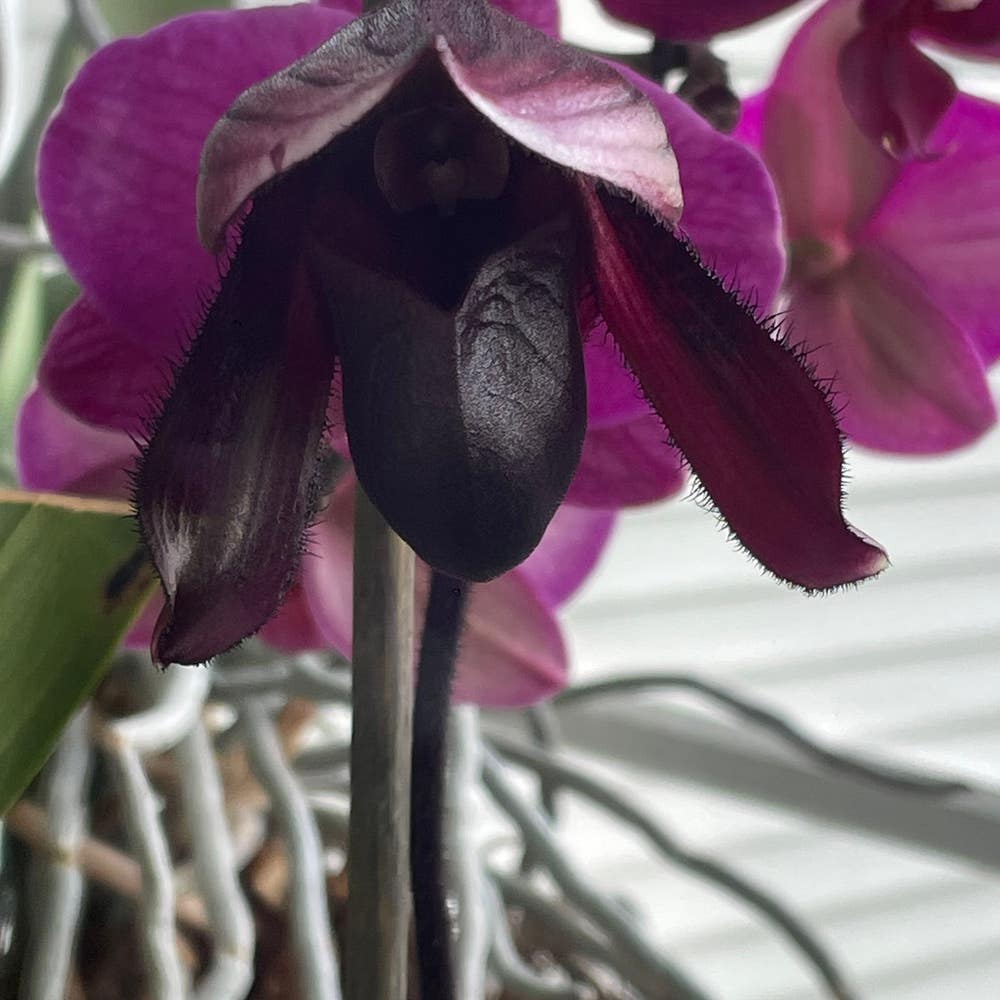
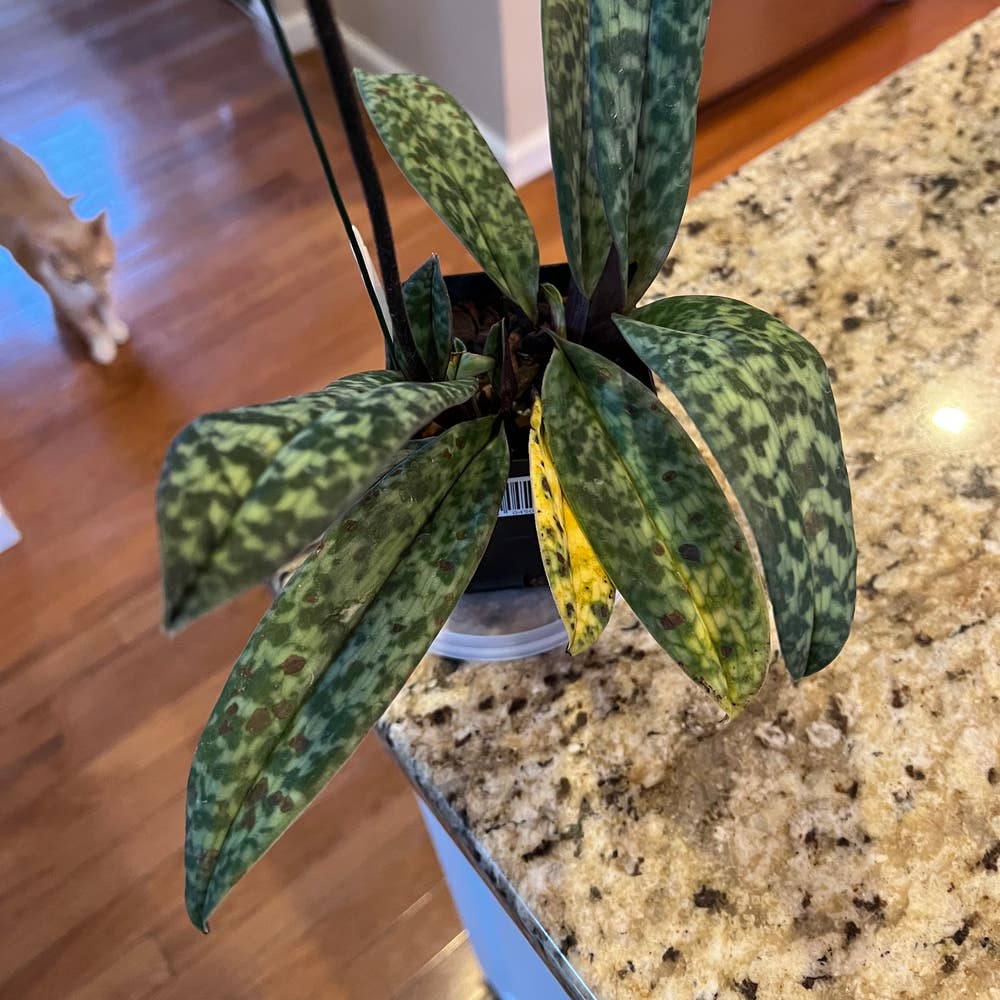
Why Are My Paphiopedilum venustum Leaves Curling?
Paphiopedilum venustum
By the Greg Editorial Team
Mar 06, 2024•5 min read
This article was created with the help of AI so we can cover more plants for you. May contain errors. See one? Report it here.
- 🍃 Leaf curling is a distress signal; check for pests, diseases, and environmental stress.
- Adjust care for stress relief promptly to prevent further damage.
- Nutrient balance is crucial; avoid over-fertilization and correct deficiencies.
Spot the Signs: Identifying Leaf Curling in Your Orchid
🍃 Visual Symptoms of Leaf Curling
Curling leaves on a Paphiopedilum venustum are a red flag. Watch for leaves that roll inward or exhibit upturned edges. A tubular leaf shape is a clear sign that your orchid is signaling for help.
🚨 Common Stress Signals in Paphiopedilum venustum
Leaf curling in Paphiopedilum venustum often pairs with discoloration and a brittle feel. If the leaves lose their characteristic flatness, it's time to spring into action. Remember, these symptoms are not just aesthetic issues; they're cries for intervention.
The Usual Suspects: Pinpointing the Culprit
🐛 Inspecting for Pests and Diseases
Pests are like uninvited guests at a party—they crash, they munch, they leave a mess. Check the undersides of leaves and the crevices of your Paphiopedilum venustum. Look for telltale signs: webbing, sticky residues, or the critters themselves. A magnifying glass isn't overkill; it's your detective's loupe.
Diseases often leave patterns. Fungal infections? Think concentric rings. Bacterial issues? Look for water-soaked spots. Use these visual clues to identify your plant's adversary.
🌿 Assessing Environmental Factors
Your orchid's environment is the stage for its health. Humidity levels too high? You're inviting fungal ovations. Watering habits off-kilter? You're either drowning the roots or leaving them parched. Strive for that Goldilocks zone—just right.
Temperature swings and improper lighting can also stress your plant. Keep it consistent, and watch for signs of discomfort like curling or yellowing leaves.
🥦 Recognizing Nutrient-Related Issues
Nutrient issues are sneaky; they don't always shout their presence. Yellow leaves? Could be a nitrogen deficiency. Rusty patches? Potassium might be the missing guest at the dinner table. Use a pH and EC meter to check the soil's nutrient levels—and make sure it's calibrated right.
Remember, over-fertilization can be just as damaging as neglect. A balanced diet is key for your Paphiopedilum venustum to thrive without those pesky curled leaves.
First Aid for Your Orchid: Immediate Actions to Take
🌿 Adjusting Care for Environmental Stress Relief
Immediate action is crucial when you notice your Paphiopedilum venustum's leaves curling. Start by scrutinizing the orchid's environment. Too much love can indeed be detrimental. Ensure the balance of light, temperature, and water is just right. Water at the base, preferably in the early morning, allowing the sun to dry the foliage. Keep humidity levels in check to prevent various stress-related symptoms.
🐜 Organic and Chemical Solutions for Pest Infestations
When pests invade, isolation is your first line of defense. Quarantine the affected plant to prevent a full-blown infestation. For scale and mealybugs, a rubbing alcohol swab can be your go-to. Spider mites loathe a good spray of horticultural oil, while aphids detest a water jet. If you're dealing with snails or slugs, consider a bait like Sluggo. Remember, a clean growing space is your best bet against pests.
🩺 Addressing Diseases with the Right Treatment
Diseases demand swift identification and treatment. If you spot black spots or other signs of disease, consider a hydrogen peroxide spray or a cinnamon dusting. However, these are last resorts; prevention is key. If you're unsure about the disease, consult with an orchid society or a nursery. And when it comes to chemical treatments, read labels carefully, ensure proper ventilation, and protect yourself with appropriate clothing. After treatment, monitor your orchid's recovery and adjust care practices as needed.
Nourish to Flourish: Correcting Nutritional Imbalances
🌿 Identifying and Fixing Nutrient Deficiencies
Leaf curling in Paphiopedilum venustum can be a distress call for nutrients. Yellowing leaves may indicate a lack of nitrogen, while crispy edges could point to potassium deficiency. Conduct a soil test to avoid guesswork; it's like getting a blood test rather than self-diagnosing.
To correct deficiencies, choose a fertilizer that matches your orchid's needs. Foliar feeding can be a quick fix, delivering nutrients straight to the leaves. However, moderation is crucial; overdoing it can lead to nutrient toxicity, much like overeating can upset your stomach.
🌱 The Role of Fertilization in Leaf Health
Balanced fertilization is like a multivitamin for your orchid, but it's not a cure-all. Over-fertilization is a common misstep, akin to overwatering. It's better to underfeed than overfeed.
Remember, Paphiopedilum venustum has specific dietary preferences. A balanced, water-soluble fertilizer is ideal, providing a steady supply of nutrients. Apply as directed, and consider organic options for a slow-release effect. They're less likely to cause a nutrient overdose, ensuring your orchid's leaves stay healthy and curl-free.
Future-Proofing Your Paphiopedilum venustum
👀 Regular Monitoring and Maintenance Tips
Vigilance is key in keeping your Paphiopedilum venustum thriving. Regularly inspect the leaves, stems, and roots for any signs of distress. Look out for pests like mealybugs, a common foe of this orchid. If you spot any, act swiftly with a pesticide treatment.
Keep an eye on the soil moisture and drainage. Overwatering is a silent killer, so ensure the potting mix is just moist and never soggy. The roots should breathe, not swim. Repot your plant every two years, or when you see the substrate breaking down, to maintain a healthy root environment.
🌿 Creating an Ideal Growing Environment to Prevent Issues
Craft an oasis for your Paphiopedilum venustum by mimicking its natural habitat. Humidity should hover around 40-50%, so consider a humidifier if your air is drier than a stand-up comedian's wit. Temperature is another critical factor; maintain a cozy 60-65°F at night and a warm 75-85°F during the day.
Lighting should be Goldilocks-approved—not too bright, not too dim, but just right. Aim for moderate light levels, around 1200 foot candles. Too much sun, and your orchid will throw a fit; too little, and it'll sulk.
Air circulation is the unsung hero of plant health. A small fan can prevent many airborne plagues, keeping your Paphiopedilum venustum's leaves dancing gently in the breeze. Remember, a stagnant environment is a playground for fungi and pests.
Lastly, don't forget the substrate. A mix of bark chips, perlite, charcoal, and sphagnum moss offers the perfect bed for your orchid's roots. And keep the pH between 5 and 6.5, because just like people, roots can be picky about their living conditions.
⚠️ Safety First
This content is for general information and may contain errors, omissions, or outdated details. It is not medical, veterinary advice, or an endorsement of therapeutic claims.
Always consult a qualified healthcare professional before using any plant as food, medicine, or supplement.
Never eat any plant (or feed one to pets) without confirming its identity with at least two trusted sources.
If you suspect poisoning, call Poison Control (800) 222-1222, the Pet Poison Helpline (800) 213-6680, or your local emergency service immediately.
Spotted an error? Please report it here.
Combat leaf curling in your orchid with Greg's custom alerts 🌡 for the perfect balance of humidity, temperature, and nutrients.