Why Are There Brown Spots on My Paphiopedilum venustum?
Paphiopedilum venustum
By the Greg Editorial Team
Mar 06, 2024•4 min read
This article was created with the help of AI so we can cover more plants for you. May contain errors. See one? Report it here.
- Visual clues hint at brown spot causes: fungal, bacterial, or environmental.
- Choose fungicides wisely and manage environment to prevent fungal spread.
- Consistent care: Inspect regularly, use sterile tools, and water precisely.
Spotting Trouble: Identifying Brown Spots
🕵️ Visual Inspection
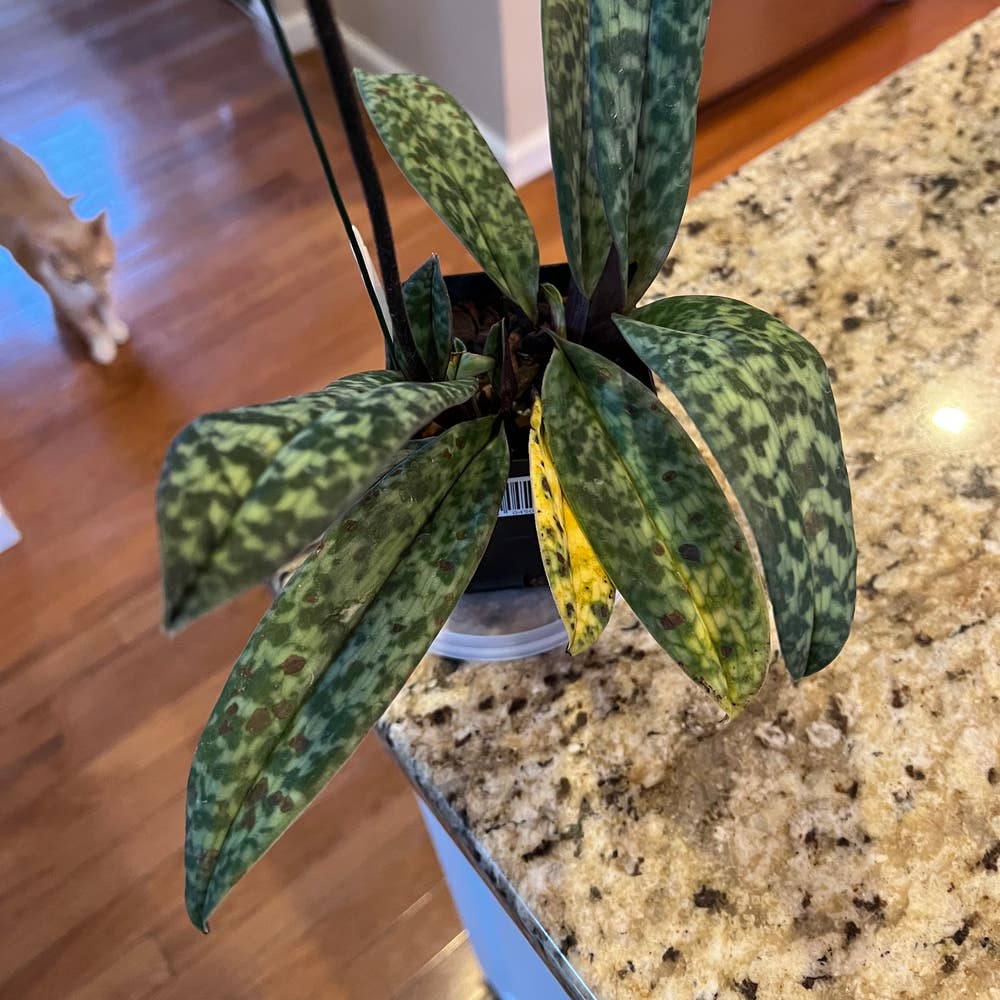
Texture and color are your first hints. Dry, crispy spots often scream sunburn, while soft, dark areas whisper overwatering. Fungal infections? They're the drama queens with yellow halos or concentric rings. Location matters too—center stage on the leaf or a peripheral cameo?
Beyond the Spots
Look for the supporting cast of symptoms. Yellowing leaves, premature drop-offs, or a papery feel can all point to a fungal plot twist. If you spot tiny fruiting bodies, it's like catching the villain red-handed. And don't ignore the understudies—distorted growth or black streaks could signal a bacterial subplot.
Fungal Foes: Tackling Infections
🌿 Choosing Your Fungicide
In the arsenal against fungal infections in Paphiopedilum venustum, selecting the right fungicide is crucial. Systemic fungicides like agri-fos and cleary's 3336 are your heavy hitters for pervasive issues. They invade the plant system and wage war from within. For a preemptive strike, protectant fungicides such as mancozeb and copper sprays act as a barrier, coating the leaves to fend off fungal invaders. Always consult a professional or reliable source to ensure compatibility with your orchid, and follow the label to the letter.
💨 Environmental Control
Airflow is the unsung hero in the fight against fungal spread. A simple fan can bolster your defense, keeping the air around your Paphiopedilum venustum moving and making it less hospitable for fungi. Humidity is a double-edged sword; necessary for your orchid's well-being, but excessive moisture invites fungal growth. Strike a balance to keep humidity levels just right. Regularly remove any fallen debris and prune affected areas with sterilized tools to prevent fungal parties from starting. Remember, it's not just about treatment—it's about creating an environment where fungi can't gain a foothold.
Sunburn and Light Exposure: Finding the Sweet Spot
🌞 Gradual Acclimation
Paphiopedilum venustum orchids are not sun worshippers. To prevent the horror of sunburn, introduce them to new light environments with the care of a bomb defusal expert. Start with gentle morning light and gradually increase exposure, avoiding the midday sun as if it were an overzealous party guest.
🌅 Perfect Placement
Indirect light is your orchid's best friend. Place your Paphiopedilum venustum near an east or west-facing window where the sun's rays are like a soft whisper, not a shout. If the sun is playing a game of peek-a-boo, consider sheer curtains to soften its advances. Remember, the goal is to mimic the dappled shade of a forest, not the open desert.
Water Woes: Striking the Right Balance
💧 Watering Frequency and Technique
Watering your Paphiopedilum venustum is less about sticking to a calendar and more about understanding its needs. Weekly watering is a good starting point, but adjust based on your home's climate. The soil should feel like a wrung-out sponge—moist, not drenched. Use a moisture meter or the trusty finger test to gauge the soil's wetness. If the top inch is dry, it's time for a drink.
🚰 Drainage and Moisture Control
Drainage is the unsung hero in the fight against root rot. Ensure your pot has holes at the bottom to let excess water escape. Consider adding materials like peat moss or vermiculite to the mix for better moisture retention. But remember, too much of a good thing is just as bad—overwatering is a stealthy killer. Keep the roots breathing, not swimming.
Prevention: Keeping Brown Spots at Bay
🌡️ Creating the Ideal Microclimate
Creating a stable environment for your Paphiopedilum venustum is like setting the thermostat for a finicky VIP guest. Humidity and temperature swings are your orchid's arch-nemeses. Keep the air moisture consistent, ideally hovering between 40% and 70%, to avoid turning your plant's habitat into a fungal rave. Use gadgets like thermometers and hygrometers to monitor these conditions with the precision of a Swiss watchmaker. If the air's too dry, consider a humidifier; too damp, and a dehumidifier might be your new best friend.
🔄 Consistent Care
Routine care for your orchid should be as regular as your morning alarm. Inspect your plant frequently, like a hawk eyeing its prey, for early signs of distress. Keep your tools as sterile as a surgeon's scalpel to prevent introducing any unwanted pathogens. Watering should be as precise as a barista crafting your custom coffee order—only when the top inch of the soil feels like a day-old sponge, and always with room-temperature water. Remember, the best offense is a good defense; by maintaining a vigilant care regimen, you're not just growing an orchid, you're curating a masterpiece.
⚠️ Safety First
This content is for general information and may contain errors, omissions, or outdated details. It is not medical, veterinary advice, or an endorsement of therapeutic claims.
Always consult a qualified healthcare professional before using any plant as food, medicine, or supplement.
Never eat any plant (or feed one to pets) without confirming its identity with at least two trusted sources.
If you suspect poisoning, call Poison Control (800) 222-1222, the Pet Poison Helpline (800) 213-6680, or your local emergency service immediately.
Spotted an error? Please report it here.
Keep your orchid's leaves spot-free 🌿 with Greg's tailored environment tracking and care alerts, ensuring your Paphiopedilum venustum stays in perfect health.