Black Spots on My Paphiopedilum venustum Leaves
Paphiopedilum venustum
By the Greg Editorial Team
Mar 06, 2024•5 min read
This article was created with the help of AI so we can cover more plants for you. May contain errors. See one? Report it here.
- Fungal, bacterial, or damage: Black spots on leaves signal trouble.
- Early detection is key: Spots can quickly grow and spread.
- Prevent with care: Adjust environment, water properly, and inspect regularly.
Spotting the Culprit: Identifying Black Spots
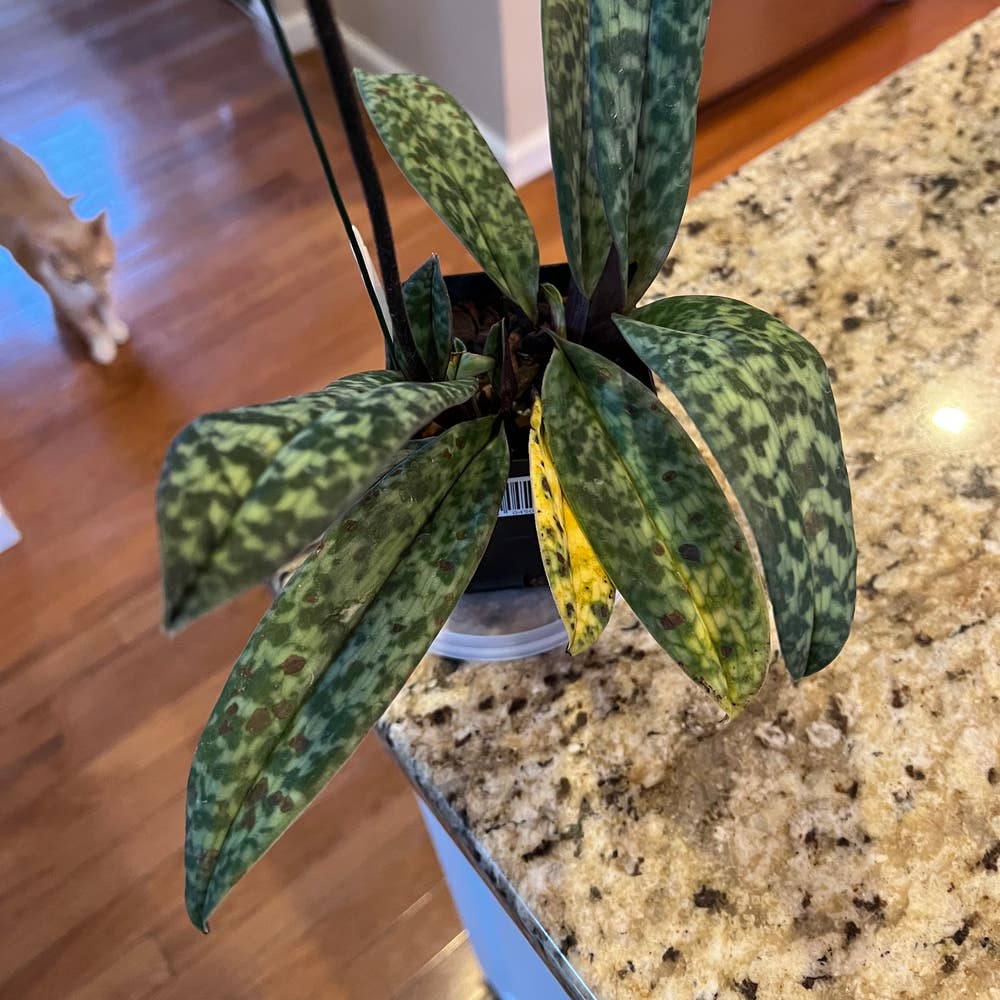
Visual Inspection: Your Paphiopedilum venustum's leaves are the canvas, and unfortunately, black spots are the unsightly graffiti. These spots are small, dark, and may begin as tiny specks less than ⅛ inch in diameter.
🕵️ What Do Black Spots Look Like?
Flip the script—and the leaves—because these spots love to start their stealthy invasion on the undersides. Left unchecked, they grow or merge into larger, more noticeable blotches.
🌿 Where to Look
Check both old and new growth, but pay special attention to the older leaves. They're like the wise elders of your plant—when they show signs of distress, it's time to take action.
🎨 Spot Characteristics
Texture and color give away the game. Are the spots raised, sunken, or do they have a wet look? Color-wise, are we talking jet black, brownish, or do they have funky halos? These details are clues pointing to whether you're dealing with a fungal rave or a bacterial bash.
📏 Assessing the Extent
It's not just about a few freckles; the spread of these spots can clue you in on the severity and speed of the issue. A few isolated dots might be manageable, but a full-on breakout suggests a more serious problem.
🧪 Diagnostic Tips
Timing is everything. Black spots often show up after a period of overwatering or high humidity. They spread like wildfire, so early detection is your best defense. If you spot yellowing leaves or fine webs, brace yourself—pests might be throwing their own party.
The Usual Suspects: Common Causes of Black Spots
🍄 Fungal Foes
Fungi are the sneaky invaders of the orchid world, often leaving black spots as their calling card. Cercospora and Anthracnose are the usual suspects, thriving in the moist, shadowy nooks of your plant's habitat. Their spots start as tiny dots, expanding into larger lesions with dark margins or concentric rings. If you spot these, it's time to acknowledge a fungal fiesta on your Paphiopedilum venustum.
🦠 Bacterial Baddies
Bacterial infections are like the ninjas of plant diseases—silent but deadly. They leave behind water-soaked lesions or spots with a yellow halo, the plant's version of a backstab. These spots might ooze or smell foul, signaling that bacteria are having a field day at your orchid's expense.
💥 When Damage Strikes
Not all black spots are a microbial rave—some are just the plant's equivalent of a bruise. Physical harm from a bump, a pet's paw, or an environmental tantrum can cause blackened areas. These spots are the orchid's SOS—a cry for gentler care or a plea for a safer location. Keep an eye out for non-infectious spots; they won't spread like those caused by fungi or bacteria but still need your attention.
The Battle Plan: Treating Black Spots
🛡️ Fungicide to the Rescue
Choosing the right fungicide is like picking your best warrior in a battle against fungal foes. For early-stage infections, protectant fungicides act as a shield, preventing further damage. If the fungus has already set up camp, systemic fungicides are the cavalry that fights from the inside out. Remember, always follow the label's instructions to the letter.
💉 Bacteria Busters
When bacteria are the villains, copper-based bactericides are your superheroes. They swoop in to save the day, but precision is key—target the infected areas and spare the healthy tissue. It's a strategic move, like a chess grandmaster's winning play. And don't forget, sterilize your tools before and after to prevent bacterial sequels.
🩹 Healing the Hurt
Physical damage on leaves can be a gateway for pathogens. Trim away the damaged parts with the precision of a skilled surgeon. Think of it as removing the zombie bite before it infects the rest. Dry air and sunlight can be your allies here, acting as natural disinfectants. Keep your plant's environment clean, and you'll be on your way to restoring its former glory.
Fortifying the Fortress: Preventing Future Black Spots
🛡️ Environmental Shielding
Adjusting your Paphiopedilum venustum's environment is like setting up a chessboard—every piece matters. Light levels should be Goldilocks-approved, not too dim, not too bright. Temperature consistency is your plant's best friend; avoid the drama of drastic changes. Humidity needs a watchful eye—too much and you're brewing a fungal fiesta. Use a hygrometer to keep it just right.
👩🌾 Cultural Best Practices
Watering is a delicate dance. Aim for the roots and avoid a leaf shower. Early morning is prime time, letting the sun work its drying magic. Cleanliness is next to godliness here; sterilize your tools like you're prepping for surgery. Keep an eye out for pests—they're party crashers that can bring unwanted guests (diseases). Airflow is the silent guardian, keeping the air moving and the leaves dry.
Fertilization is your plant's training regimen. A balanced diet promotes resilience against black spots. Remember, consistency is key—like your favorite morning routine. Pruning isn't just for looks; it's strategic, promoting good circulation and denying diseases a cozy spot. Lastly, vigilance is your watchtower. Regular inspections can catch the smallest spot before it becomes a blot.
⚠️ Safety First
This content is for general information and may contain errors, omissions, or outdated details. It is not medical, veterinary advice, or an endorsement of therapeutic claims.
Always consult a qualified healthcare professional before using any plant as food, medicine, or supplement.
Never eat any plant (or feed one to pets) without confirming its identity with at least two trusted sources.
If you suspect poisoning, call Poison Control (800) 222-1222, the Pet Poison Helpline (800) 213-6680, or your local emergency service immediately.
Spotted an error? Please report it here.
Banish black spots 🌿 with ease by letting Greg's environmental tracking and custom alerts keep your orchid's surroundings optimal.