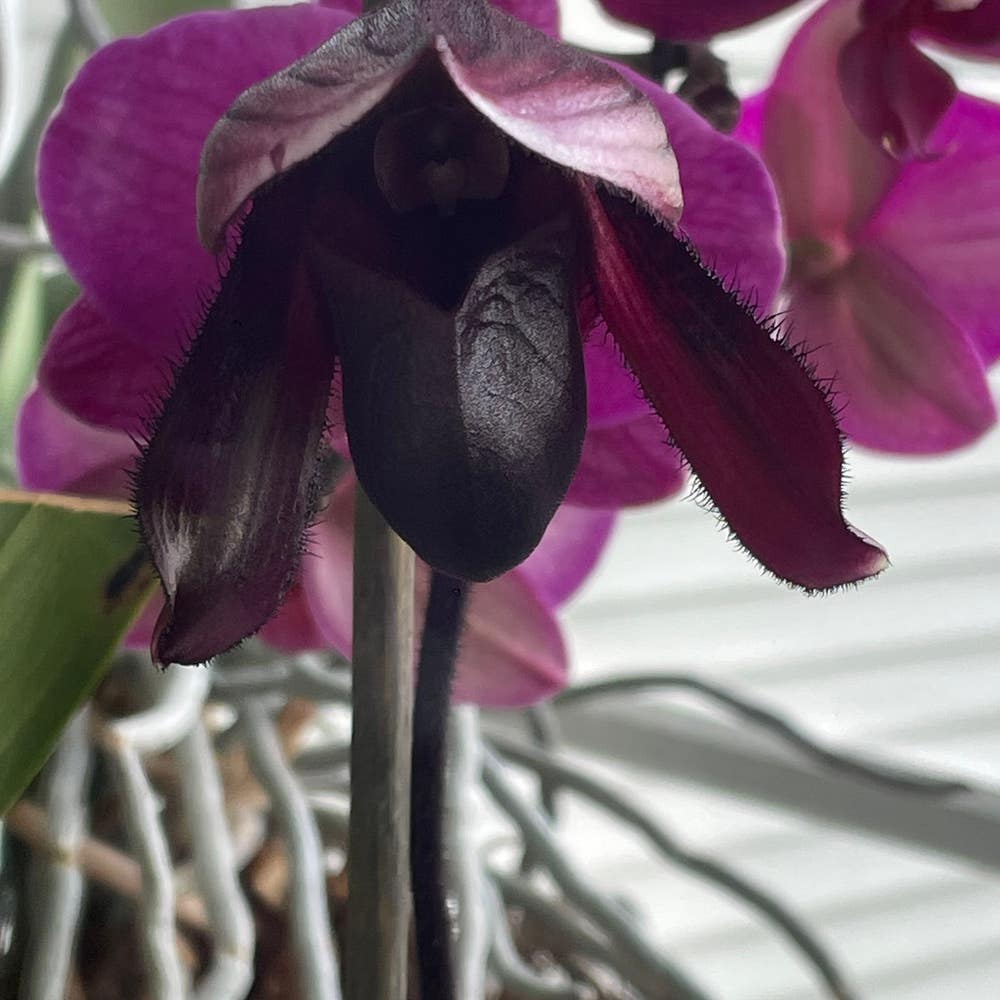
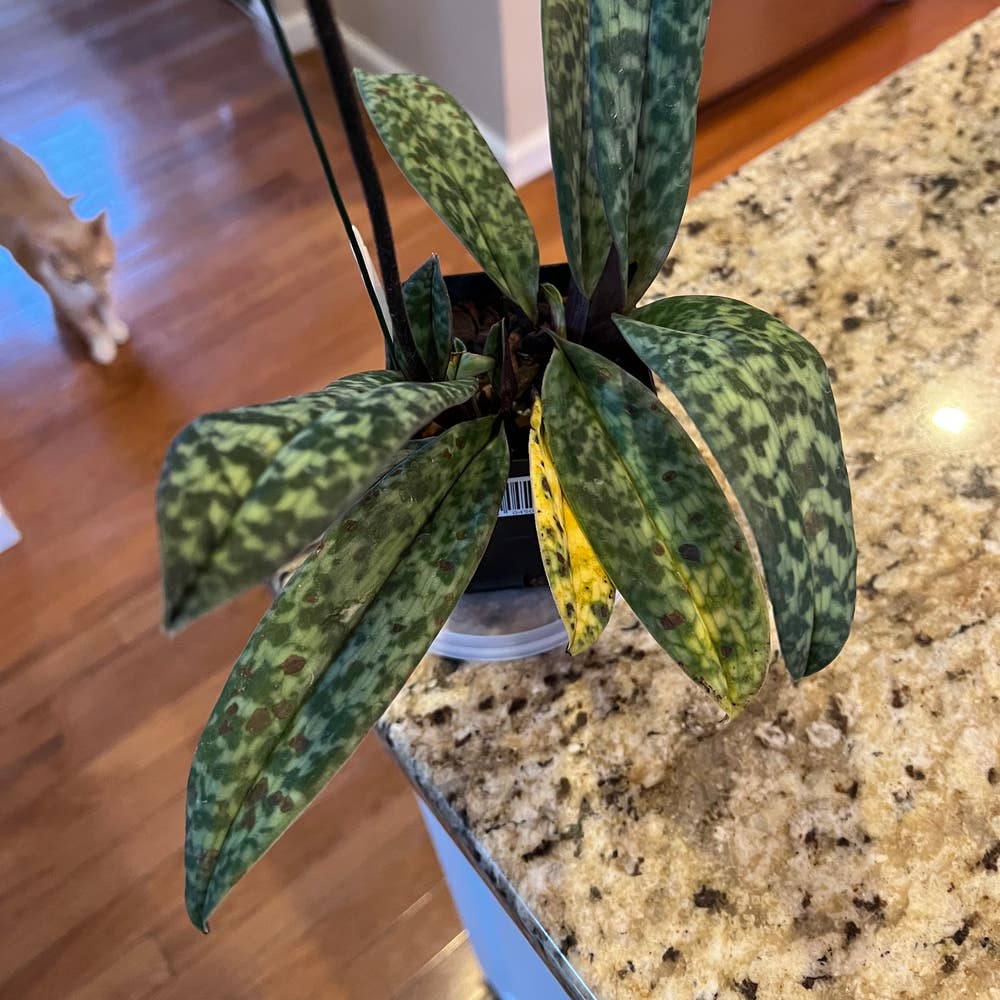
💧 Why Are My Paphiopedilum venustum Leaves Mushy?
Paphiopedilum venustum
By the Greg Editorial Team
Mar 06, 2024•3 min read
This article was created with the help of AI so we can cover more plants for you. May contain errors. See one? Report it here.
- Overwatering and root rot are the main culprits for mushy leaves.
- Adjust watering and inspect roots to save your orchid.
- Proper drainage and airflow prevent future mushiness.
Spotting the Trouble: Signs Your Paphiopedilum venustum Has Mushy Leaves
💦 Overwatering Symptoms
Squishy leaves on your Paphiopedilum venustum? That's your orchid's way of saying, "I'm drowning here!" If the foliage feels like it's been on a waterbed, you've been overzealous with the watering can. Yellow or brown spots are not just cosmetic flaws; they're distress flares signaling overwatering.
🚩 Root Rot Red Flags
Root rot is the silent assassin in the pot. If you get a whiff of decay from the soil, consider it a red flag. Healthy roots are white and firm, not mushy and brown. Spot darkened roots or a base that's softer than your favorite plush toy? It's time for an urgent orchid intervention.
Immediate Rescue: Saving Your Orchid from Mushiness
💧 Adjusting Your Watering Routine
Watering your Paphiopedilum venustum should be judicious. Overwatering can lead to mushy leaves, so it's essential to strike the right balance. Check the potting media before watering; if it's dry, give your plant a drink. If it's damp, hold off. This simple step is crucial for your orchid's recovery.
🌱 Root R&R: Inspect, Treat, and Recover
🕵️♂️ Inspect
Begin by removing your orchid from its pot to inspect the roots. Healthy roots are firm and light-colored. If they're soft, brown, or black, it's a sign of trouble.
🩹 Treat
For roots that have succumbed to rot, trim the damaged parts with a sterile tool. Be precise—think surgeon, not butcher.
🌿 Recover
After the crisis, focus on consistency. Establish a new watering routine that aligns with your orchid's needs. Consider a diluted all-purpose fertilizer as a supplement, akin to comfort food for your plant.
🌱 Repotting
Finally, repot your orchid in a fresh, airy mix. Ensure the new pot has excellent drainage to prevent future waterlogging. This step is not just about recovery; it's about setting the stage for a thriving orchid.
The Best Offense is a Good Defense: Preventing Future Mushiness
🛡️ Mastering the Art of Drainage
Choosing the right potting mix and containers is like building a fortress against excess moisture. Your Paphiopedilum venustum's roots crave a well-draining environment. Opt for a mix that's more aerated than your average soil—think chunky, loose, and almost rebellious against retaining water. Terra cotta pots are the unsung heroes here, with their porous walls allowing soil to dry evenly. And let's not forget the critical role of drainage holes; they're not just decorative, they're downright essential.
💨 Breezy Business: Ensuring Air Flow
Airflow is your orchid's invisible shield against the dark arts of mold and rot. Don't cram your plants together like sardines; give them some breathing room. A gentle fan can keep the air moving without creating a mini tornado. This isn't about gale-force winds, just a whisper of movement to keep things fresh. And while you're at it, keep your humidity in check with a hygrometer—it's like having a weather station tailored for your orchid's microclimate.
⚠️ Safety First
This content is for general information and may contain errors, omissions, or outdated details. It is not medical, veterinary advice, or an endorsement of therapeutic claims.
Always consult a qualified healthcare professional before using any plant as food, medicine, or supplement.
Never eat any plant (or feed one to pets) without confirming its identity with at least two trusted sources.
If you suspect poisoning, call Poison Control (800) 222-1222, the Pet Poison Helpline (800) 213-6680, or your local emergency service immediately.
Spotted an error? Please report it here.
Ensure your Paphiopedilum venustum leaves never go mushy again by leveraging Greg's custom watering reminders and humidity tracking 🌿, tailored to your orchid's needs for a flourishing recovery.