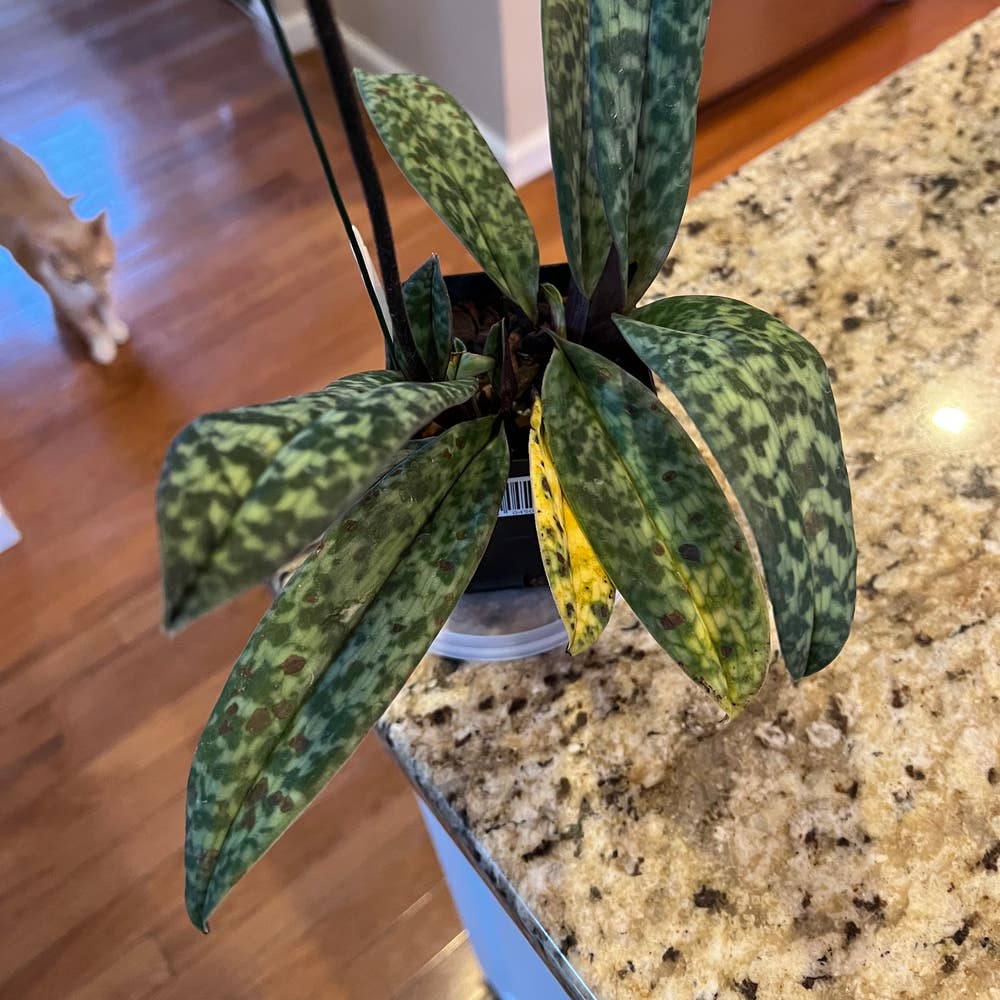
🌺 Why Are My Paphiopedilum sukhakulii Leaves Turning Yellow?
Paphiopedilum sukhakulii
By the Greg Editorial Team
Apr 16, 2024•4 min read
This article was created with the help of AI so we can cover more plants for you. May contain errors. See one? Report it here.
Turn yellow leaves green 🌿 and ensure your Paphiopedilum sukhakulii flourishes with these pro care secrets!
- 🌞 Insufficient light or too much shade causes yellow leaves.
- 💧 Water carefully—balance is key to prevent yellowing.
- 🌱 Fertilize and inspect for pests to maintain green leaves.
Spotting the Culprits: Common Causes of Yellowing Leaves
🌞 Not Enough Sun, Too Much Shade
Paphiopedilum sukhakulii orchids are like Goldilocks; they need their light just right. Too little, and they turn as pale as a ghost. To prevent yellow leaves, place your orchid in a spot with bright, indirect light.
🚰 Water Woes: Overwatering and Underwatering
Yellow leaves can be a distress signal for improper watering. Overwatering leads to a soggy, rotten mess, while underwatering leaves your orchid parched. Aim for moist soil, akin to a well-squeezed sponge, and let the top inch dry out before watering again.
🍽️ Hungry for Nutrients
An underfed Paphiopedilum sukhakulii might sport yellow leaves. It's a sign they're starving for essential minerals. Fertilize with a balanced orchid food, following the less-is-more mantra, especially during the dormant winter months.
🐜 Unwanted Guests: Pest Infestation
Pests are the party crashers nobody wants. They suck the life out of leaves, leaving them yellow and drained. Keep an eye out for webbing or sticky residue, and show these bugs the door with appropriate pest control measures.
Turning Things Around: Treatment Tactics
💡 Let There Be Light (But Not Too Much)
Your Paphiopedilum sukhakulii is a Goldilocks when it comes to light—it craves that 'just right' amount. If it's been sunbathing like it's on vacation, move it to a spot with bright, indirect light. Think of it as a shady retreat for your green friend.
🚰 Hydration Harmony
Watering is a balancing act. Too much, and your orchid's roots are swimming; too little, and they're gasping for a drink. Check the top inch of soil—dry? Time to water. Soggy? Hold off. Aim for consistency in your watering schedule, like clockwork.
🍽️ Nutritional Boost
Fertilizer is your orchid's multivitamin, not its main course. Go for a balanced, water-soluble type, and use it sparingly. Remember, less is more here; you're nourishing, not force-feeding. Keep an eye on the N-P-K ratio and don't forget about those vital micronutrients.
🛡️ Pest Control
Pests are the party crashers of the orchid world. Isolate the affected plant first—no one likes a contagion. Insecticidal soaps and neem oil are your bouncers, showing those bugs the door. And for the love of leaves, keep your plant's living area clean—it's a simple yet effective deterrent.
Keeping the Green: Prevention Practices
Regular vigilance is your first line of defense in plant care. To keep your Paphiopedilum sukhakulii thriving, it's crucial to establish a consistent care routine.
💡 Optimal Lighting Conditions
Dappled light is the sweet spot for your orchid. Too much shade saps the life out of leaves, turning them yellow. Ensure your plant receives the right amount of light without being scorched by direct sun.
🚰 Watering Wisdom
Watering is a balancing act. Your orchid's roots should never be drowning nor gasping for moisture. Aim for soil that's consistently moist during growth periods and reduce watering when growth slows.
🍽️ Nutrient Know-How
Fertilize with a gentle hand. Use a balanced fertilizer during active growth to prevent nutrient deficiency without overwhelming your plant.
🐜 Pest Patrol
Keep an eye out for uninvited guests. Regular inspections can catch pests before they become a full-blown infestation. If bugs do crash the party, show them the door with appropriate treatments.
Cleanliness is Key
A tidy plant is a happy plant. Remove any debris or dead leaves to discourage pests and maintain aesthetic appeal. A clean plant is less likely to suffer from diseases.
🌞 Climate Control
Strive to mimic your orchid's natural habitat. Avoid extreme temperatures and maintain moderate humidity to create a microclimate utopia for your Paphiopedilum sukhakulii.
🛡️ Proactive Plant Parenting
Prevention isn't just a task—it's a lifestyle. Embrace it, and your orchid will reward you with vibrant, spot-free leaves.
⚠️ Safety First
This content is for general information and may contain errors, omissions, or outdated details. It is not medical, veterinary advice, or an endorsement of therapeutic claims.
Always consult a qualified healthcare professional before using any plant as food, medicine, or supplement.
Never eat any plant (or feed one to pets) without confirming its identity with at least two trusted sources.
If you suspect poisoning, call Poison Control (800) 222-1222, the Pet Poison Helpline (800) 213-6680, or your local emergency service immediately.
Spotted an error? Please report it here.
Turn those yellow leaves to lush green 🌿 with Greg's pinpointed sunlight and watering schedules, ensuring your Paphiopedilum sukhakulii thrives.