💧 Why Are My Paphiopedilum sukhakulii Leaves Mushy?
Paphiopedilum sukhakulii
By the Greg Editorial Team
Apr 16, 2024•5 min read
This article was created with the help of AI so we can cover more plants for you. May contain errors. See one? Report it here.
Prevent mushy leaves and save your orchids by nailing the perfect watering routine! 🌿💧
- Overwatering leads to mushiness, causing leaves to collapse and change color.
- 🚿 Fix waterlogged pots with better drainage and emergency repotting.
- ✂️ Prevent future issues with a proper watering routine and regular pruning.
Spotting the Trouble: Signs Your Paphiopedilum sukhakulii Has Mushy Leaves
🍃 Visual Cues: Identifying Mushiness in Leaves
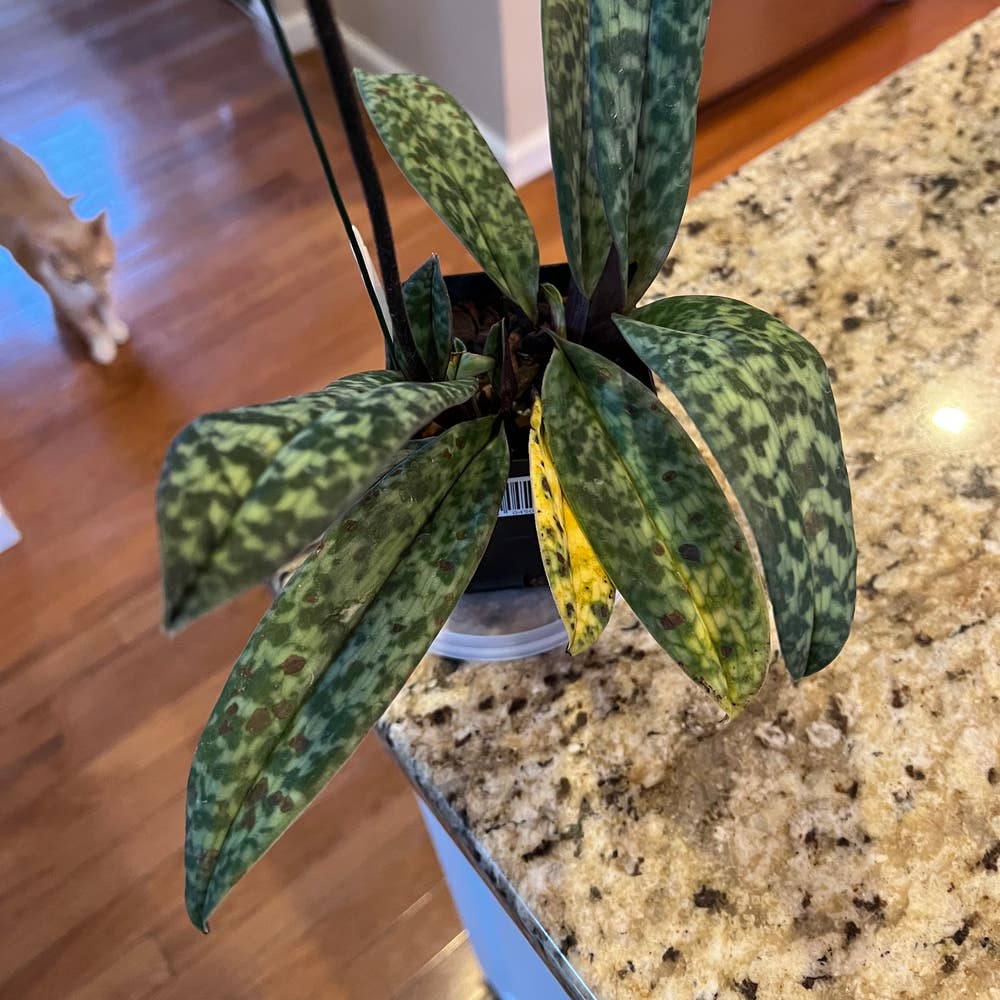
Leaves should resist gentle pressure, not collapse like a poorly made flan. If your Paphiopedilum sukhakulii's leaves are giving in to even the softest touch, sounding the alarm bells is appropriate. Discoloration is another red flag; a shift from healthy green to yellow or brown hues is like a neon sign pointing to trouble.
🕵️ Beyond the Surface: Other Symptoms to Watch For
Don't stop at the leaves. If the stem feels like it's auditioning for a role as a wet noodle, your plant's foundation is compromised. A pot that feels heavier than your last dumbbell set could indicate excess water. And let's not ignore the olfactory clues; a foul smell emanating from the soil is the botanical equivalent of a distress flare, often signaling root rot. Keep an eye out for roots that have the appearance and texture of something you'd regret finding in the back of your fridge—dark, mushy, and decidedly not firm.
The Root of the Problem: Common Causes of Mushiness
💧 Overwatering Woes
Overwatering is the chief villain in the mushy leaf saga of Paphiopedilum sukhakulii. Leaves that feel like a wet sponge are crying out for less water. If your pot weighs as much as a small boulder days after watering, you're drowning those roots.
💦 How to tell if you're overdoing the H2O
Yellow leaves and a pot that's heavier than your pet cat are telltale signs of overwatering. Check the soil; if it's soggier than a rain-soaked towel, it's time to ease up on the liquid love.
🚰 Drainage Dilemmas
A pot without proper drainage is like a bathtub with a plugged drain. Water that should be leaving is instead throwing a pool party for pathogens. If your orchid's roots are swimming instead of thriving, you've got a drainage disaster.
🛠 Quick fixes for waterlogged pots
Unblock those holes—it's time for a drainage intervention. If your pot's as sealed as a Tupperware, consider repotting with a mix that's more like a sieve and less like a sponge.
☣️ Infection Inspection
Fungi and bacteria are the uninvited guests that love a wet environment. They turn roots into a mushy mess and leaves into limp handkerchiefs. If your orchid's base smells like a forgotten gym locker, it's time for an infection inspection.
🌿 When to seek out professional plant healthcare
When home remedies fail and your plant's leaves are more mush than majestic, it's time to call in the pros. Discolored spots, a moldy smell, and a root system that looks like overcooked spaghetti are signs you need expert help.
First Aid for Foliage: Immediate Actions to Take
💧 Cutting Back on Water: The First Line of Defense
Cut back on water—it's not just advice, it's an urgent intervention. If the soil feels like a swamp, it's time to let it dry. Check the top inch; if it's moist, hold off on the H2O.
🏥 Home Remedies and When to Use Them
Snip off mushy leaves with sanitized shears. It's like giving your plant a life-saving haircut. Afterward, reassess its living conditions—light, humidity, and air circulation. Make tweaks as needed.
🚑 Emergency Repotting: A Step-by-Step Guide
- Choose the right pot—snug but not tight, like yoga pants for plants.
- Select a well-draining mix; think of it as a relocation to the suburbs for your orchid.
- Gently remove the plant and trim any damaged roots.
- Repot and water sparingly, then monitor like it's the season finale of your favorite show.
Long-Term Care: Preventing Future Mushiness
💧 Watering Wisdom
Check the soil before you water; if the top layer feels dry, it's time to quench your orchid's thirst. Establish a watering routine that caters to the unique needs of your Paphiopedilum sukhakulii, considering factors like season and ambient humidity.
To avoid the guesswork, consider using moisture meters or even weighing your pots. Some gardeners swear by watering apps as a high-tech reminder to hydrate their leafy companions.
🌱 Potting Perfection
Select a potting mix that promotes excellent drainage; think of it as the foundation for your orchid's future prosperity. Terracotta pots are the unsung heroes here, thanks to their moisture-wicking superpowers.
For an extra layer of protection against sogginess, mix in some perlite or coarse sand. This keeps the soil from throwing a compacting tantrum and suffocating your plant's roots.
🧼 Cleanliness is Key
Routine cleaning isn't just for show; it's a frontline defense against the unseen microbial hordes. Prune away any mushy leaves to prevent the spread of infection—it's like social distancing for plants.
Ensure your plant's living space has good air circulation; a gentle fan can simulate a breezy day, making it harder for fungal fiestas to start. Remember, your plant's environment should be as consistent as a dog's walking schedule—use a hygrometer and thermometer to avoid turning your plant's home into a weather rollercoaster.
⚠️ Safety First
This content is for general information and may contain errors, omissions, or outdated details. It is not medical, veterinary advice, or an endorsement of therapeutic claims.
Always consult a qualified healthcare professional before using any plant as food, medicine, or supplement.
Never eat any plant (or feed one to pets) without confirming its identity with at least two trusted sources.
If you suspect poisoning, call Poison Control (800) 222-1222, the Pet Poison Helpline (800) 213-6680, or your local emergency service immediately.
Spotted an error? Please report it here.
Banish mushy leaves 🚫 from your Paphiopedilum sukhakulii with Greg's custom watering reminders, ensuring your orchid thrives without the guesswork.