Black Spots on My Paphiopedilum sukhakulii Leaves
Paphiopedilum sukhakulii
By the Greg Editorial Team
Apr 16, 2024•4 min read
This article was created with the help of AI so we can cover more plants for you. May contain errors. See one? Report it here.
Banish black spots 🕵️♂️ on your Paphiopedilum sukhakulii with our expert care and prevention guide! 🌿
- Texture and size clues help diagnose black spot causes.
- 🚩 Declining health with spots signals serious issues.
- Prevent with proper care: humidity, cleanliness, and quarantine.
Spotting the Culprit: Diagnosing Black Spots
🔍 Examining the Black Spots
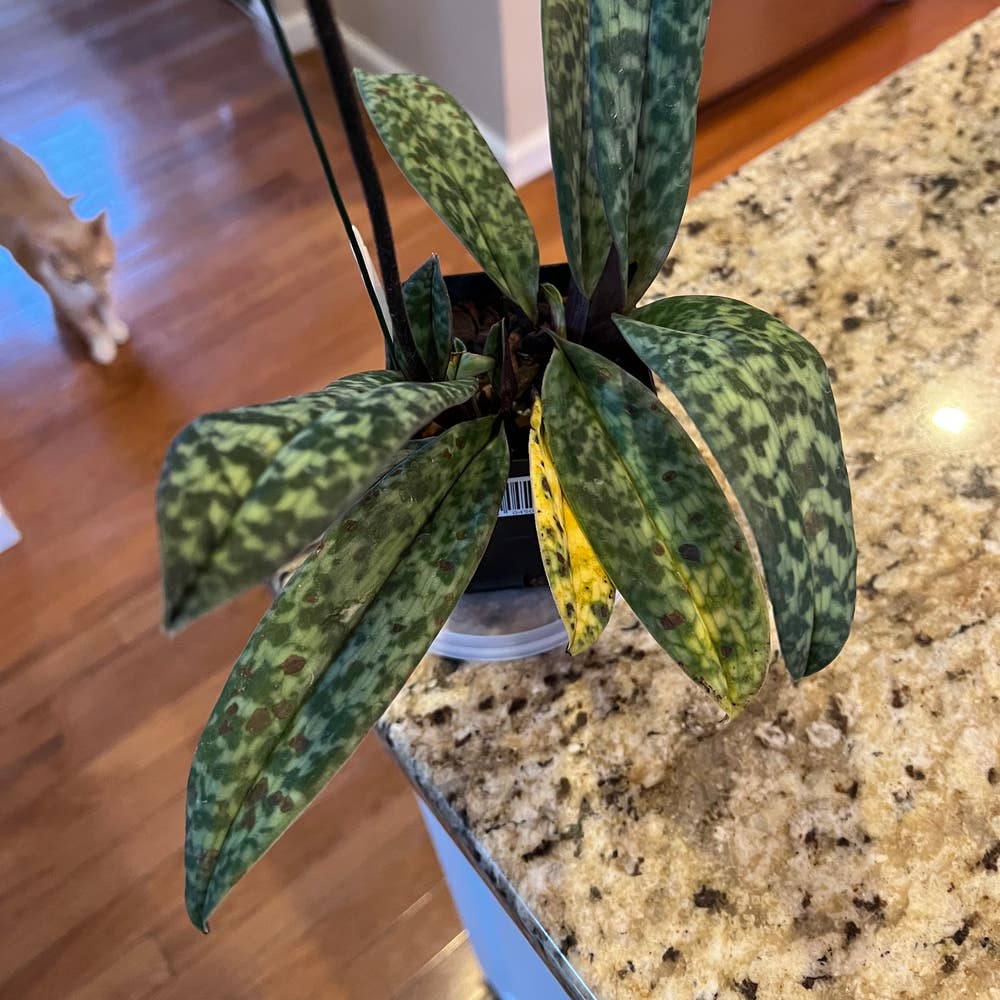
Feel the texture of the spots—are they raised, sunken, or slimy? This tactile investigation can reveal a lot. Black, brownish, or haloed spots each tell a different story. It's a clue, not a conclusion.
Check the size and pattern. Tiny specks could be the early stages of a problem, while larger blotches might indicate a more advanced condition. Uniformity suggests natural markings, but randomness often signals trouble.
👀 Looking Beyond the Spots
Other symptoms often crash the black spot party. Wilting, discoloration, or a sticky residue? These extras can point to pests or disease, not just an aesthetic hiccup.
Location matters. Spots underneath leaves are sneakier and potentially more sinister. If they're changing the leaf's texture, it's time to get your detective hat on.
When spots seem more like a symptom than a solo act, suspect more than a cosmetic issue. It could be a sign of an underlying condition that needs immediate attention. Keep an eye out for a decline in overall plant health—it's a red flag.
Remember, not all spots are a crisis, but don't wait for an invitation to act. If you're stumped, a chat with a plant pathologist or a seasoned gardener can be enlightening. They're the plant world's equivalent of a detective agency.
Rolling Up Your Sleeves: Treatment Tactics
🍄 Fungus Among Us: Battling Fungal Infections
Fungicides are your first line of defense against the fungal invaders causing black spots on your Paphiopedilum sukhakulii. Opt for products containing thiophanate-methyl or azoxystrobin, known for their effectiveness. Apply these treatments thoroughly, ensuring every part of the leaf is covered, but avoid drenching the plant. Rotate fungicides to prevent resistance; it's like updating your antivirus software to keep up with new threats.
🦠 Bacteria Be Gone: Addressing Bacterial Infections
When bacteria are the culprits, copper-based bactericides are often the go-to. However, not all bacteria are created equal; match your treatment to the specific strain. Apply during cooler hours to avoid stressing the plant further. And remember, gloves and goggles aren't just a fashion statement; they're essential for safe application.
🌿 Environmental TLC: Correcting Stress-Related Issues
Sometimes, the black spots are a cry for help from a plant stressed by its environment. Ensure your Paphiopedilum sukhakulii isn't sitting in soggy soil; proper drainage is key. Adjust humidity and airflow around the plant to discourage fungal and bacterial growth. It's like giving your plant a room with a view—good circulation is the equivalent of a breath of fresh air.
Keeping It Spotless: Prevention Strategies
🌿 Cultivating the Ideal Environment
Humidity and temperature aren't just weather talk; they're crucial for your Paphiopedilum sukhakulii. Aim for that 40-60% humidity sweet spot—too much and you're in a fungal funhouse, too little and you're in a desert. Keep the temperature steady; think of your plant's comfort, not your thrill for seasonal change. Lighting should be bright but indirect, like a partly cloudy day at a beach—sun-kissed, not sunburned.
🕵️ Routine Checks and Balances
Regular inspections are like your plant's personal check-up—preventative care at its finest. Spot a problem early and you've just dodged a bullet. Keep your plant's living area free of fallen leaves and debris; cleanliness is next to, well, spotlessness. And remember, water at the base—wet leaves are a no-no.
🌱 Proactive Plant Parenting
Be the plant parent who's got their act together. Adjust care with the seasons—more water when it's hot, less when it's not. Prune with purpose; it's not just for aesthetics, it's a strategic move against potential black spot hideouts. And if you're introducing new plants, quarantine them like they're the latest tabloid scandal until you're sure they're clean. Soil choice matters too; go for well-draining mixes that are supportive but not suffocating.
⚠️ Safety First
This content is for general information and may contain errors, omissions, or outdated details. It is not medical, veterinary advice, or an endorsement of therapeutic claims.
Always consult a qualified healthcare professional before using any plant as food, medicine, or supplement.
Never eat any plant (or feed one to pets) without confirming its identity with at least two trusted sources.
If you suspect poisoning, call Poison Control (800) 222-1222, the Pet Poison Helpline (800) 213-6680, or your local emergency service immediately.
Spotted an error? Please report it here.
Ensure your Paphiopedilum sukhakulii remains spotless 🌿 with Greg's tailored environment tracking, helping you preempt those black spots with ease.