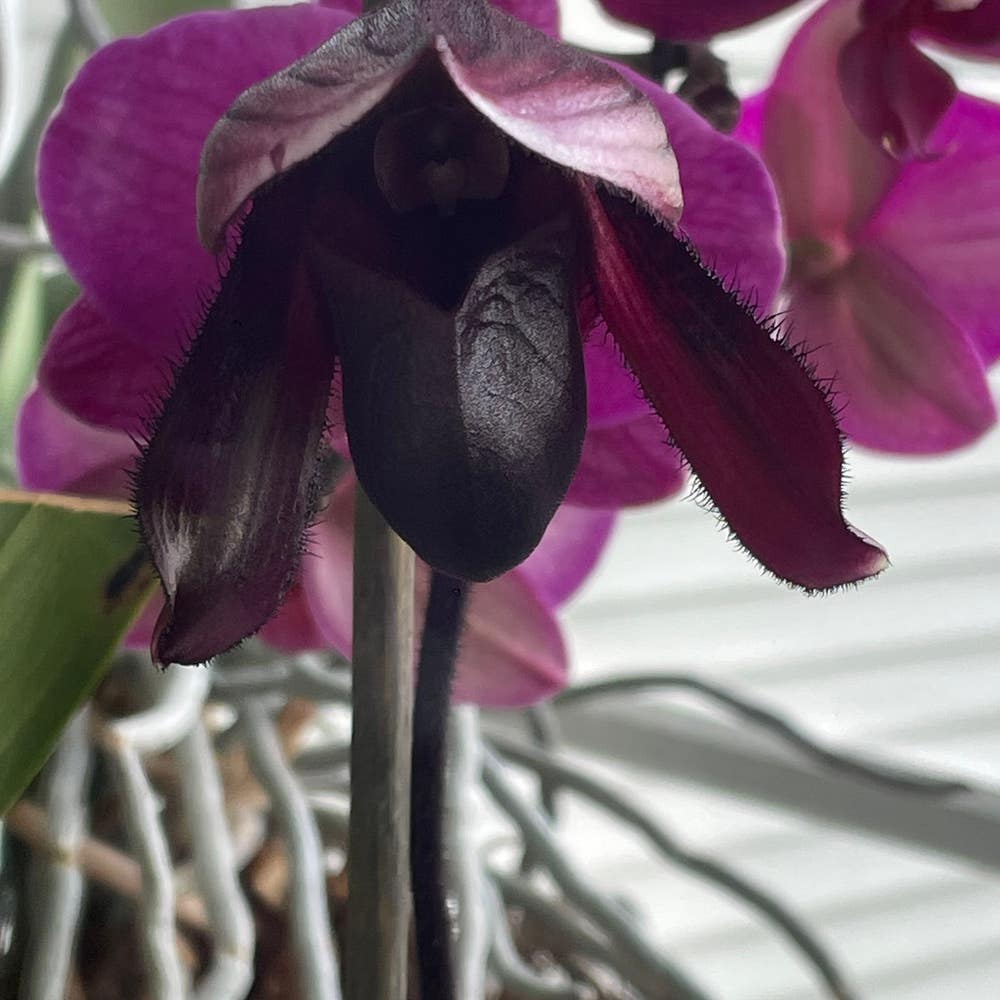
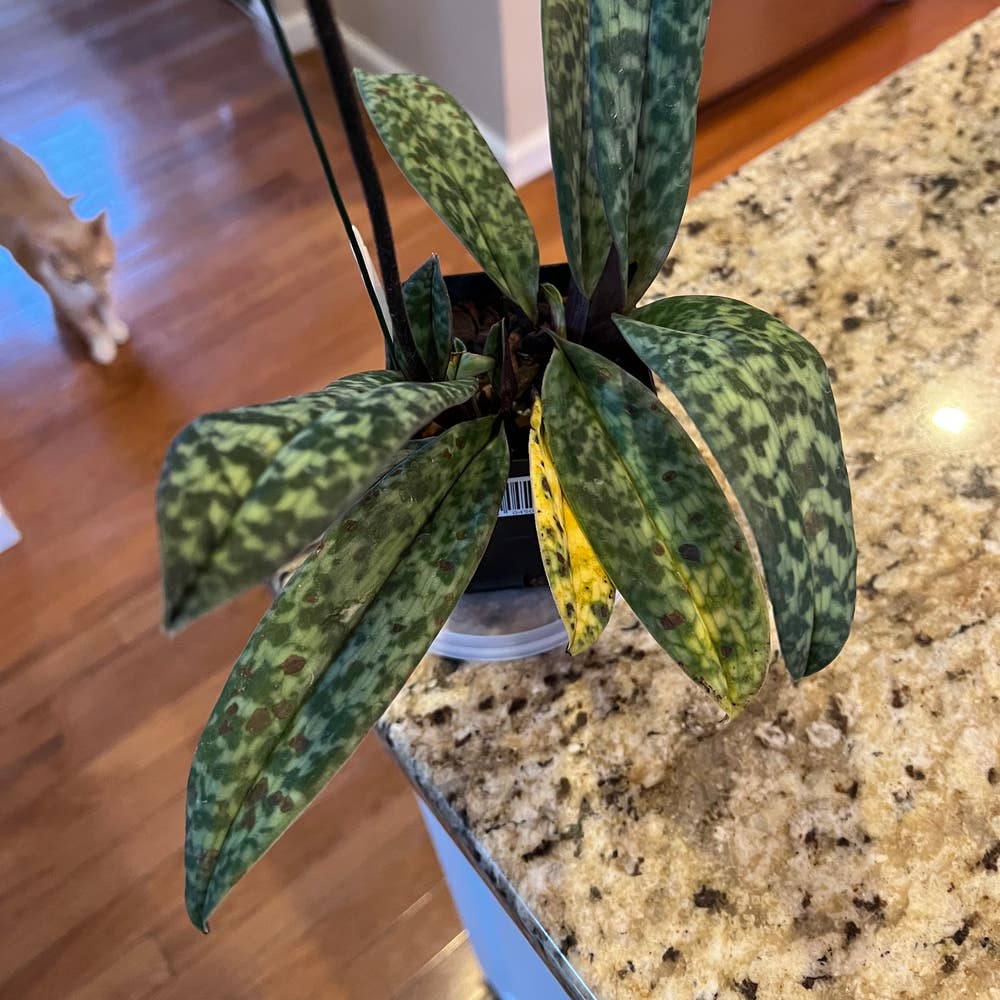
Why Are My Paphiopedilum sukhakulii Leaves Falling Over?
Paphiopedilum sukhakulii
By the Greg Editorial Team
Apr 16, 2024•3 min read
This article was created with the help of AI so we can cover more plants for you. May contain errors. See one? Report it here.
Stop your orchid's leaf-fall and restore its poise with proven care tips! 🍂🌺
- Overwatering and underwatering both lead to leaf drop; check soil moisture.
- 🐛 Pests and nutrient deficiencies weaken leaves, causing them to fall over.
- Regular care and environmental control prevent future leaf-falling issues.
When Leaves Take a Tumble: Pinpointing the Culprits
💧 Too Much H2O: Overwatering Woes
Root rot is a silent assassin in the plant world, and overwatering is its accomplice. When Paphiopedilum sukhakulii sits in waterlogged soil, its roots can't breathe, leading to a tragic leaf flop. Yellowing leaves that detach with a gentle tug are the plant's cry for help.
🏜️ Thirsty Roots: The Underwatering Effect
Conversely, underwatering turns your orchid into a leaf-shedding machine. Leaves droop and crisp up as the plant desperately tries to conserve water. A telltale sign of dehydration is when the leaves feel brittle and the soil is as dry as a bone.
🐜 Unwanted Guests: Pest-Induced Leaf Stress
Pests are like party crashers for Paphiopedilum sukhakulii, causing chaos and leaf distress. Watch for spider mites, aphids, and mealybugs, which can turn robust leaves into weakened, falling casualties. Symptoms include sticky residue or webbing on the leaves.
🌱 Starved for Nutrients: Deficiency Dilemmas
Nutrient deficiencies can leave your orchid's leaves looking lackluster and prone to dropping. Leaves that turn pale or develop odd spots may be signaling a cry for help. It's essential to spot these signs early to prevent a full-blown nutrient heist.
Turning Over a New Leaf: Remedial Actions
💧 Fine-Tuning Watering Techniques
Root health is critical. To correct overwatering, let the top inch of soil dry before the next watering. Underwatering? Increase frequency, ensuring the soil stays evenly moist.
- Check soil moisture before watering; it should be dry an inch down.
- Adjust watering frequency according to season; less in winter.
🚰 Proper Drainage: The Unsung Hero
Without proper drainage, you're asking for trouble. Use pots with drainage holes and mix in perlite for that airy, breathable soil mix.
- Use pots with drainage holes to prevent water accumulation.
- Mix in perlite or pumice for better soil aeration.
🐜 Evicting Pests: Integrated Pest Management
Pests are like uninvited guests; they overstay and wreak havoc. Keep air flowing and leaves dry to deter them. Spot any critters? Isolate your plant and choose your weapons—organic or chemical.
- Ensure good air circulation to deter fungal diseases.
- Avoid overhead watering to keep leaves dry and disease-free.
🌱 Feeding Your Plant: Nutritional Adjustments
Fertilizing is like seasoning; too much ruins the dish. Use a balanced, water-soluble fertilizer sparingly during the growing season. Think of it as the plant's multivitamin.
- Adjust fertilization practices to combat deficiencies.
- Supplement with a balanced, water-soluble fertilizer as needed.
Proactive Plant Parenting: Preventing Future Flops
💧 Consistency is Key: Routine Care
Maintaining a regular care schedule is crucial in preventing the leaves of your Paphiopedilum sukhakulii from falling over. Like clockwork, a consistent routine ensures that your plant receives the attention it needs without the stress of irregular care. This includes timely watering, feeding, and pruning, all aligned with the plant's growth cycle and seasonal needs. Think of it as the plant version of a well-oiled machine.
🌿 Tailoring the Environment
Creating the right environment is non-negotiable for keeping your orchid's leaves upright. Humidity levels should be just right—not too muggy, not too dry. Use a hygrometer to keep tabs on moisture in the air; your plant will thank you for it. Airflow is another silent hero; ensure your Paphiopedilum sukhakulii isn't suffocating in still air. A gentle fan or an open window can work wonders, just make sure it's not in the path of harsh drafts. Remember, your plant's leaves are like sails; they need the right conditions to stand tall.
⚠️ Safety First
This content is for general information and may contain errors, omissions, or outdated details. It is not medical, veterinary advice, or an endorsement of therapeutic claims.
Always consult a qualified healthcare professional before using any plant as food, medicine, or supplement.
Never eat any plant (or feed one to pets) without confirming its identity with at least two trusted sources.
If you suspect poisoning, call Poison Control (800) 222-1222, the Pet Poison Helpline (800) 213-6680, or your local emergency service immediately.
Spotted an error? Please report it here.
Combat droopy leaves and thrive 🌿 with your Paphiopedilum sukhakulii by using Greg to balance watering, pest control, and nutrient needs based on expert care schedules.