Why Are There Brown Spots on My Paphiopedilum sukhakulii?
Paphiopedilum sukhakulii
By the Greg Editorial Team
Apr 16, 2024•4 min read
This article was created with the help of AI so we can cover more plants for you. May contain errors. See one? Report it here.
Solve the mystery of your orchid's brown spots 🍂 and restore its pristine beauty with expert tips!
- Fungal and bacterial infections cause distinct brown spot patterns.
- Fungicides and bactericides treat infections; follow safety instructions.
- Prevent spots with proper environment, watering, and tool sterilization.
Spotting the Trouble: Identifying Brown Spots on Your Orchid
🕵️ Visual Clues and Symptoms
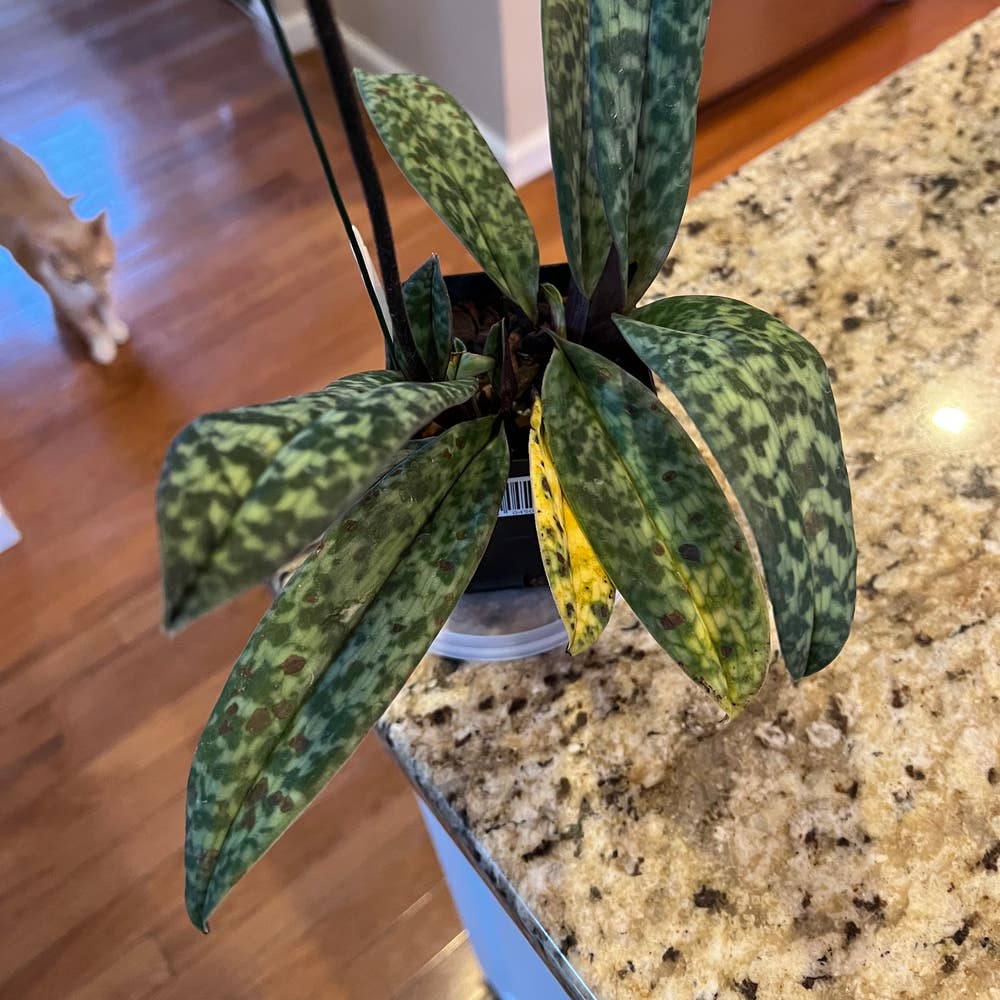
Size, shape, and pattern are your first hints when inspecting brown spots. Tiny speckles could be pest damage, while larger blotches often scream fungal foul play. Look for crispy edges that suggest sunburn or slimy textures hinting at bacterial joyrides.
Recognizing the line between natural aging and disease is key. Aging leaves gracefully sport uniform yellowing, while disease-ridden ones flaunt a chaotic mix of brown with yellow or black halos.
🦠 Common Culprits Behind the Spots
Fungal infections are like uninvited guests at a dinner party, leaving a mess of spots behind. Bacterial infections play it cool with water-soaked lesions, often rimmed with yellow. Meanwhile, environmental stressors are the silent types, causing random spotting from factors like overwatering or sunburn.
Overwatering is a classic blunder, leading to dark, soggy spots lurking on leaf undersides. Conversely, underwatering leaves a trail of dry, rusty patches. It's a delicate balance, much like your morning coffee-to-water ratio.
Fungal Foes: Tackling Fungal Causes of Brown Spots
🍄 Identifying Fungal Infections
Concentric rings or a halo around brown spots on your Paphiopedilum sukhakulii? These are telltale signs of a fungal infection. Unlike the uniform aging of leaves, these patterns indicate an unwanted guest.
Raised or spreading spots are the fungal signature. They're not just blemishes; they're distress signals from your plant. Ignore them, and you might as well RSVP 'yes' to a full-blown fungal takeover.
🦠 Fungicide to the Rescue
When natural remedies fail, it's time for fungicides. Don your safety gear and keep pets and kids away. Follow the label to the letter; fungicides are allies, not party favors. Options like chlorothalonil or mancozeb are your heavy hitters against these invaders.
For a gentler approach, neem oil can be your plant's knight in shining armor. It's effective, yet less harsh than chemical options. But remember, overuse is as unwelcome as a skunk at a picnic.
🛡️ Keeping Fungus at Bay
Prevention is your best defense. Boost air circulation; it's like setting up a no-fly zone for spores. Keep humidity in check with a pebble tray or humidifier, but don't let things get swampy.
Routine inspections are your plant's health checkups. Catch issues early, and you can avoid a full-blown plant ICU situation. And remember, cleanliness is next to godliness; keep those tools sterilized and your plant's environment tidy to keep those fungal party crashers from ever stepping foot in the door.
Bacterial Battles: Addressing Bacterial Causes of Brown Spots
🦠 Spotting Bacterial Infections
Bacterial infections in Paphiopedilum sukhakulii often manifest as water-soaked lesions. These spots may lack the yellow halo typical of fungal infections but can ooze or emit an odor if the infection is advanced. They enter through wounds or natural openings and flourish in warm, moist conditions. Quick identification is vital, as bacteria can rapidly cause extensive damage.
💊 Bactericide: Your Plant's Antibiotic
When bacterial brown spots appear, it's time for bactericides. Copper compounds are a common choice, but use them judiciously to avoid resistance. Always adhere to the label's instructions. Safety gear is non-negotiable when handling these chemicals, as they can be potent.
🛡️ Prevention is Better Than Cure
Preventative measures are crucial. Improve air circulation and ensure proper drainage to make conditions less favorable for bacteria. Avoid overhead watering to prevent moisture accumulation on leaves. Keep your gardening tools pristine and quarantine new plants to prevent the spread of bacteria. Remember, an ounce of prevention is worth a pound of cure.
Environmental Stress: When the Elements Leave Their Mark
🌞 Sunburn and Your Orchid
Sunburn is a common issue for Paphiopedilum sukhakulii, often mistaken for a tan from the tropics. Look for brown patches or a reddish-purple tint on leaves. If your orchid's leaves scream "I've had too much sun," it's time for a shade intervention. Move it to a spot with indirect light, and consider a sheer curtain as a sunblock.
🚰 Water Woes: Over and Underwatering
Watering is not a guessing game. Your orchid's roots despise being soggy or parched. Ensure the top layer of soil is slightly dry before watering again. Early morning is the best time to water, allowing leaves to dry out and avoid a fungal rave. Keep the humidity in check; think comfortable, not a rainforest.
💡 The Right Environment for Your Orchid
Creating an ideal environment is like setting the stage for a stellar performance. Balance is key—moderate temperatures, consistent humidity, and a light breeze for good air circulation. Avoid placing your orchid near vents or drafts. It's not about pampering; it's about providing a stable home where your orchid doesn't have to stress about the elements.
⚠️ Safety First
This content is for general information and may contain errors, omissions, or outdated details. It is not medical, veterinary advice, or an endorsement of therapeutic claims.
Always consult a qualified healthcare professional before using any plant as food, medicine, or supplement.
Never eat any plant (or feed one to pets) without confirming its identity with at least two trusted sources.
If you suspect poisoning, call Poison Control (800) 222-1222, the Pet Poison Helpline (800) 213-6680, or your local emergency service immediately.
Spotted an error? Please report it here.
Keep your orchid's leaves spotless 🌿 with Greg's custom care plans and a community of experts to prevent and treat those pesky brown spots.