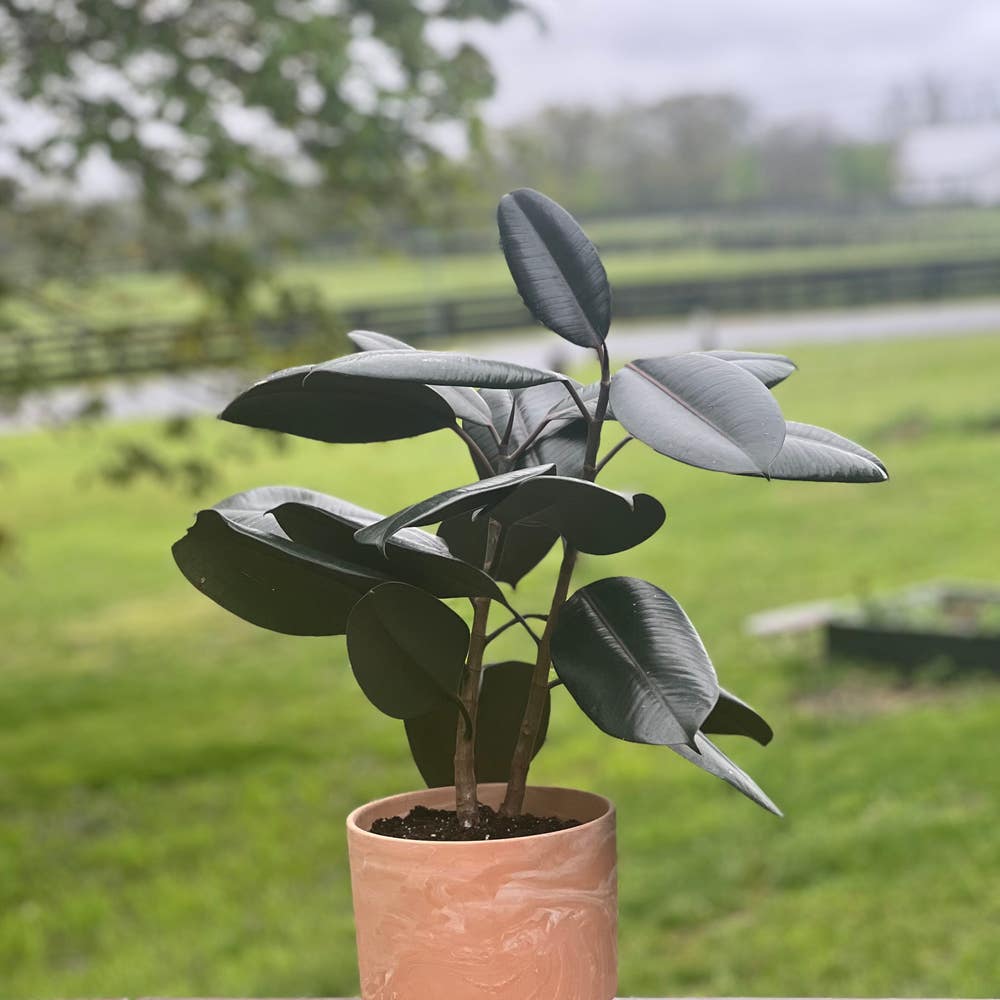
💜 How to Grow Purple Rubber Plant: From Soil to Sun
Ficus elastica 'Burgundy'
By the Greg Editorial Team
Oct 17, 2024•8 min read
This article was created with the help of AI so we can cover more plants for you. May contain errors. See one? Report it here.
Transform your purple rubber plant care 🌱 with expert tips on light, soil, and watering for vibrant growth!
- 🌱 Purple rubber plants thrive in 60°F to 80°F with 40-60% humidity.
- ☀️ Bright, indirect sunlight is ideal; too little light causes discoloration.
- 💧 Water when top inch is dry; adjust for yellowing or wilting leaves.
Choosing the Right Location
🌱 Indoor vs. Outdoor Conditions
When growing a purple rubber plant, the right environment is crucial. For indoor settings, aim for temperatures between 60°F and 80°F, with humidity levels around 40-60% to keep your plant thriving.
Outdoors, consider your hardiness zone. Purple rubber plants prefer warmer climates, so ensure your area doesn’t experience frost. They can adapt to various conditions, but protection from harsh weather is essential.
☀️ Light Requirements
Understanding light conditions is key to a healthy purple rubber plant. These plants thrive in bright, indirect sunlight, but they can tolerate some direct sunlight in moderation.
If your plant's leaves start to discolor or drop, it might be a sign of inadequate light. Watch for slow growth or leggy stems, which indicate your plant is stretching for more light.
By choosing the right location and light conditions, you set the stage for a flourishing purple rubber plant. Next, let’s dive into soil preparation to ensure your plant has the best foundation for growth.
Soil Preparation
Best Soil Types 🌱
When it comes to growing a purple rubber plant, the right soil mix is crucial. Opt for a well-draining potting soil enriched with organic matter to provide essential nutrients.
Ficus elastica thrives in a slightly acidic to neutral pH range of 6.0 to 7.0. Regularly checking pH levels can help ensure your plant's health and growth.
Importance of Drainage 🚰
Poor drainage can lead to serious issues like root rot, which can quickly kill your plant. Ensuring your soil drains well is key to maintaining a healthy root system.
To improve drainage, consider adding perlite or sand to your soil mix. These materials create air pockets that help excess water escape, promoting healthier roots.
With the right soil and drainage, your purple rubber plant will be set up for success. Next, let's explore the best planting techniques to give your plant the best start.
Planting Techniques
🌱 Container vs. Ground Planting
Choosing between container and ground planting for your purple rubber plant can significantly impact its growth. Container growing offers mobility, allowing you to reposition your plant for optimal light and temperature conditions.
On the other hand, ground planting provides more space for root expansion and can enhance stability. However, consider environmental factors like soil quality and drainage when opting for this method.
📏 Depth and Spacing Considerations
When planting, the recommended depth for your purple rubber plant is about 2 to 3 inches below the soil surface. This ensures stability and promotes healthy root development.
For spacing guidelines, if you're planting multiple rubber plants, aim for at least 2 to 3 feet between each one. This spacing allows for adequate airflow and room for growth, preventing overcrowding and potential disease issues.
With these planting techniques in mind, you're well on your way to nurturing a thriving purple rubber plant. Next, let’s dive into the essential aspects of watering and fertilizing to keep your plant healthy and vibrant.
Watering and Fertilizing
💧 Watering Schedule and Techniques
Watering your purple rubber plant is crucial for its health. Generally, you should water when the top inch of soil feels dry, which can vary by season and environment.
For effective watering, consider deep watering rather than surface watering. This encourages roots to grow deeper and promotes a healthier plant.
⚠️ Signs of Overwatering and Underwatering
Recognizing the signs of overwatering and underwatering can save your plant. Yellowing leaves and wilting are common symptoms that indicate your plant may be struggling.
Adjust your watering practices based on these responses. If you notice these signs, reassess your schedule and technique to find the right balance.
🌱 Best Fertilizers
Choosing the right fertilizer can make a significant difference. Balanced NPK fertilizers are great for general use, while organic options can provide a more natural approach.
Some recommended brands include Miracle-Gro and FoxFarm. These formulations can help your rubber plant thrive.
📅 Frequency of Fertilization
Fertilization frequency varies with the seasons. During spring and summer, fertilize every 4-6 weeks, while in fall and winter, you can reduce this to every 8-12 weeks.
Watch for signs of nutrient deficiency, such as leaf color changes or stunted growth. These indicators can guide you in adjusting your fertilization schedule effectively.
With proper watering and fertilizing, your purple rubber plant will flourish, setting the stage for the next crucial step: pruning and maintenance.
Pruning and Maintenance
Pruning Techniques ✂️
Pruning your purple rubber plant is essential for its growth and overall health. The best time to prune is during the growing season, typically in spring or early summer, when the plant is most active.
When pruning, focus on shaping the plant and removing any dead or yellowing leaves. Use clean, sharp scissors to make precise cuts, which helps prevent disease and encourages new growth.
Ongoing Care Routine 🔍
Regular inspections are crucial for keeping your rubber plant healthy. Look for signs of pests or diseases, such as webbing or discolored leaves, and address any issues promptly.
Seasonal care adjustments are also important. As temperatures and light conditions change, be ready to adapt your watering and fertilizing routines to meet your plant's evolving needs.
By staying attentive and proactive, you can ensure your purple rubber plant thrives year-round. This commitment to care will set the stage for the next section, where we’ll tackle common challenges and solutions.
Common Challenges and Solutions
Identifying Common Problems 🌿
Leaf drop can be a distressing sight for any plant parent. This issue often stems from environmental stressors like sudden temperature changes or inadequate watering.
To prevent leaf drop, maintain a stable environment and ensure consistent care. Regularly check your plant's conditions to keep it thriving.
Yellowing leaves are another common concern. They can indicate nutrient deficiencies or improper watering practices.
If you notice yellowing, assess your watering routine and consider fertilizing to replenish nutrients. A little attention can go a long way in restoring your plant's health.
Solutions for Pest Infestations 🐛
Pests can wreak havoc on your purple rubber plant. Common culprits include spider mites and mealybugs, which can be identified by their webbing and cotton-like clusters, respectively.
To combat these pests, consider both organic and chemical treatments. Neem oil and insecticidal soap are effective organic options, while chemical treatments can provide a stronger defense when necessary.
Addressing Environmental Stressors 🌬️
Humidity is crucial for the health of your rubber plant. These plants thrive in environments with humidity levels around 40-60%.
If your home is too dry, consider using a humidifier or placing a tray of water near your plant. This simple adjustment can significantly enhance its growth.
Temperature also plays a vital role in your plant's well-being. Ideally, keep your rubber plant in temperatures between 65°F and 80°F.
Be mindful of drafts or sudden temperature fluctuations, as these can stress your plant. A stable environment is key to keeping it happy and healthy.
With these insights, you can tackle common challenges head-on. Next, let’s explore advanced care techniques to elevate your plant care game.
Advanced Care Techniques
🌱 Propagation Methods
Cuttings: Step-by-Step Guide
Propagating your purple rubber plant through cuttings is a rewarding process. Start by selecting a healthy stem with at least two leaves.
- Cut the Stem: Use a clean, sharp knife to take a 4-6 inch cutting just below a leaf node.
- Prepare the Cutting: Remove the lower leaves to expose the node, which will encourage root growth.
- Rooting Medium: Place the cutting in a glass of water or a pot with well-draining soil.
- Wait for Roots: If using water, change it weekly. Roots should develop in 2-4 weeks. If using soil, keep it moist but not soggy.
Air Layering: Techniques and Timing
Air layering is a more advanced method that can yield impressive results. This technique is best done in spring or early summer when the plant is actively growing.
- Select a Branch: Choose a healthy branch and make a small upward cut about one-third through the stem.
- Wrap with Moist Sphagnum Moss: Cover the cut with moist moss and wrap it in plastic to retain moisture.
- Wait for Roots: In 4-6 weeks, roots should form. Once established, cut below the new roots and pot it up.
🌿 Tips for Encouraging Bushier Growth
Pinching and Pruning Techniques
To achieve a bushier rubber plant, regular pinching and pruning are essential. Pinch back the tips of new growth to encourage branching.
- Timing: Prune during the growing season for the best results.
- Technique: Use clean scissors to remove the top inch of each stem, promoting lateral growth.
Importance of Light and Nutrients
Adequate light and nutrients are crucial for bushiness. Ensure your plant receives bright, indirect sunlight and consider using a balanced fertilizer during the growing season.
🍂 Seasonal Considerations
Adjusting Care Routines
As seasons change, so should your care routine. In spring and summer, increase watering and fertilization, while in fall and winter, reduce both.
- Monitor Conditions: Keep an eye on temperature and humidity, adjusting as necessary.
Preparing Plants for Winter
If your rubber plant is outdoors, transition it indoors before the first frost. For indoor plants, reduce watering and ensure they are in a well-lit area to combat the winter blues.
With these advanced care techniques, your purple rubber plant will thrive and grow beautifully. Next, let’s explore common challenges and solutions to keep your plant healthy and vibrant.
⚠️ Safety First
This content is for general information and may contain errors, omissions, or outdated details. It is not medical, veterinary advice, or an endorsement of therapeutic claims.
Always consult a qualified healthcare professional before using any plant as food, medicine, or supplement.
Never eat any plant (or feed one to pets) without confirming its identity with at least two trusted sources.
If you suspect poisoning, call Poison Control (800) 222-1222, the Pet Poison Helpline (800) 213-6680, or your local emergency service immediately.
Spotted an error? Please report it here.
Transform your Purple Rubber Plant into a lush masterpiece 🌿 with Greg's tailored watering alerts and expert care tips that keep your plant thriving in its ideal environment!