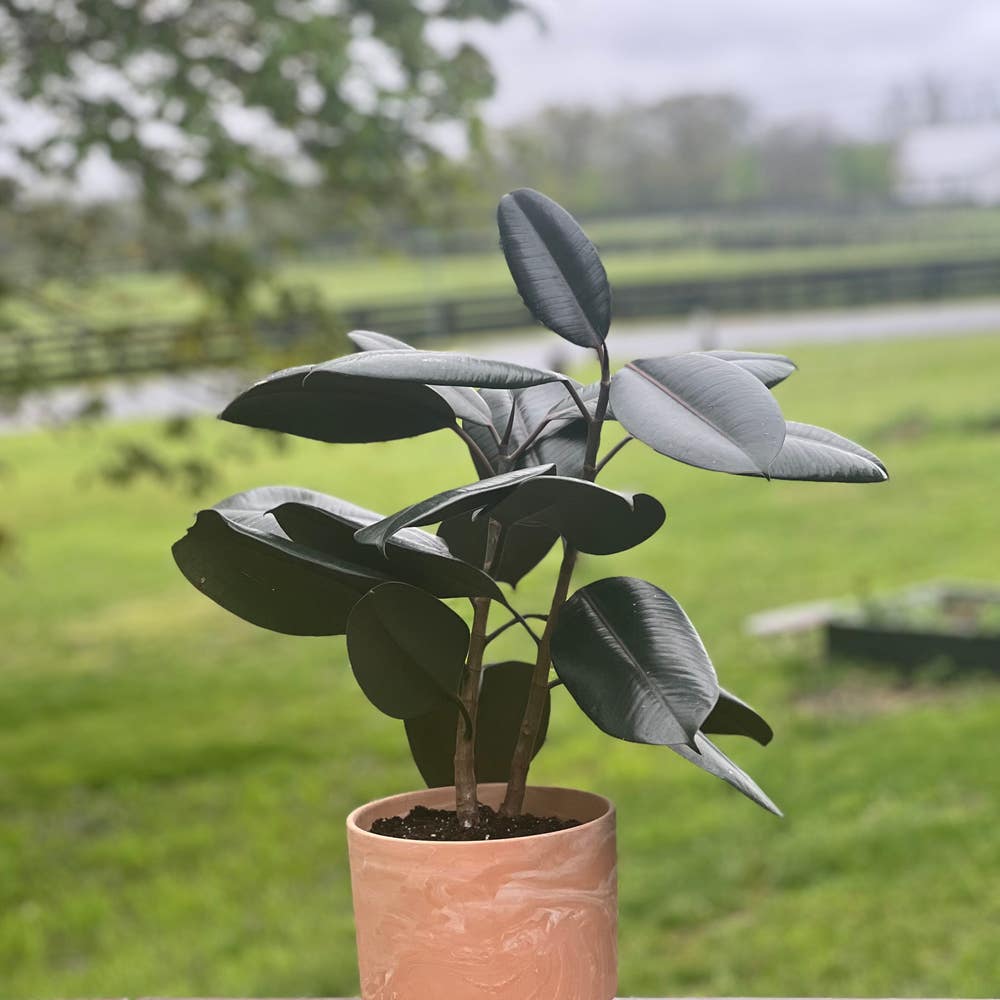
💜 Ultimate Guide to Fertilizing Purple Rubber Plant
Ficus elastica 'Burgundy'
By the Greg Editorial Team
Oct 17, 2024•5 min read
This article was created with the help of AI so we can cover more plants for you. May contain errors. See one? Report it here.
Unlock your purple rubber plant's full potential 🌱 with expert fertilization tips for vibrant growth and health!
- 🌱 Fertilize in spring and summer for optimal growth; reduce in fall and winter.
- 💧 Water before fertilizing to enhance nutrient absorption and prevent leaf burn.
- ⚖️ Balance is key; more fertilizer doesn't equal faster growth—avoid nutrient burn.
Fertilization Schedule
🌱 Seasonal Guidelines
Spring is the time to kick off your fertilization routine as your purple rubber plant wakes up from its winter dormancy. Start applying fertilizer when you notice new growth, signaling that the plant is ready to thrive.
As summer rolls in, keep up with regular fertilization to support the active growth phase. This is when your plant is most hungry for nutrients, so don’t hold back!
When fall arrives, it’s time to gradually reduce your fertilization efforts. The plant's growth will slow down, and it won’t need as many nutrients.
During winter, minimal to no fertilization is necessary. Your purple rubber plant is in dormancy, and it’s best to let it rest.
📅 Frequency
A general guideline for fertilizing your purple rubber plant is every 4-6 weeks during the growing season. However, always adjust the frequency based on how your plant responds and its growth rate.
If you notice your plant thriving, you might consider sticking to the upper end of that range. Conversely, if growth seems sluggish, it may be time to cut back.
🌿 Adjusting Based on Growth Stage
For young plants, use lower nutrient concentrations to avoid overwhelming them. They’re still establishing roots and need a gentler touch.
Mature plants, on the other hand, have increased nutrient needs during their active growth phase. Be ready to provide them with the extra boost they crave.
If you’ve just repotted your plant, hold off on fertilization for 4-6 weeks. This allows the roots to recover and settle into their new environment.
With these guidelines in mind, you’re well-equipped to create a tailored fertilization schedule that meets your purple rubber plant’s unique needs. Next, let’s explore the best application techniques to ensure those nutrients reach your plant effectively.
Application Techniques
🌱 How to Apply Liquid Fertilizer
Applying liquid fertilizer is straightforward and effective.
- Dilution: Always follow the package instructions for the correct dilution ratios to avoid harming your plant.
- Application Method: Use a watering can or spray bottle for even distribution across the soil.
- Timing: The best times to apply are during the morning or late afternoon to prevent leaf burn from the sun.
⏳ Using Slow-Release Fertilizer
Slow-release fertilizers offer a convenient way to nourish your purple rubber plant over time.
- Application Method: Mix the fertilizer into the top layer of soil to ensure it integrates well.
- Timing: Apply it once at the beginning of the growing season for optimal results.
- Duration: These fertilizers release nutrients gradually, providing nourishment for several months.
📈 Best Practices
Implementing best practices can enhance your fertilization efforts.
- Watering Before Application: Water your plant before applying fertilizer to ensure even nutrient absorption.
- Avoiding Direct Contact with Leaves: Keep fertilizer off the leaves to prevent burn and damage.
- Monitoring Plant Response: Keep an eye on how your plant reacts and adjust future applications based on its growth and health.
By following these application techniques, you can ensure your purple rubber plant receives the nutrients it needs to thrive. Next, let’s dive into troubleshooting common fertilization issues to keep your plant healthy and vibrant.
Troubleshooting Fertilization Issues
🌱 Common Problems
Fertilization can sometimes lead to unexpected issues. Two common problems are nutrient lockout and soil salinity.
Nutrient Lockout
Nutrient lockout occurs when plants can't absorb nutrients, even if they are present in the soil. Symptoms include yellowing leaves, stunted growth, and leaf drop. This often results from imbalanced pH levels or excessive salts in the soil.
Soil Salinity
High soil salinity can also hinder plant growth. Signs include brown leaf tips and a crusty surface on the soil. To prevent this, ensure proper watering and avoid over-fertilization.
💧 Solutions for Over-Fertilization
If you suspect over-fertilization, there are effective solutions to restore your plant's health.
Flushing the Soil
Flushing the soil is a straightforward process. Follow these steps:
- Water Generously: Use plain water to saturate the soil, allowing excess salts to leach out.
- Drain Thoroughly: Ensure good drainage to prevent waterlogging.
- Repeat if Necessary: You may need to flush several times to fully remove excess salts.
Adjusting Future Practices
To avoid future issues, reduce the frequency and concentration of your fertilizer applications. Monitor your plant's response closely and adjust as needed.
🥦 Addressing Nutrient Deficiencies
Identifying and correcting nutrient deficiencies is crucial for a thriving purple rubber plant.
Identifying Specific Deficiencies
Conduct soil testing to pinpoint deficiencies. Visual symptoms can also guide you; for instance, yellowing leaves may indicate nitrogen deficiency, while purple hues can signal phosphorus issues.
Corrective Measures
Once you've identified the deficiency, consider targeted fertilization or soil amendments. This tailored approach ensures your plant receives the specific nutrients it needs to flourish.
By understanding these common issues and solutions, you can keep your purple rubber plant healthy and vibrant. Next, let’s explore some myths and misconceptions surrounding fertilization practices.
Myths and Misconceptions
Common Myths 🌱
Many plant enthusiasts believe that "more fertilizer equals faster growth." This is a misconception; balance is key. Over-fertilizing can lead to nutrient burn, harming your purple rubber plant rather than helping it thrive.
Another common myth is that "all fertilizers are the same." In reality, fertilizers vary widely in formulation, nutrient ratios, and release methods. Understanding these differences is crucial for effective plant care.
Clarifying Misunderstandings 🔍
A frequent misunderstanding revolves around seasonal needs. Many gardeners neglect to adjust fertilization throughout the year, which can hinder plant health. Each season brings different growth patterns, and your fertilization strategy should reflect that.
Additionally, not all purple rubber plants have the same nutrient requirements. Different varieties may need tailored care, so it's essential to recognize their unique needs for optimal growth.
By debunking these myths and clarifying misunderstandings, you can foster a healthier environment for your purple rubber plant. Next, let’s explore effective application techniques to ensure your plant gets the nutrients it needs.
⚠️ Safety First
This content is for general information and may contain errors, omissions, or outdated details. It is not medical, veterinary advice, or an endorsement of therapeutic claims.
Always consult a qualified healthcare professional before using any plant as food, medicine, or supplement.
Never eat any plant (or feed one to pets) without confirming its identity with at least two trusted sources.
If you suspect poisoning, call Poison Control (800) 222-1222, the Pet Poison Helpline (800) 213-6680, or your local emergency service immediately.
Spotted an error? Please report it here.
Fertilizing your purple rubber plant at the right times is essential for lush growth 🌿, and with Greg's tailored reminders and expert tips, you can nurture your plant to its fullest potential all year round!