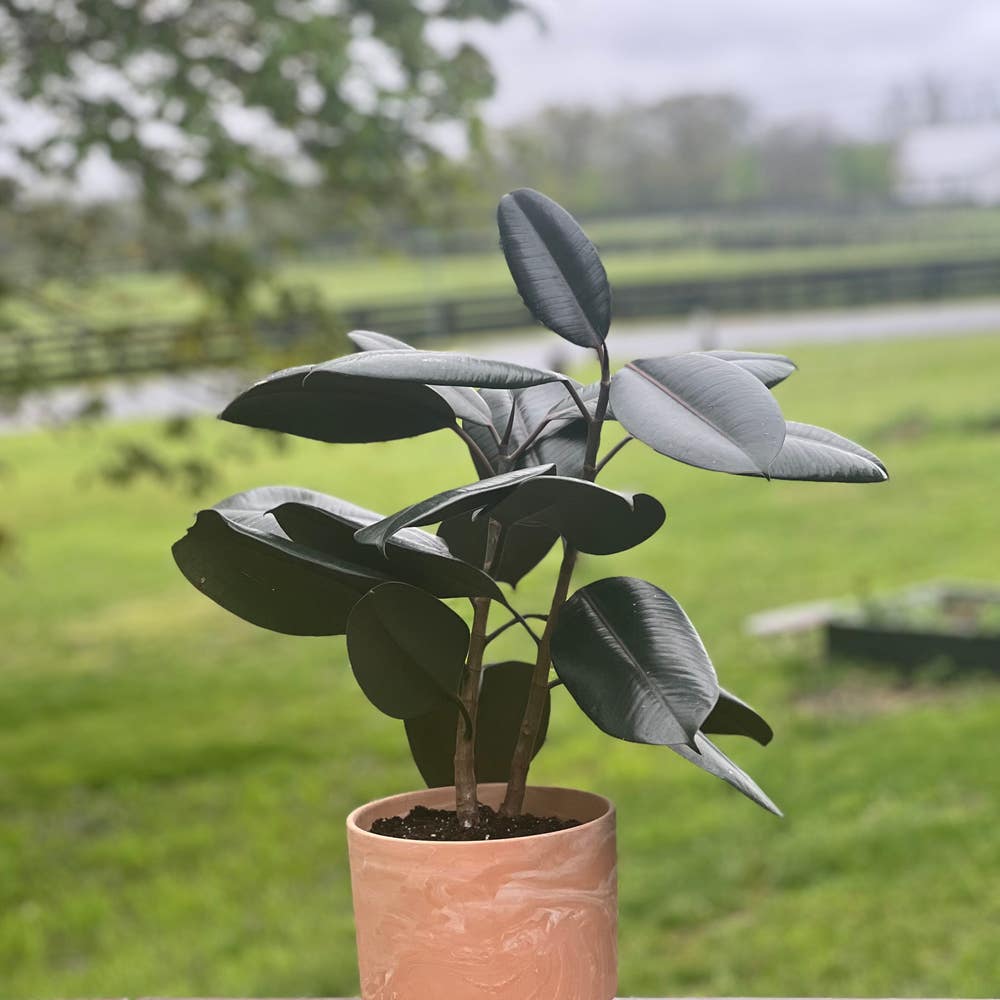
Reasons Purple Rubber Plant Leaves Turn Yellow 🍃
Ficus elastica 'Burgundy'
By the Greg Editorial Team
Oct 17, 2024•6 min read
This article was created with the help of AI so we can cover more plants for you. May contain errors. See one? Report it here.
Transform your purple rubber plant's health by tackling yellowing leaves with expert diagnosis and care! 🌿
- 🌱 Yellow leaves indicate issues like overwatering, underwatering, or nutrient deficiencies.
- 🐛 Pests like spider mites can cause yellowing; regular inspections are essential.
- ☀️ Bright, indirect sunlight is crucial; insufficient light leads to yellowing leaves.
Causes of Yellowing Leaves
💧 Overwatering and Its Effects
Overwatering is a common culprit behind yellowing leaves in purple rubber plants. Symptoms include yellowing, particularly of the lower leaves, wilting even when the soil is wet, and mushy roots upon inspection.
Proper soil drainage is crucial to prevent waterlogging. A recommended soil mix consists of 50% potting soil, 30% perlite, and 20% orchid bark to ensure your plant thrives.
🌵 Underwatering and Its Symptoms
Underwatering can also lead to yellowing leaves, especially in older foliage. Look for crispy, dry leaf edges and premature leaf drop as key indicators.
To maintain optimal moisture, check the soil weekly and water when the top inch feels dry. This simple practice can make a significant difference in your plant's health.
🥦 Nutrient Deficiencies
Nitrogen Deficiency
A nitrogen deficiency manifests as general yellowing of older leaves and stunted growth. To remedy this, use a balanced fertilizer rich in nitrogen during the growing season.
Iron Deficiency
Iron deficiency presents as yellowing between leaf veins, known as interveinal chlorosis, often affecting new growth first. Applying iron chelate or a fertilizer high in iron can help restore your plant's vibrant color.
🕷️ Pest Infestations
Spider Mites
Spider mites can wreak havoc on your rubber plant. Signs of infestation include fine webbing on leaves and yellow spots or speckling.
To control spider mites, increase humidity and consider using insecticidal soap for effective treatment.
Mealybugs
Mealybugs are another pest to watch for, identifiable by cotton-like clusters on stems and leaf joints. They can cause yellowing and wilting leaves.
Manual removal with a cotton swab dipped in alcohol is an effective way to combat these pests.
🌡️ Environmental Stress
Temperature Sensitivity
Purple rubber plants thrive in temperatures between 60°F to 80°F (15°C to 27°C). Exposure to cold drafts or excessive heat can lead to yellowing leaves.
Humidity Requirements
These plants prefer humidity levels of 40-60%. Low humidity can cause leaf curling and yellowing, so maintaining the right environment is key to their health.
Understanding these causes of yellowing leaves can help you take proactive steps in caring for your purple rubber plant. Next, we’ll explore how to diagnose the specific issues affecting your plant.
Diagnosing the Problem
Identifying Signs of Overwatering 🌊
Overwatering is a common issue for purple rubber plants. Check for soggy soil and root rot, which can manifest as mushy roots when inspected.
Look for yellowing leaves, especially at the base. This is often the first visible sign that your plant is drowning.
Recognizing Underwatering Symptoms 💧
Underwatering can also lead to yellowing leaves. Inspect the soil; if it feels dry and the leaf edges are crispy, your plant is likely thirsty.
Monitor for leaf drop, as this can indicate that your rubber plant is not getting enough water.
Checking for Pests and Diseases 🐛
Regular inspections are crucial for maintaining plant health. Check leaves and stems for pests like spider mites or mealybugs.
Look for signs of disease, such as spots or mold, which can also contribute to yellowing leaves.
Assessing Light Conditions ☀️
Light plays a vital role in your plant's health. The ideal light for a purple rubber plant is bright, indirect sunlight.
If your plant is stretching towards a light source or showing yellowing leaves, it may not be getting enough light.
By diagnosing these issues, you can take the necessary steps to restore your purple rubber plant's vibrancy. Next, let’s explore effective solutions and treatments to address these problems.
Solutions and Treatments
🌊 Adjusting Watering Practices
Determine the Correct Watering Schedule: Water your purple rubber plant when the top inch of soil feels dry. This helps prevent both overwatering and underwatering.
Use Pots with Drainage Holes: Always choose pots that allow excess water to escape. This is crucial for avoiding waterlogged soil.
Monitor Soil Moisture: Consider using a moisture meter to keep track of soil conditions. This tool can help you avoid guesswork in your watering routine.
🌱 Fertilizing for Nutrient Deficiencies
Apply a Balanced Fertilizer: During the growing season, fertilize every 4-6 weeks with a balanced fertilizer. This ensures your plant receives essential nutrients.
Use Slow-Release Fertilizer: For a consistent nutrient supply, opt for slow-release fertilizers. They gradually feed your plant, promoting steady growth.
🐛 Pest Control Methods
Regularly Inspect Plants: Make it a habit to check your rubber plant for pests. Early detection is key to effective treatment.
Use Neem Oil or Insecticidal Soap: These are effective options for managing pest infestations. They help keep your plant healthy without harsh chemicals.
🌤️ Improving Environmental Conditions
Adjust Light Exposure: If your plant isn’t thriving, consider moving it to a brighter location. Adequate light is essential for vibrant leaves.
Increase Humidity: To boost humidity, use a humidifier or place a pebble tray filled with water near your plant. This creates a more favorable environment.
By implementing these solutions, you can help your purple rubber plant recover and thrive. Next, let’s explore preventative measures to keep your plant healthy in the long run.
Preventative Measures
Best Practices for Watering 🌊
Always check the soil moisture before watering your purple rubber plant. This simple step can prevent overwatering, which is a common cause of yellowing leaves.
Using room temperature water is also crucial. Cold water can shock the plant, leading to stress and further yellowing.
Soil Selection and Drainage Tips 🕳️
Choosing a well-draining potting mix is essential for your plant's health. A mix that allows excess water to escape will help prevent root rot.
Ensure your pots have adequate drainage holes. This allows for proper airflow and prevents water from pooling at the bottom.
Regular Inspection for Pests 🐛
Conduct weekly checks for signs of pests or disease. Early detection can save your plant from severe damage.
Keeping leaves clean by wiping them with a damp cloth not only improves appearance but also helps prevent pest infestations.
Optimal Placement for Light and Temperature ☀️
Place your rubber plant in a location with bright, indirect sunlight. This ensures it receives the light it needs without the risk of sunburn.
Avoid drafts and extreme temperature fluctuations. Consistent conditions will help your plant thrive and maintain its vibrant color.
By following these preventative measures, you can create a healthy environment for your purple rubber plant. This proactive approach will help you enjoy lush, green leaves and minimize the risk of yellowing.
Next, let’s explore how to monitor your plant's health effectively.
Monitoring Plant Health
🌱 Signs of Recovery
After addressing the issues causing yellowing leaves, look for signs of recovery. New growth is a promising indicator, as is the return of vibrant green leaves.
🌿 When to Repot or Change Soil
Repot your purple rubber plant every 1-2 years or when it becomes root-bound. Additionally, change the soil if it becomes compacted or retains too much moisture, as this can hinder root health.
🛠️ Long-Term Care Strategies for Healthy Leaves
To maintain healthy leaves, establish a consistent watering and feeding schedule. Regularly rotate your plant to ensure even light exposure and keep an eye on environmental conditions for stability.
By monitoring these aspects, you can foster a thriving purple rubber plant that remains vibrant and healthy. Next, let’s explore preventative measures to keep your plant in top shape.
⚠️ Safety First
This content is for general information and may contain errors, omissions, or outdated details. It is not medical, veterinary advice, or an endorsement of therapeutic claims.
Always consult a qualified healthcare professional before using any plant as food, medicine, or supplement.
Never eat any plant (or feed one to pets) without confirming its identity with at least two trusted sources.
If you suspect poisoning, call Poison Control (800) 222-1222, the Pet Poison Helpline (800) 213-6680, or your local emergency service immediately.
Spotted an error? Please report it here.
Revive your purple rubber plant's vibrant leaves 🌿 by using Greg's tailored care reminders and pest control tips to keep it thriving and healthy!