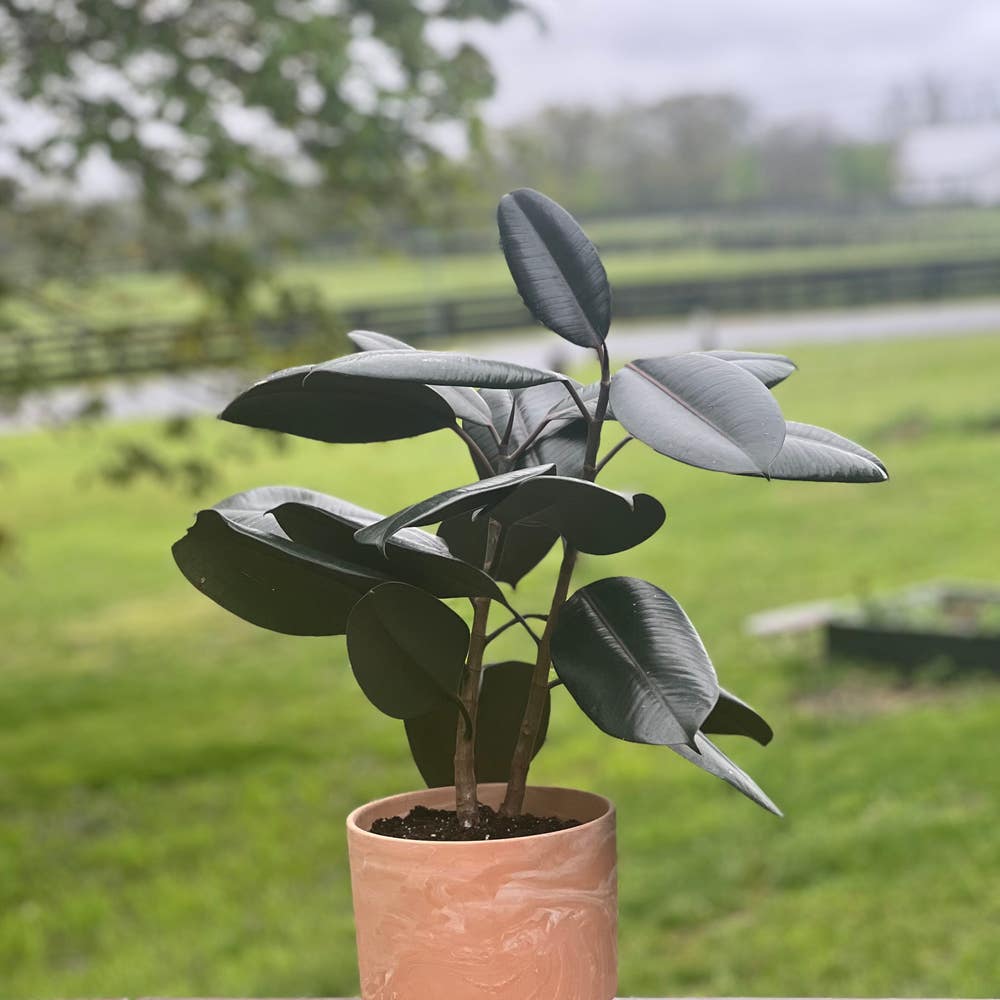
Ficus 'Burgundy' Care: Preventing and Treating Root Rot 💧
Ficus elastica 'Burgundy'
By the Greg Editorial Team
Jan 08, 2025•4 min read
This article was created with the help of AI so we can cover more plants for you. May contain errors. See one? Report it here.
Rescue your Ficus 'Burgundy' from root rot with these quick tips for diagnosis and recovery! 🌿
- 🌱 Early detection of root rot is crucial for Ficus 'Burgundy' health.
- 🚨 Signs include yellowing leaves and foul odors; act quickly to save your plant!
- 🧪 Inspect roots regularly; healthy ones are white and firm, not brown and mushy.
Diagnosing Root Rot
🟡 Signs and symptoms of root rot
Detecting root rot early is crucial for the health of your Ficus 'Burgundy'. Look out for yellowing leaves, which often signal stress and nutrient deficiencies.
Wilting, even when you've watered adequately, is another key indicator of root health issues. If you notice a foul odor, it could mean decaying roots are present, signaling a serious problem.
🔍 How to check for root rot (visual inspection)
Diagnosing root rot involves a straightforward visual inspection. Start by gently removing the plant from its pot.
Next, inspect the roots closely. Healthy roots should be white and firm, while brown, mushy roots indicate rot.
Don't forget to check the soil as well; assess its moisture levels and texture to understand the overall health of your plant.
📊 Importance of root health monitoring
Regular checks on your Ficus 'Burgundy' can save it from severe damage. Establishing a routine for inspecting root health helps catch issues before they escalate.
Early detection is key. By monitoring your plant's roots, you can intervene promptly and keep your Ficus thriving.
With these steps, you’re well on your way to ensuring your plant remains healthy and vibrant. Next, let’s explore how to prevent root rot from occurring in the first place.
Preventing Root Rot
🌊 Best practices for watering Ficus 'Burgundy'
Watering your Ficus 'Burgundy' correctly is crucial to preventing root rot. Aim to let the top inch of soil dry out before you water again; this helps maintain a healthy moisture balance.
Be vigilant for signs of overwatering. If your plant's leaves start to yellow or droop despite regular watering, it may be time to adjust your watering frequency.
🪴 Choosing the right potting mix and container
Selecting the right potting mix is essential for your plant's health. Opt for well-draining, lightweight soil blends that allow excess moisture to escape easily.
Container choice also plays a significant role. Ensure your pot is appropriately sized and made from breathable materials to support healthy root development.
🚰 Importance of drainage holes and soil aeration
Proper drainage is non-negotiable when it comes to preventing root rot. Always use pots with adequate drainage holes to allow excess water to escape.
Additionally, consider soil aeration techniques. Mixing in perlite or sand can significantly improve drainage, ensuring your Ficus 'Burgundy' thrives in a well-oxygenated environment.
By following these best practices, you can create an optimal growing environment that minimizes the risk of root rot. Next, let’s explore how to treat root rot effectively if it does occur.
Treating Root Rot
Step-by-step guide to treating root rot 🌱
Treating root rot in your Ficus 'Burgundy' requires careful attention. Start by gently removing the plant from its pot to inspect the roots.
Next, trim away any affected roots, cutting back to healthy tissue. This step is crucial to prevent the spread of rot.
Disinfect your tools with alcohol or bleach to avoid introducing further infection. Clean tools are essential for a successful recovery.
Finally, repot your plant in fresh, dry potting mix. This new environment will help promote healthy root growth.
How to repot a Ficus 'Burgundy' with root rot 🪴
When repotting, choose a new pot that has adequate drainage holes. Proper drainage is vital for preventing future root rot.
Fill the pot with an appropriate potting mix that promotes drainage. A well-draining environment is key to your plant's recovery.
Position the plant carefully, ensuring the roots are spread out and not compacted. This allows for better air circulation and root health.
Recommended fungicides and treatments 💊
Consider using fungicides to treat any lingering fungal infections. There are various types available, each designed for specific issues.
Follow the label instructions for effective application methods. Proper application is crucial for the success of your treatment.
By taking these steps, you can help your Ficus 'Burgundy' recover from root rot and thrive once again. Next, let’s explore how to care for your plant post-treatment to ensure lasting health.
Post-Treatment Care
Care tips after treating root rot 🌱
After addressing root rot, it's crucial to adjust your watering schedule. Allow the soil to dry out more thoroughly between waterings to prevent future issues.
Additionally, provide optimal light conditions for your Ficus 'Burgundy'. Bright, indirect light will support recovery and encourage healthy growth.
Monitoring recovery and signs of improvement 👀
Keep an eye out for new growth, as this is a positive indicator of successful treatment. Regular inspections will help you catch any signs of recurring issues early.
Adjusting care routine to prevent recurrence 🔄
Developing a consistent long-term watering strategy is essential. Stick to a schedule that allows the top inch of soil to dry out before watering again.
Consider making environmental adjustments as well. Improving air circulation and humidity levels can significantly benefit your plant's overall health and resilience.
By following these post-treatment care tips, you can help your Ficus 'Burgundy' thrive and prevent root rot from becoming a recurring problem.
⚠️ Safety First
This content is for general information and may contain errors, omissions, or outdated details. It is not medical, veterinary advice, or an endorsement of therapeutic claims.
Always consult a qualified healthcare professional before using any plant as food, medicine, or supplement.
Never eat any plant (or feed one to pets) without confirming its identity with at least two trusted sources.
If you suspect poisoning, call Poison Control (800) 222-1222, the Pet Poison Helpline (800) 213-6680, or your local emergency service immediately.
Spotted an error? Please report it here.
Keep your Ficus 'Burgundy' thriving 🌱 by using Greg's tailored watering reminders and care tips to prevent root rot and promote healthy growth!