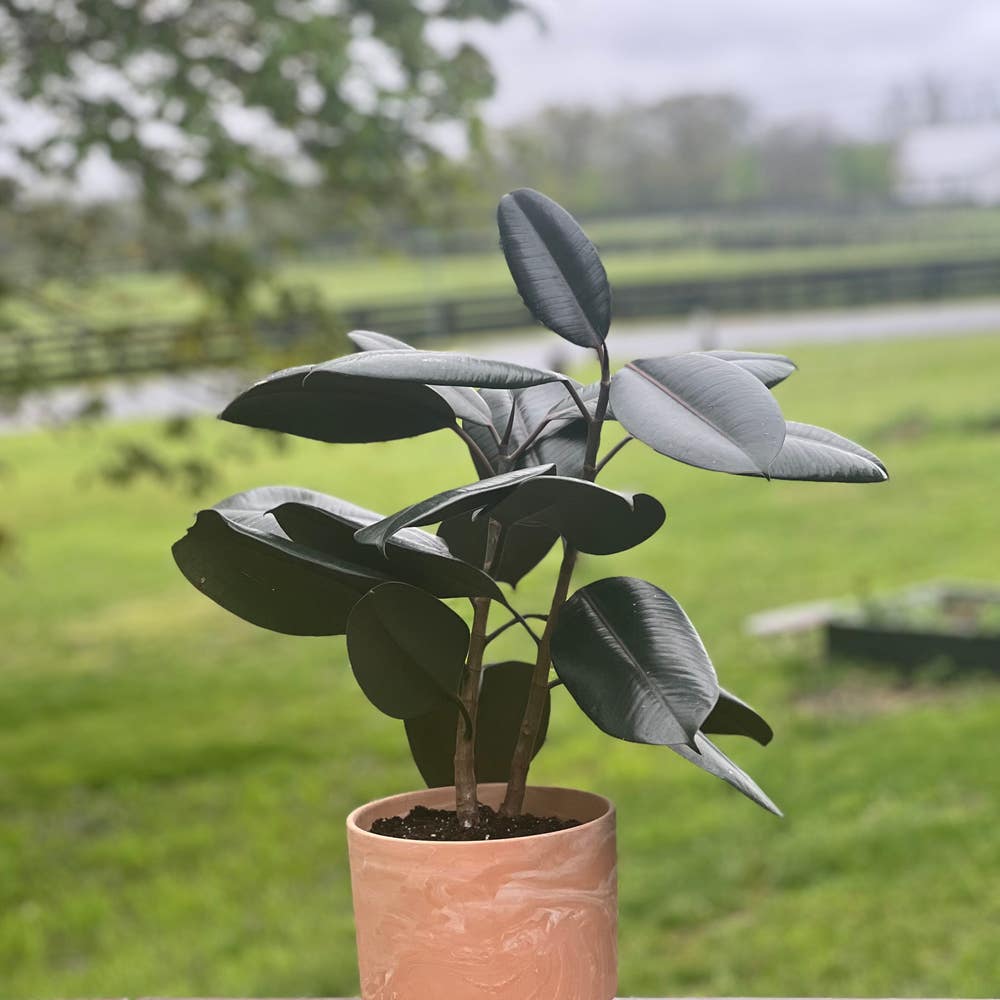
🍃 Ultimate Guide to Fixing Curling Leaves on Ficus 'Burgundy'
Ficus elastica 'Burgundy'
By the Greg Editorial Team
Jan 08, 2025•5 min read
This article was created with the help of AI so we can cover more plants for you. May contain errors. See one? Report it here.
Revive your curling Ficus 'Burgundy' leaves 🌱 with these essential care tips for vibrant growth and health!
- 🌱 Curling leaves indicate issues like overwatering, underwatering, pests, or nutrient deficiencies.
- 🐜 Common pests like spider mites and aphids cause significant leaf curling on Ficus 'Burgundy'.
- 💧 Regularly check soil moisture to prevent curling leaves from overwatering or underwatering.
Causes of Curling Leaves
💧 Overwatering and Its Effects
Overwatering is a common issue that can lead to curling leaves on your Ficus 'Burgundy'. Symptoms include yellowing leaves, soft and mushy roots, and even leaf drop.
When the roots are submerged in excess water, they suffocate, leading to nutrient uptake problems. This environment can also foster fungal infections, further exacerbating leaf curl.
🚰 Underwatering and Dehydration Symptoms
On the flip side, underwatering can also cause significant leaf curling. Look for signs like crispy, dry leaf edges, inward curling, and wilting or drooping leaves.
Insufficient water creates dehydration stress, impairing the plant's ability to photosynthesize and transport nutrients effectively. This imbalance can lead to a decline in overall plant health.
🐜 Pest Infestations
Common Pests
Pest infestations can wreak havoc on your Ficus 'Burgundy', causing leaves to curl and discolor.
- Spider mites: Look for fine webbing and stippled leaves, which indicate damage and can lead to severe leaf curling.
- Aphids: These pests leave a sticky residue and distort leaves, weakening the plant's vigor.
🍽️ Nutrient Deficiencies
Key Nutrients
Nutrient deficiencies can also contribute to curling leaves.
- Nitrogen deficiency: Symptoms include yellowing leaves and stunted growth, signaling that your plant isn't getting enough essential nutrients.
- Potassium deficiency: This manifests as leaf curling and browning at the edges, indicating a need for balanced nutrition.
Understanding these causes is crucial for maintaining the health of your Ficus 'Burgundy'. By addressing overwatering, underwatering, pests, and nutrient deficiencies, you can prevent curling leaves and promote vibrant growth.
Diagnosing Curling Leaves
Identifying Symptoms 🌿
Curling leaves can signal various issues with your Ficus 'Burgundy'. Understanding the type of curl is crucial for diagnosis.
- Inward curling typically indicates underwatering. This is when the leaves curl towards the stem, signaling that the plant is desperate for moisture.
- Outward curling may suggest overwatering or pest problems. Leaves curling away from the stem can indicate that the roots are struggling or that pests are at play.
Differentiating Between Causes 🔍
To effectively diagnose the problem, you need to differentiate between overwatering and underwatering.
- Check soil moisture levels: Use a moisture meter or simply stick your finger into the soil. If the top 1-2 inches are dry, it’s time to water.
- Observe root health: Inspect the roots for signs of rot or dryness. Healthy roots should be firm and white, while rotten roots appear mushy and brown.
Recognizing Pest Damage 🐛
Pests can wreak havoc on your Ficus 'Burgundy', leading to curling leaves. A visual inspection is essential for early detection.
- Look for webs, which are a telltale sign of spider mites.
- Check for sticky residue or visible insects, which may indicate aphid infestations. Early identification can save your plant from severe damage.
By carefully observing these symptoms and signs, you can pinpoint the cause of curling leaves and take appropriate action. Next, let’s explore effective solutions to restore your plant’s health.
Solutions for Curling Leaves
🌊 Adjusting Watering Practices
Establishing a proper watering schedule is crucial for your Ficus 'Burgundy.' Water when the top 1-2 inches of soil feel dry, ensuring the roots receive adequate moisture without becoming waterlogged.
When you water, do so thoroughly until excess drains from the pot. This method promotes healthy root growth and prevents issues related to both overwatering and underwatering.
💧 Improving Humidity Levels
Humidity plays a significant role in the health of your plant. To increase humidity, consider using a humidifier or placing a pebble tray filled with water near your Ficus.
Another effective strategy is to group your plants together. This creates a microclimate that can help maintain higher humidity levels, benefiting all your greenery.
🐛 Treating Pest Infestations
Treatment Options
If pests are the culprit behind curling leaves, prompt action is essential. For minor infestations, organic treatments like neem oil or insecticidal soap can effectively target spider mites and aphids.
In cases of severe infestations, systemic insecticides may be necessary. These options work from within the plant, providing a more comprehensive solution to pest problems.
🌱 Fertilizing for Nutrient Deficiencies
Nutrient deficiencies can also lead to leaf curling. A balanced NPK fertilizer, such as 10-10-10, is recommended during the growing season to provide essential nutrients.
Apply fertilizer every 4-6 weeks during active growth. This regular feeding helps ensure your Ficus receives the nutrients it needs to thrive.
✂️ Pruning Affected Leaves
Pruning is a straightforward way to encourage new growth. Remove severely curled or damaged leaves to help your plant redirect energy toward healthier foliage.
Make sure to use clean, sharp pruning shears for the best results. This simple step can significantly improve the overall appearance and health of your Ficus 'Burgundy.'
With these solutions in place, your Ficus will be on the path to recovery. Next, let’s explore preventative measures to keep your plant healthy and thriving.
Preventative Measures
Best Practices for Care 🌱
To keep your Ficus 'Burgundy' thriving, regularly check the soil moisture. Adjust your watering schedule based on the plant's needs to prevent both overwatering and underwatering.
Maintaining consistent temperature and humidity levels is crucial. Aim for a stable environment that mimics the plant's natural habitat for optimal growth.
Ideal Environmental Conditions ☀️
Your Ficus 'Burgundy' loves bright, indirect light. Avoid placing it in direct sunlight, as this can scorch the leaves and lead to curling.
Temperature and humidity are also key. Keep your plant in a warm spot with humidity levels that suit its tropical origins, ideally between 60-75°F and 40-60% humidity.
Regular Monitoring for Pests 🐛
Conduct weekly inspections for any signs of pests or disease. Early detection is vital to prevent infestations from taking hold.
Implement early intervention strategies, such as isolating affected plants or using organic treatments, to keep your Ficus healthy and pest-free.
By following these preventative measures, you can help your Ficus 'Burgundy' flourish and avoid the common issue of curling leaves. Next, let’s explore effective solutions for addressing curling leaves when they do occur.
⚠️ Safety First
This content is for general information and may contain errors, omissions, or outdated details. It is not medical, veterinary advice, or an endorsement of therapeutic claims.
Always consult a qualified healthcare professional before using any plant as food, medicine, or supplement.
Never eat any plant (or feed one to pets) without confirming its identity with at least two trusted sources.
If you suspect poisoning, call Poison Control (800) 222-1222, the Pet Poison Helpline (800) 213-6680, or your local emergency service immediately.
Spotted an error? Please report it here.
Keep your Ficus 'Burgundy' thriving 🌱 by using Greg's tailored watering schedules and pest control tips to prevent curling leaves and promote vibrant growth!