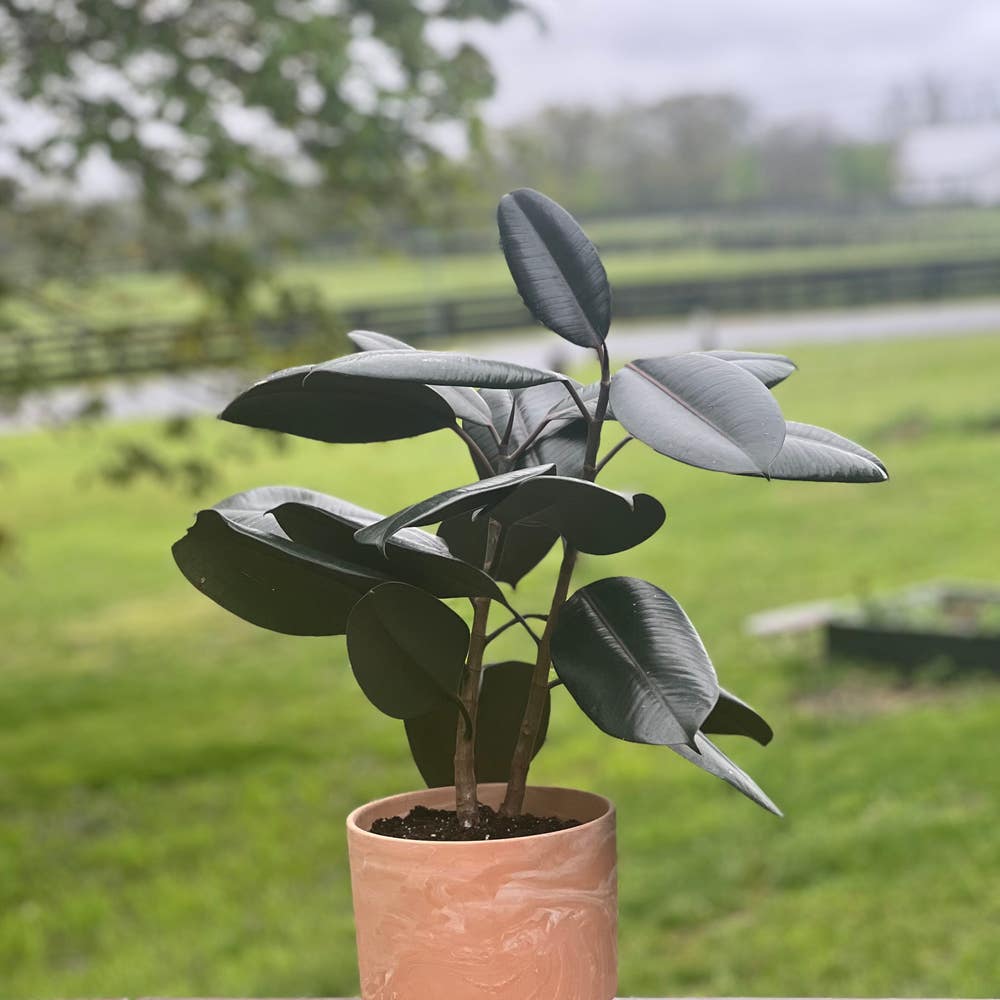
Managing Black Spots on Your Ficus 'Burgundy' Leaves ⚫
Ficus elastica 'Burgundy'
By the Greg Editorial Team
Jan 08, 2025•5 min read
This article was created with the help of AI so we can cover more plants for you. May contain errors. See one? Report it here.
Transform your Ficus 'Burgundy' from struggling to thriving with expert tips on diagnosing and treating black spots! 🌿✨
- 🦠 Identify infections: Fungal shows yellow halos; bacterial has water-soaked spots.
- 🌱 Treat black spots with fungicides, neem oil, or home remedies like garlic spray.
- 💧 Prevent root rot by allowing soil to dry out between waterings.
Diagnosing the Problem
🦠 Differentiating Between Fungal and Bacterial Infections
Identifying the type of infection affecting your Ficus 'Burgundy' is crucial for effective treatment.
Characteristics of Fungal Infections
Fungal infections typically present as spots surrounded by yellow halos. These spots can spread rapidly, especially in humid conditions, making early detection essential.
Characteristics of Bacterial Infections
In contrast, bacterial infections show water-soaked spots with irregular edges. They tend to spread more slowly and are often localized, allowing for targeted intervention.
🐛 Recognizing Pest Infestations
Pests can significantly impact the health of your Ficus 'Burgundy'.
Common Pests Affecting Ficus 'Burgundy'
- Spider Mites: Look for fine webbing and stippled leaves, which indicate these tiny pests are at work.
- Scale: These appear as hard, raised bumps on leaves and stems, often leading to further complications.
Impact of Pests on Leaf Health
Pests feed on the plant's sap, causing discoloration and black spots on the leaves. This feeding damage can weaken the plant, making it more susceptible to diseases.
Understanding these issues is the first step in restoring your plant's health. Next, we’ll explore effective treatment options to combat these problems.
Treatment Options
Chemical Treatments for Fungal Infections 🧪
When dealing with fungal infections on your Ficus 'Burgundy', using the right fungicides is crucial. Look for products with active ingredients like copper-based compounds or chlorothalonil, applying them every 7-14 days until you see improvement.
Safety is paramount during application. Always wear gloves and a mask to protect yourself, and ensure the area is well-ventilated to avoid inhaling any harmful chemicals.
Organic Solutions for Leaf Spot Issues 🌿
If you prefer a more natural approach, neem oil is an excellent option. Mix 1-2 tablespoons of neem oil per quart of water and spray it on the affected leaves every two weeks until the problem resolves.
Another effective organic solution is a baking soda spray. Combine 1 tablespoon of baking soda and 1 teaspoon of liquid soap in 1 gallon of water, then spray it directly onto the leaves to combat leaf spots.
Home Remedies for Black Spots 🏡
For those looking for simple home remedies, consider a milk spray. Mix 1 part milk with 2 parts water and spray it on the leaves once a week to help reduce black spots.
Garlic spray is another powerful option. Blend 2-3 cloves of garlic with water, strain the mixture, and spray it on your plant. Garlic's natural antifungal properties can be quite effective in treating leaf issues.
These treatment options provide a range of solutions to tackle black spots on your Ficus 'Burgundy', whether you prefer chemical, organic, or home remedies. With the right approach, you can restore your plant's health and beauty.
Preventive Measures
💧 Proper Watering Techniques
Watering your Ficus 'Burgundy' correctly is crucial for preventing black spots. Allow the top 1-2 inches of soil to dry out between waterings to maintain healthy roots.
Signs of overwatering include yellowing leaves and a musty smell from the soil. These indicators suggest that your plant may be suffering from root rot, which can lead to black spots on the leaves.
☀️ Ideal Light Conditions
Providing the right light conditions is essential for your plant's health. Ficus 'Burgundy' thrives in bright, indirect sunlight, which helps it grow lush and vibrant.
Avoid direct sunlight, as it can scorch the leaves and cause stress. To ensure even light distribution, consider rotating the plant regularly.
🌫️ Maintaining Humidity Levels
Humidity plays a significant role in the overall health of your Ficus. Aim for a humidity level between 40-60% to keep your plant happy and thriving.
To increase humidity, you can use a humidifier set to your desired level. Alternatively, create a pebble tray by filling a tray with pebbles and water, then placing your pot on top to boost moisture around the plant.
These preventive measures will help keep your Ficus 'Burgundy' healthy and reduce the risk of black spots. Next, let’s explore ongoing care and maintenance to ensure your plant continues to flourish.
Ongoing Care and Maintenance
Regular Inspection of Leaves 🌿
Regular inspections are crucial for maintaining the health of your Ficus 'Burgundy'. Aim for weekly checks to catch any early signs of trouble.
Look for changes in leaf color, texture, or the presence of pests. Early detection can make a significant difference in managing issues effectively.
Pruning Affected Leaves ✂️
When you notice black spots, it's time to prune. Addressing these spots promptly helps prevent further spread.
Use clean, sharp scissors or pruning shears for the best results. Cut the affected leaves at the base, ensuring you avoid damaging any healthy tissue.
Fertilization Practices to Boost Plant Health 🌱
To keep your Ficus thriving, establish a regular fertilization schedule. Aim to fertilize every 4-6 weeks during the growing season.
Opt for balanced NPK fertilizers, like a 10-10-10 ratio, or consider organic options such as compost or worm castings. These choices will provide the nutrients your plant needs to flourish.
By following these ongoing care practices, you'll help your Ficus 'Burgundy' stay healthy and vibrant. Next, let’s explore preventive measures to keep your plant in top shape.
⚠️ Safety First
This content is for general information and may contain errors, omissions, or outdated details. It is not medical, veterinary advice, or an endorsement of therapeutic claims.
Always consult a qualified healthcare professional before using any plant as food, medicine, or supplement.
Never eat any plant (or feed one to pets) without confirming its identity with at least two trusted sources.
If you suspect poisoning, call Poison Control (800) 222-1222, the Pet Poison Helpline (800) 213-6680, or your local emergency service immediately.
Spotted an error? Please report it here.
Keep your Ficus 'Burgundy' spotless 🌿 by using Greg's tailored care tips and reminders to tackle pests and ensure optimal watering for a thriving plant!