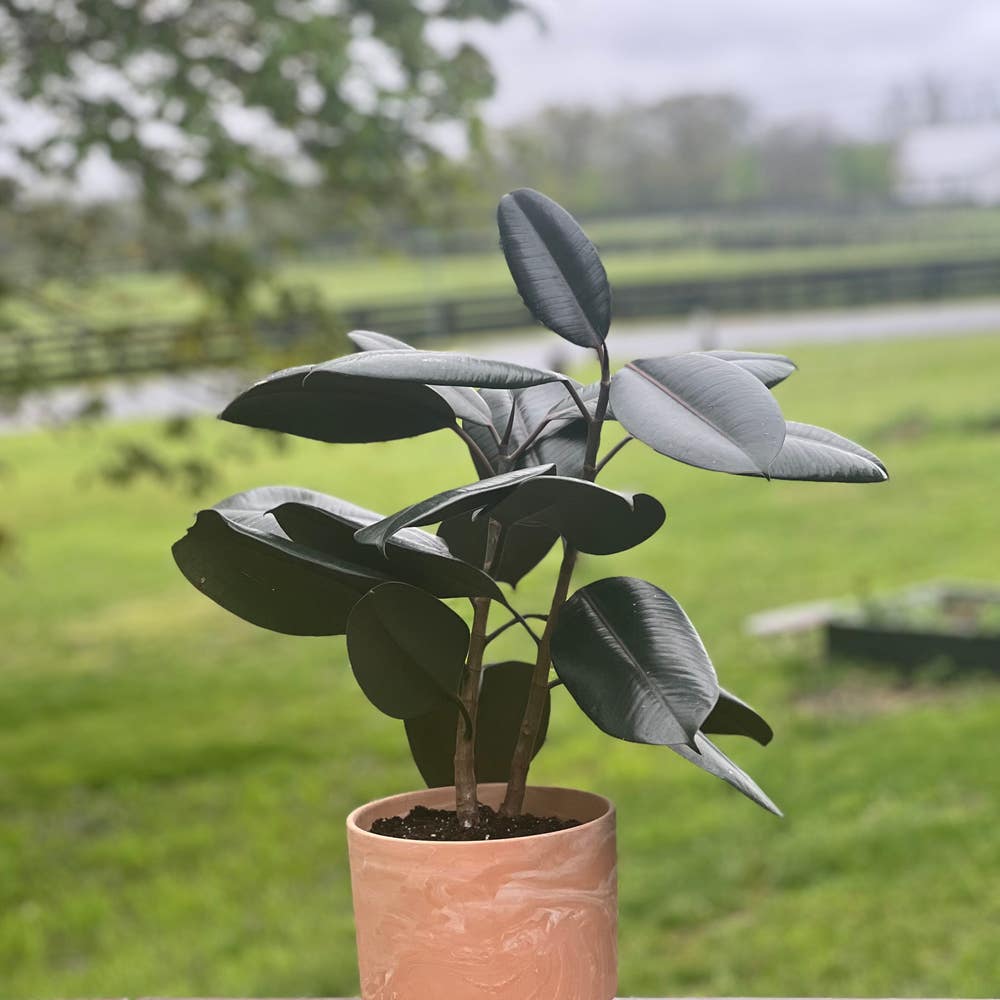
How to Cure Droopy Leaves on Your Ficus 'Burgundy' 😩
Ficus elastica 'Burgundy'
By the Greg Editorial Team
Jan 08, 2025•6 min read
This article was created with the help of AI so we can cover more plants for you. May contain errors. See one? Report it here.
Transform droopy Ficus 'Burgundy' leaves into lush greenery 🌿 with these vital care tips for thriving plants!
- 🌱 Droopy leaves on Ficus 'Burgundy' can stem from overwatering, underwatering, or pests.
- 💧 Check soil moisture regularly to prevent overwatering and underwatering issues.
- 🌞 Bright, indirect light is essential; insufficient light causes leggy growth and leaf drop.
Diagnosing Droopy Leaves
🌧️ Identifying Symptoms of Overwatering
Overwatering is a common issue for Ficus 'Burgundy' that can lead to droopy leaves. Look for visual indicators such as leaf yellowing and wilting, which often signal that the roots are struggling.
To confirm overwatering, perform a soil moisture test. Check for sogginess by sticking your finger into the soil; if it feels overly wet, it’s time to reassess your watering habits.
💧 Identifying Symptoms of Underwatering
On the flip side, underwatering can also cause droopy leaves. Symptoms include leaf curling and crispy edges, indicating that your plant is thirsty and stressed.
A soil moisture test can help you determine if your Ficus needs water. If the soil feels dry at the root level, it’s a clear sign that it’s time to give your plant a good drink.
🐛 Recognizing Signs of Pest Damage
Pests can wreak havoc on your Ficus 'Burgundy', leading to droopy leaves as well. Look for visual indicators like webbing, sticky residue, or leaf discoloration, which can signal an infestation.
Conduct a physical inspection by checking the undersides of leaves and stems. This will help you spot any unwanted guests before they cause significant damage.
🌡️ Assessing Environmental Conditions
☀️ Light Conditions
Ficus 'Burgundy' thrives in bright, indirect light. If your plant is dropping leaves or growing leggy, it may not be receiving enough light.
Adjusting its position can make a world of difference. Ensure it’s getting the right amount of light to promote healthy growth.
❄️ Temperature
Monitoring temperature fluctuations is crucial for your plant's health. Signs of temperature stress include leaf droop and discoloration, which can indicate that your Ficus is uncomfortable.
Keep your plant away from drafts and heat sources to maintain a stable environment.
💦 Humidity
Humidity plays a vital role in the well-being of your Ficus 'Burgundy'. Use a hygrometer to measure humidity levels in your home.
If you notice leaf curling or browning tips, it may be a sign of low humidity. Consider using a humidifier or placing a pebble tray under your plant to boost moisture levels.
With these diagnostic tips, you can better understand the needs of your Ficus 'Burgundy' and take action to restore its health. Next, let’s explore effective treatment and recovery strategies for your droopy leaves.
Treatment and Recovery
🌊 Steps to Take for Overwatered Ficus 'Burgundy'
If your Ficus 'Burgundy' is suffering from overwatering, it's crucial to act quickly.
- Assess root condition: Gently remove the plant from its pot and inspect the roots for any signs of rot.
- Trim away rotten roots: Use sterilized scissors to cut away any mushy or blackened roots, ensuring clean cuts to prevent further infection.
- Repot in fresh, well-draining soil: Choose a high-quality potting mix that promotes drainage to help your plant recover.
- Adjust watering schedule: Allow the soil to dry out between waterings to prevent future issues.
💧 Steps to Take for Underwatered Ficus 'Burgundy'
Underwatering is just as concerning, but the recovery process is simpler.
- Water thoroughly: Give your plant a good soak, ensuring that water drains from the bottom of the pot.
- Monitor soil moisture: Regularly check the soil to prevent it from drying out completely again.
- Increase humidity: Consider using a humidity tray or misting the leaves to boost moisture levels around your plant.
🌱 Adjusting Environmental Conditions for Optimal Growth
Creating the right environment is key to your Ficus 'Burgundy' thriving.
- Increase humidity levels: A humidifier or pebble tray can help maintain the moisture your plant craves.
- Maintain stable temperatures: Keep your plant away from drafts and heat sources to avoid temperature stress.
🐞 Pest Control Methods for Ficus 'Burgundy'
Pests can be a real nuisance, but there are effective ways to manage them.
- Manual removal: Wipe the leaves with a damp cloth to physically remove any pests you spot.
- Insecticidal soap: Follow the application instructions carefully and apply it regularly to keep pests at bay.
- Neem oil treatment: This natural remedy can be applied to combat pests and promote plant health.
By following these treatment and recovery steps, your Ficus 'Burgundy' can bounce back and flourish. Next, let’s explore some preventative measures to keep your plant healthy and vibrant.
Preventative Measures
🌊 Best Watering Practices for Ficus 'Burgundy'
To keep your Ficus 'Burgundy' thriving, establish a consistent watering routine. Aim to water every 1-2 weeks, adjusting based on the plant's environment and season.
Regularly check the soil moisture to avoid over or underwatering. Use the finger test or a moisture meter to ensure the soil is neither too soggy nor too dry.
🌫️ Ideal Humidity and Temperature Levels
Humidity plays a crucial role in the health of your Ficus. Regularly monitor humidity levels and make adjustments as needed to maintain a comfortable environment.
Temperature stability is equally important. Keep your plant in a space that avoids extreme fluctuations, ensuring it stays within the recommended range for optimal growth.
🌱 Soil Selection and Drainage Tips
Choosing the right soil is vital for your Ficus 'Burgundy.' Opt for a well-draining potting mix that allows excess water to escape easily.
Don't overlook drainage holes in your pots. They are essential for preventing water accumulation, which can lead to root rot and other issues.
🔍 Regular Maintenance and Monitoring Techniques
Routine checks are key to a healthy plant. Inspect the leaves and soil moisture weekly to catch any potential issues early.
Establish a fertilization schedule during the growing season, ideally once a month. This will provide your Ficus with the nutrients it needs to flourish.
By following these preventative measures, you can help ensure your Ficus 'Burgundy' remains vibrant and healthy, reducing the risk of droopy leaves in the future.
Common Misconceptions
🌱 Myths About Droopy Leaves and Plant Health
One common myth is that all droopy leaves signal overwatering. In reality, droopiness can stem from various issues, including underwatering, pests, or environmental stress.
Understanding the specific cause is crucial for effective treatment. Each problem requires a tailored approach, so don't jump to conclusions based solely on droopy leaves.
🍂 Clarifying the Difference Between Droop and Natural Leaf Drop
It's essential to differentiate between drooping leaves and natural leaf drop. Seasonal changes can lead to leaf drop, which is a normal part of a plant's life cycle.
However, if drooping persists, it may indicate stress. Regularly monitoring your Ficus 'Burgundy' will help you catch any issues early and maintain its overall health.
⚠️ Safety First
This content is for general information and may contain errors, omissions, or outdated details. It is not medical, veterinary advice, or an endorsement of therapeutic claims.
Always consult a qualified healthcare professional before using any plant as food, medicine, or supplement.
Never eat any plant (or feed one to pets) without confirming its identity with at least two trusted sources.
If you suspect poisoning, call Poison Control (800) 222-1222, the Pet Poison Helpline (800) 213-6680, or your local emergency service immediately.
Spotted an error? Please report it here.
Revive your Ficus 'Burgundy' from droopy leaves with Greg's tailored care tips 🌱 that ensure optimal watering and environmental conditions for a thriving plant!