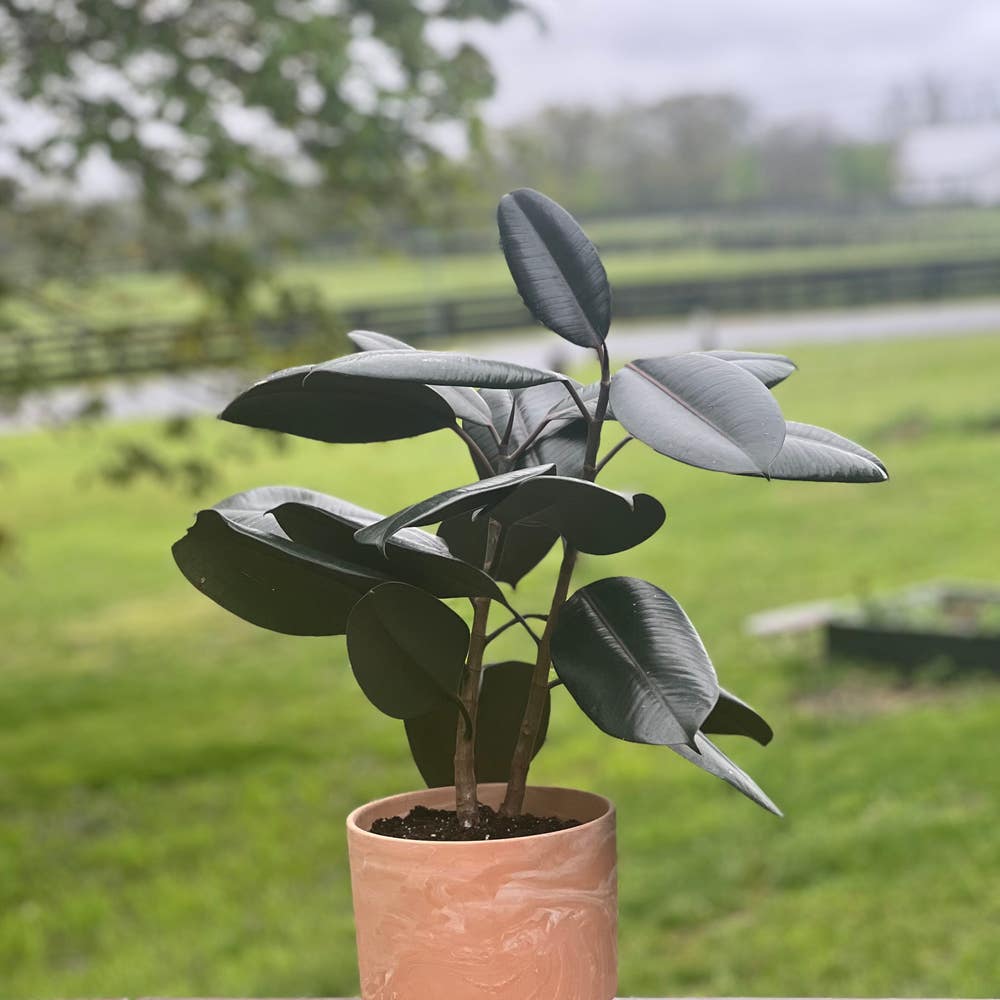
🔍 Determining If Your Ficus 'Burgundy' Is Dying
Ficus elastica 'Burgundy'
By the Greg Editorial Team
Jan 08, 2025•6 min read
This article was created with the help of AI so we can cover more plants for you. May contain errors. See one? Report it here.
Revive your Ficus 'Burgundy' 🌱 by quickly spotting distress signs and applying essential care tips for vibrant growth!
- 🌱 Yellowing leaves indicate overwatering or nutrient deficiencies; adjust care accordingly.
- 🍂 Sudden leaf drop signals stress; check environmental conditions for changes.
- 💧 Wilting leaves suggest underwatering or root issues; monitor soil moisture closely.
Recognizing Unhealthy Ficus 'Burgundy'
Signs of an unhealthy plant 🌱
Recognizing when your Ficus 'Burgundy' is struggling is crucial for its recovery. Here are some key indicators to watch for:
Yellowing Leaves 🍋
If you notice yellowing leaves, it could be a sign of overwatering or a nutrient deficiency. This discoloration often means your plant isn't getting what it needs to thrive.
Leaf Drop 🍂
Sudden leaf drop can signal stress or environmental changes. If your plant is shedding leaves unexpectedly, it's time to investigate further.
Wilting or Drooping 😩
Wilting or drooping leaves often indicate underwatering or root issues. This is a clear cry for help from your plant, signaling that it needs immediate attention.
Fuzzy Growth 🦠
Fuzzy growth on your Ficus 'Burgundy' could mean mold or pests are affecting its health. Keep an eye out for this, as it can quickly escalate if not addressed.
By staying vigilant and recognizing these signs, you can take proactive steps to restore your Ficus 'Burgundy' to its vibrant self. Next, let’s explore common problems specific to this plant and how to tackle them effectively.
Common Problems Specific to Ficus 'Burgundy'
💧 Incorrect Watering
Identifying Overwatering and Underwatering
Overwatering your Ficus 'Burgundy' can lead to yellowing leaves, mushy stems, and root rot. Conversely, underwatering results in crispy, dry leaves and wilting.
Causes of Watering Issues
Watering problems often stem from an inconsistent watering schedule or poor drainage in pots, which can lead to water accumulation. Both factors can stress your plant and hinder its growth.
Steps to Resolve Watering Problems
- Check soil moisture with a finger test (1-2 inches deep).
- Adjust your watering frequency based on the season and humidity.
- Ensure pots have drainage holes to prevent standing water.
💡 Incorrect Light Conditions
Symptoms of Inadequate or Excessive Light
If your Ficus 'Burgundy' is receiving insufficient light, you may notice leggy growth, slow growth, and yellowing leaves. On the flip side, excessive light can cause leaf scorch, browning edges, and faded color.
Causes of Light-Related Issues
Light problems often arise from placing the plant in too dark or too bright locations. Seasonal changes can also affect light exposure, impacting your plant's health.
Solutions for Light Problems
- Move the plant to a location with bright, indirect light.
- Use sheer curtains to diffuse harsh sunlight.
- Rotate the plant regularly to ensure even light exposure.
🌡️ Incorrect Temperature
Signs of Temperature Stress
Temperature extremes can lead to leaf drop or curling, indicating stress. Stunted growth may also occur due to unsuitable temperatures.
Causes of Temperature-Related Issues
Common causes include exposure to drafts or sudden temperature changes, as well as placement near heating or cooling vents. These factors can disrupt your plant's comfort.
How to Adjust Temperature Conditions
- Maintain indoor temperatures between 60°F to 75°F (15°C to 24°C).
- Avoid placing the plant near windows during extreme weather.
- Use a thermometer to monitor room temperature.
🐛 Pests
Common Pests Affecting Ficus 'Burgundy'
Spider mites and mealybugs are common pests that can affect your plant. Look for tiny webs and stippled leaves or white, cotton-like clusters on stems and leaves.
Identifying Pest Infestations
To identify infestations, check for visible insects or webbing. Sticky residue or leaf damage can also indicate a pest problem.
Treatment Options for Pests
- Wipe leaves with a damp cloth to remove pests.
- Apply insecticidal soap or neem oil for severe infestations.
- Introduce beneficial insects like ladybugs for natural control.
🦠 Diseases
Common Diseases
Ficus 'Burgundy' can suffer from several diseases, including powdery mildew, rust, black rot, and blight. Each of these can severely impact your plant's health.
Symptoms of Each Disease
- Powdery mildew: Fuzzy white growth on leaves.
- Rust: Yellowing leaves with orange spores.
- Black rot: Dark patches and leaf drop.
- Blight: Sudden wilting and browning of foliage.
Causes and Treatment Methods
- Improve air circulation around the plant.
- Use fungicides for severe outbreaks.
- Remove affected leaves to prevent the spread of disease.
🌱 Root Problems
Identifying Root Rot and Squishy Roots
Root rot manifests as dark, mushy roots with a foul smell, while squishy roots indicate overwatering. Both conditions can severely affect your plant's health.
Causes of Root Issues
Poor drainage and overwatering practices are common culprits. Compacted soil can also prevent root aeration, leading to further issues.
Steps to Resolve Root Problems
- Remove the plant from its pot and inspect the roots.
- Trim away rotten roots and repot in fresh, well-draining soil.
- Adjust your watering schedule to prevent recurrence.
🍃 Leaf Issues
Symptoms of Leaf Scorching, Yellowing, and Fuzzy Growth
Leaf scorching appears as brown edges and crispy leaves from too much light. Yellowing can indicate nutrient deficiencies or overwatering, while fuzzy growth often signals mold or pest infestations.
Causes of Leaf Problems
Environmental stressors like light and humidity can lead to leaf issues. Nutrient imbalances in the soil can also contribute to these problems.
Solutions for Leaf Care
- Adjust light exposure based on symptoms.
- Fertilize with a balanced houseplant fertilizer.
- Ensure proper humidity levels (40-60%).
📈 Growth Problems
Identifying Growth Issues
Signs of growth problems include stagnation despite care, lack of flowers or fruit, leaning towards light, leggy growth, and etiolated stems. Each symptom points to underlying issues.
Causes of Growth Problems
Inadequate light or nutrients can hinder growth. Environmental stress from temperature or humidity can also play a significant role.
How to Encourage Healthy Growth
- Provide adequate light and rotate the plant.
- Fertilize during the growing season.
- Prune leggy growth to encourage bushier growth.
Understanding these common problems can help you keep your Ficus 'Burgundy' thriving. With the right care, your plant can flourish and bring beauty to your space.
Preventive Measures
Best Practices for Ficus 'Burgundy' Care 🌱
To keep your Ficus 'Burgundy' thriving, start by regularly checking the soil moisture. Adjust your watering schedule based on the plant's needs and the season.
Ensure your plant receives the right amount of light by placing it in a suitable location and rotating it occasionally. This helps prevent uneven growth and promotes a balanced shape.
Don't forget to monitor for pests and diseases. Catching these issues early can save your plant from severe damage.
Importance of Regular Monitoring and Maintenance 🔍
Regular monitoring is crucial for your plant's health. Early detection of problems can prevent them from escalating into serious issues.
Consistent care not only helps in identifying potential threats but also promotes overall vitality. A little attention goes a long way in keeping your Ficus 'Burgundy' happy and healthy.
Using the Greg Plant Care App for Reminders 📱
Consider using the Greg plant care app to streamline your plant care routine. Set reminders for watering, fertilizing, and monitoring your plant's health.
The app also offers tailored care tips based on your plant's specific needs. This can make plant care feel less overwhelming and more manageable.
By integrating these preventive measures into your routine, you can ensure your Ficus 'Burgundy' remains a vibrant part of your home. Up next, we’ll explore how to identify and address common problems specific to this beautiful plant.
⚠️ Safety First
This content is for general information and may contain errors, omissions, or outdated details. It is not medical, veterinary advice, or an endorsement of therapeutic claims.
Always consult a qualified healthcare professional before using any plant as food, medicine, or supplement.
Never eat any plant (or feed one to pets) without confirming its identity with at least two trusted sources.
If you suspect poisoning, call Poison Control (800) 222-1222, the Pet Poison Helpline (800) 213-6680, or your local emergency service immediately.
Spotted an error? Please report it here.
Keep your Ficus 'Burgundy' thriving 🌱 by using Greg's tailored care reminders to catch issues early and maintain its vibrant health!