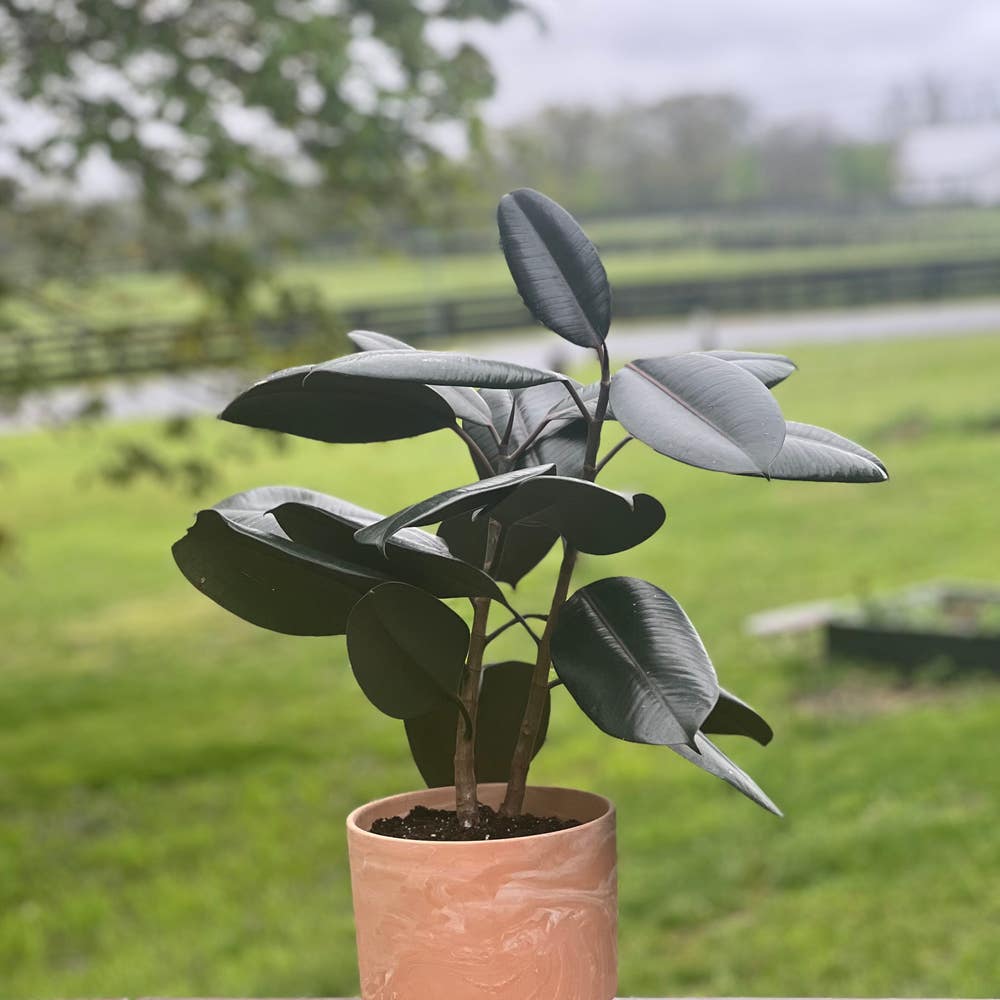
Why Your Ficus 'Burgundy' Leaves Are Falling Over 🍃
Ficus elastica 'Burgundy'
By the Greg Editorial Team
Jan 08, 2025•6 min read
This article was created with the help of AI so we can cover more plants for you. May contain errors. See one? Report it here.
Transform your Ficus 'Burgundy' into a thriving beauty 🌿 with expert tips to prevent leaf drop and ensure vibrant growth!
- 💧 Overwatering or underwatering causes leaf issues; adjust watering every 1-2 weeks.
- 🌡️ Stable temperature and humidity are crucial; fluctuations lead to leaf drop.
- 🐛 Regular pest inspections and treatments prevent infestations and maintain leaf health.
Diagnosing Leaf Drop Issues
Signs of Overwatering vs. Underwatering 🌊
Understanding the signs of overwatering and underwatering is crucial for your Ficus 'Burgundy'.
Overwatering typically manifests as soggy soil and yellowing leaves. If you notice these symptoms, it’s time to reassess your watering habits.
On the other hand, underwatering can be identified by dry soil and crispy leaf edges. If your plant exhibits these signs, it’s likely thirsty and needs a drink.
Identifying Environmental Stress Symptoms 🌡️
Environmental factors can significantly impact your plant's health.
Temperature stress often leads to leaf drop, especially if your Ficus is exposed to cold drafts or heat sources. Keeping your plant in a stable environment is key.
Humidity stress can cause leaf curling and browning tips. Maintaining the right humidity levels will help your Ficus thrive.
Recognizing Pest Damage on Leaves 🐛
Pests can wreak havoc on your Ficus 'Burgundy'.
Start with a visual inspection of the leaf undersides and stems. This will help you catch any unwanted visitors early.
Look for specific pest damage patterns such as holes in leaves or sticky residue. Identifying these signs quickly can save your plant from further damage.
Assessing Soil Health and Nutrient Levels 🌱
Healthy soil is the foundation of a thriving plant.
Utilize soil testing methods like pH and nutrient testing kits to assess your soil's health. This will provide insights into what your Ficus needs.
Additionally, ensure your soil is well-draining. Ficus 'Burgundy' thrives in soil that allows excess water to escape, preventing root rot and promoting healthy growth.
With these diagnostic tools in hand, you can effectively address the issues causing leaf drop in your Ficus 'Burgundy'. Next, let’s explore how to prevent these problems from occurring in the first place.
Preventing Leaf Drop
💧 Proper Watering Techniques for Ficus 'Burgundy'
To keep your Ficus 'Burgundy' thriving, aim to water it every 1-2 weeks. This frequency can vary based on environmental conditions, so it's essential to adjust accordingly.
Checking soil moisture is crucial. Use the finger test—stick your finger into the soil up to the first knuckle. If it feels dry, it’s time to water. Alternatively, a moisture meter can provide a more precise reading.
🌫️ Ideal Humidity Levels and How to Maintain Them
Maintaining the right humidity is vital for your plant's health. Grouping plants together can create a mini ecosystem, while using trays filled with water and pebbles can help increase moisture levels around your Ficus.
Investing in a hygrometer is a smart move. This tool allows you to monitor humidity levels, ensuring your plant stays in its comfort zone.
☀️ Optimal Light Conditions for Healthy Growth
Ficus 'Burgundy' prefers bright, indirect light but can tolerate lower light conditions. However, inadequate light can lead to leggy growth and leaf drop, signaling that your plant needs more sunshine.
Keep an eye on your plant's posture. If it starts stretching towards the light, it’s a clear sign it’s not getting enough.
🐞 Regular Pest Control Measures
Preventative pest control is essential for keeping your Ficus healthy. Using neem oil or insecticidal soap can deter pests before they become a problem.
Routine inspections are key. Regularly check the undersides of leaves and stems for any signs of infestation, allowing you to catch issues early and maintain your plant's vitality.
By following these preventative measures, you can significantly reduce the chances of leaf drop and ensure your Ficus 'Burgundy' remains lush and vibrant. Next, let’s explore how to effectively treat any leaf drop problems that may arise.
Treating Leaf Drop Problems
Step-by-Step Guide to Adjusting Watering Habits 🌊
Adjusting your watering habits is crucial for your Ficus 'Burgundy' to thrive. Start by assessing your current watering schedule, paying attention to how often and how much water you provide.
Next, adjust your watering based on soil moisture readings. Wait until the top inch of soil is dry before watering again to prevent overwatering.
Finally, monitor your plant's response closely. Look for signs of recovery, such as new growth or improved leaf health.
How to Improve Humidity for Indoor Plants 💧
Humidity plays a significant role in the health of your Ficus 'Burgundy.' One effective method to increase humidity is to implement pebble trays; simply fill trays with water and pebbles and place them near your plant.
Another option is to use a humidifier set to maintain humidity levels between 40%-60%. Regular misting can also help; mist the leaves in the morning to avoid mold growth.
Treatment Options for Pest Infestations 🐛
Pest infestations can lead to significant leaf drop if not addressed promptly. Start by identifying the pest; inspect the leaves and stems for any visible signs of damage or the pests themselves.
Choose a treatment method that suits your situation, such as neem oil, insecticidal soap, or manual removal. After treatment, monitor the plant's health and check for new signs of pests to ensure the issue is resolved.
Fertilization Tips to Correct Nutrient Deficiencies 🌱
Fertilization is essential for correcting nutrient deficiencies in your Ficus 'Burgundy.' A recommended fertilization schedule is every 4-6 weeks during the growing season to provide your plant with the nutrients it needs.
Consider using balanced NPK fertilizers or slow-release options for optimal results. Look for signs of improvement, such as new growth and healthier leaves, as indicators that your fertilization efforts are paying off.
With these treatment strategies, you can effectively address leaf drop issues and promote a healthier, more vibrant Ficus 'Burgundy.' Next, let's explore how to monitor and maintain your plant's health for long-term success.
Monitoring and Maintenance
Regular Check-Ups for Leaf Health 🌿
To keep your Ficus 'Burgundy' thriving, regular inspections are essential. Aim for bi-weekly or monthly check-ups to catch any issues early.
During these inspections, look for signs of discoloration, pests, and the overall vigor of your plant. Healthy leaves should be vibrant and firm, so any changes could indicate a problem.
Seasonal Care Adjustments for Ficus 'Burgundy' 🍂
As seasons change, so should your care routine. In winter, reduce watering and closely monitor light exposure to prevent stress on your plant.
When preparing for the growth season, focus on increasing humidity and adjusting your fertilization schedule. This proactive approach will help your Ficus flourish during its active growth phase.
Tools and Products for Monitoring Plant Health 🛠️
Utilizing the right tools can make plant care much easier. Invest in moisture meters, hygrometers, and pH testers to keep tabs on your Ficus's environment.
Additionally, keeping a plant care journal can be incredibly beneficial. Documenting changes and care routines helps you track your plant's health and adjust your methods as needed.
By staying vigilant and adapting your care strategies, you can ensure your Ficus 'Burgundy' remains healthy and vibrant. Next, let’s explore how to treat any leaf drop problems you may encounter.
⚠️ Safety First
This content is for general information and may contain errors, omissions, or outdated details. It is not medical, veterinary advice, or an endorsement of therapeutic claims.
Always consult a qualified healthcare professional before using any plant as food, medicine, or supplement.
Never eat any plant (or feed one to pets) without confirming its identity with at least two trusted sources.
If you suspect poisoning, call Poison Control (800) 222-1222, the Pet Poison Helpline (800) 213-6680, or your local emergency service immediately.
Spotted an error? Please report it here.
Keep your Ficus 'Burgundy' thriving 🌿 by using Greg's tailored reminders for watering and humidity, ensuring you never miss a beat in your plant care routine!