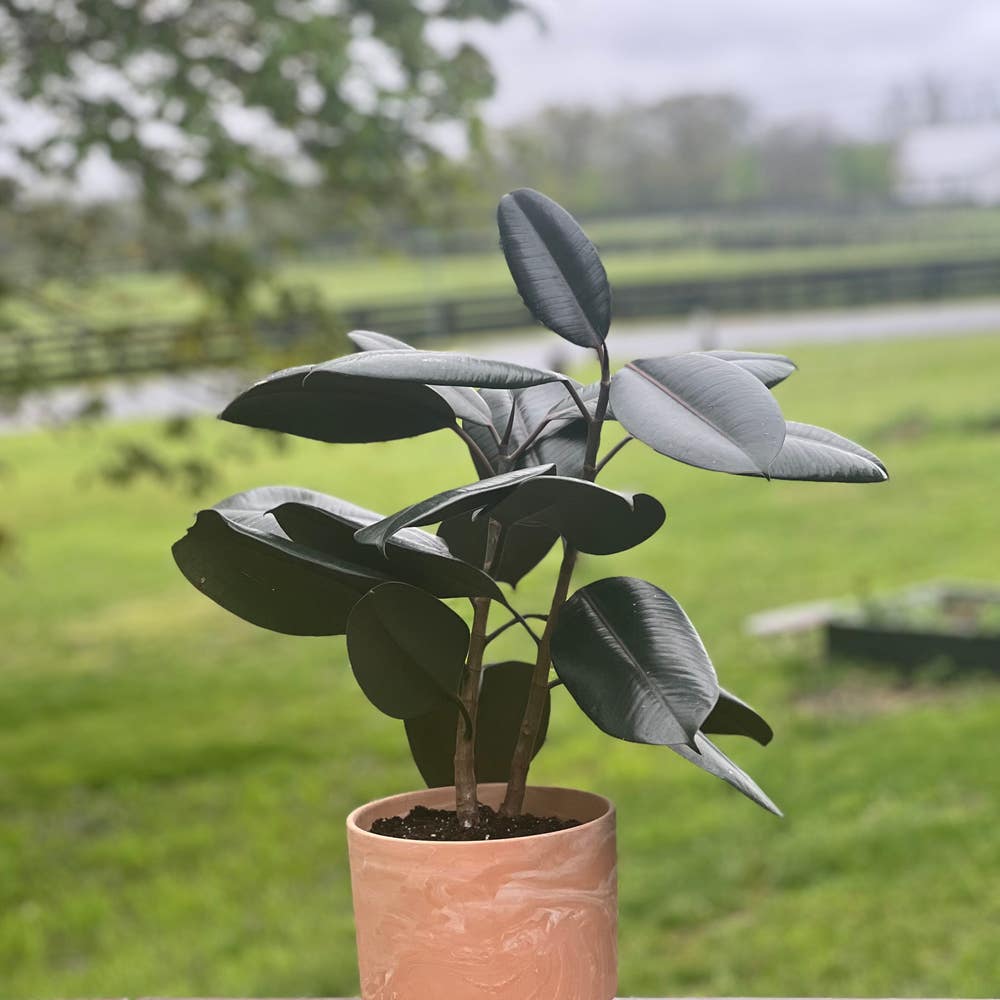
💜 4 Indoor Purple Rubber Plant Care Hacks
Ficus elastica 'Burgundy'
By the Greg Editorial Team
Oct 17, 2024•6 min read
This article was created with the help of AI so we can cover more plants for you. May contain errors. See one? Report it here.
Elevate your purple rubber plant's beauty with essential care tips for vibrant growth! 🌱
- 🌞 Purple rubber plants thrive in bright, indirect light; adjust for slower growth in low light.
- 💧 Water every 1-2 weeks, letting soil dry out to prevent yellowing leaves.
- 🌬️ Maintain humidity levels between 40-60% to avoid brown leaf tips and promote health.
Light Requirements
Optimal Indoor Light Levels 🌞
Purple rubber plants thrive in bright, indirect light. While they can adapt to low light, this often leads to slower growth and less vibrant leaves.
Watch for signs of insufficient light, such as leggy growth, smaller leaves, and a loss of variegation. These indicators suggest your plant is craving more light.
Role of Grow Lights 💡
In situations where natural light is lacking, especially during winter months, grow lights become essential. They not only supplement light but also promote healthy growth and enhance leaf color.
Using grow lights can make a significant difference in your plant's vitality, ensuring it remains lush and vibrant.
Choosing the Best Grow Light 🛠️
When selecting grow lights, consider the types available: LED, fluorescent, and incandescent. Full-spectrum LED lights are highly recommended, ideally with a color temperature between 5000-6500K.
Position your grow lights 12-24 inches above the plant, adjusting as needed based on its growth. This ensures your purple rubber plant receives the optimal light it craves.
With the right light conditions, your plant will flourish, setting the stage for the next crucial aspect of its care: watering needs.
Watering Needs
Frequency and Amount 🌊
To keep your purple rubber plant thriving, it's crucial to establish a proper watering schedule. Allow the top 1-2 inches of soil to dry out between waterings, ensuring the roots don’t sit in soggy conditions.
As a general guideline, water every 1-2 weeks. However, be prepared to adjust based on your home's humidity and temperature.
Signs of Overwatering and Underwatering 🚨
Recognizing the signs of overwatering is essential for your plant's health. Look for yellowing leaves, wilting, and root rot as clear indicators that you might be giving it too much water.
On the flip side, underwatering can lead to crispy leaf edges, drooping leaves, and stunted growth. If you notice these symptoms, it’s time to adjust your watering frequency and check the drainage of your pot.
By staying attentive to these signs, you can ensure your purple rubber plant remains vibrant and healthy. Next, let’s explore the ideal humidity and temperature conditions for optimal growth.
Humidity and Temperature
Ideal Humidity Levels 🌧️
Maintaining the right humidity is crucial for your purple rubber plant. Aim for a humidity level between 40-60% to keep your plant thriving.
If the air is too dry, you might notice brown tips and edges on the leaves. This is a clear sign that your plant needs a little more moisture in its environment.
Temperature Preferences 🌡️
Your purple rubber plant loves warmth. The ideal temperature range is between 65°F to 80°F (18°C to 27°C).
Be cautious of sudden temperature changes and cold drafts, as these can stress your plant and hinder its growth.
Humidity Control Methods 💧
To boost humidity, consider using a humidifier, pebble trays, or misting your plant regularly. Each method can effectively raise moisture levels around your rubber plant.
Don’t forget to monitor humidity with a hygrometer. This tool helps you ensure your plant is living in its ideal environment, promoting healthy growth and vibrant leaves.
With the right humidity and temperature, your purple rubber plant will flourish, setting the stage for the next essential care aspect: soil and fertilization.
Soil and Fertilization
Best Soil Type 🌱
For your purple rubber plant, a well-draining potting mix is essential. Aim for a blend of peat, perlite, and pine bark to ensure proper aeration and moisture retention.
The ideal pH level for this mix should be slightly acidic to neutral, ranging from 6.0 to 7.0. This balance helps the plant absorb nutrients effectively.
Fertilization Schedule and Types 🗓️
During the growing season, typically spring and summer, fertilize your plant every 4-6 weeks. This regular feeding supports healthy growth and vibrant foliage.
Consider using a balanced liquid fertilizer, like a 10-10-10 mix, or opt for slow-release granules. Both options provide essential nutrients without overwhelming the plant.
Maintaining a proper soil and fertilization routine is crucial for your rubber plant's overall health. With the right care, you'll enjoy a thriving, lush indoor plant that brightens your space.
As you nurture your rubber plant, keep an eye on its watering needs and environmental conditions. This holistic approach will ensure your plant flourishes beautifully.
Common Issues and Solutions
🛡️ Pest Prevention Strategies
Keeping your purple rubber plant healthy is crucial for preventing pests. Regular inspections and maintaining plant health can deter unwanted visitors.
Quarantine new plants for a couple of weeks before introducing them to your collection. This simple step can save you from a potential infestation.
🕷️ Common Pests
Spider mites are sneaky little pests. Look for webbing and stippled leaves as telltale signs of their presence.
Mealybugs are another common issue, identifiable by their cotton-like clusters on stems and leaf joints. Both pests can be managed effectively with neem oil or insecticidal soap.
🍂 Troubleshooting Yellowing Leaves and Leaf Drop
Yellowing leaves can be a cry for help from your plant. Common causes include overwatering, underwatering, and insufficient light.
To remedy this, adjust your watering practices and ensure your plant is getting enough light. A little attention can go a long way in restoring your plant's health.
With these strategies in mind, you can keep your purple rubber plant thriving and vibrant. Next, let’s explore the best placement and maintenance tips to enhance its growth even further.
Placement and Maintenance
Best Placement Within the Home 🌅
To ensure your purple rubber plant thrives, position it near east or west-facing windows. This location provides the bright, indirect light it craves while avoiding the harsh glare of direct sunlight and cold drafts.
Tips for Maintaining Appearance 🧼
Keep your plant looking its best by regularly wiping its leaves with a damp cloth. This simple act removes dust and allows the plant to breathe, while pruning dead or yellowing leaves encourages new growth.
Seasonal Care Adjustments 🌦️
As seasons change, so should your care routine. In winter, reduce watering frequency and stay vigilant for temperature fluctuations; in summer, increase humidity and watering to keep your plant happy and healthy.
With these placement and maintenance tips, your purple rubber plant will not only survive but thrive, setting the stage for the next section on common issues and solutions.
⚠️ Safety First
This content is for general information and may contain errors, omissions, or outdated details. It is not medical, veterinary advice, or an endorsement of therapeutic claims.
Always consult a qualified healthcare professional before using any plant as food, medicine, or supplement.
Never eat any plant (or feed one to pets) without confirming its identity with at least two trusted sources.
If you suspect poisoning, call Poison Control (800) 222-1222, the Pet Poison Helpline (800) 213-6680, or your local emergency service immediately.
Spotted an error? Please report it here.
Keep your purple rubber plant thriving 🌱 with Greg's tailored watering alerts and light tips, ensuring it flourishes in any environment!