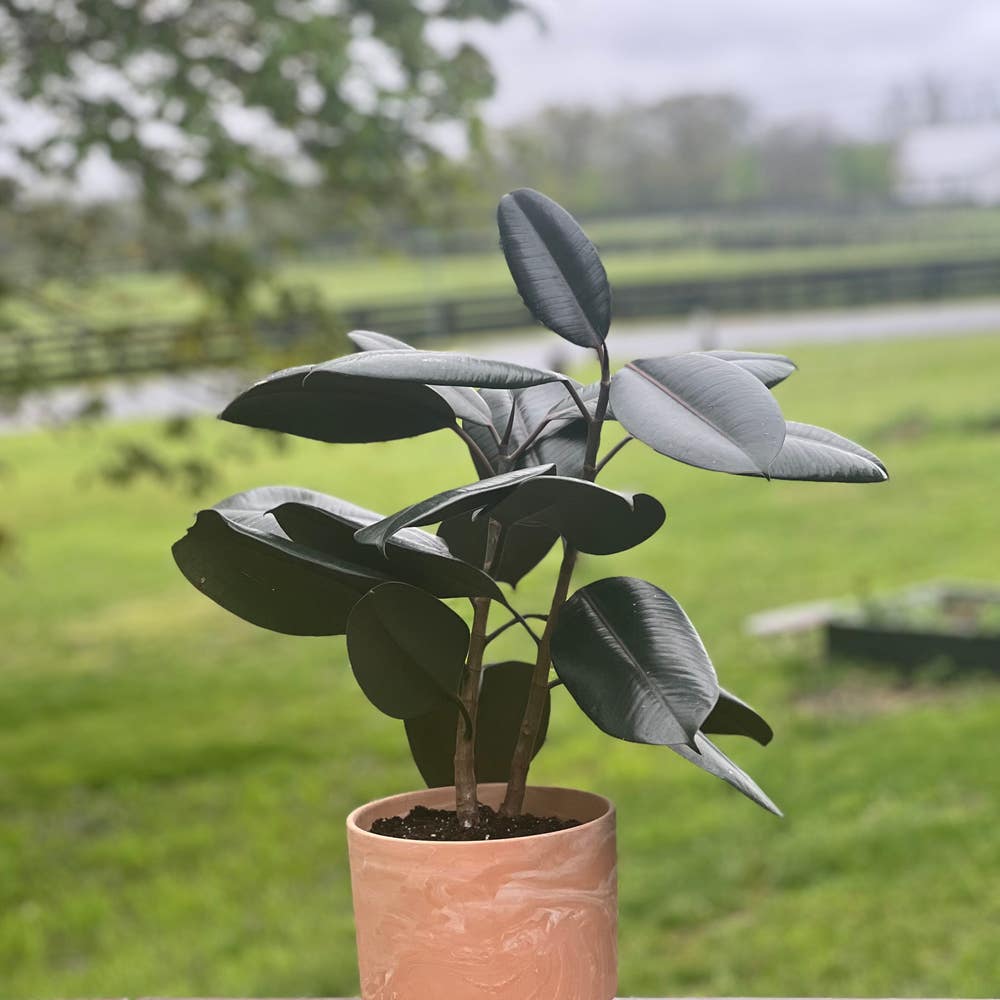
🌱 Step-by-Step Guide to Repotting Purple Rubber Plant
Ficus elastica 'Burgundy'
By the Greg Editorial Team
Oct 17, 2024•5 min read
This article was created with the help of AI so we can cover more plants for you. May contain errors. See one? Report it here.
Unlock your purple rubber plant's full potential by recognizing when it needs repotting! 🌱✨
- 🌱 Signs your purple rubber plant needs repotting: roots outgrowing pot, yellowing leaves, stunted growth.
- 🕒 Best time to repot is spring or early summer for optimal growth.
- 🧴 Use well-draining soil and pots with drainage holes to prevent root rot.
Signs That Your Plant Needs Repotting
🪴 Physical Indicators
Recognizing when your purple rubber plant needs repotting is crucial for its health. Look for roots emerging from the drainage holes; this is a clear sign that the plant has outgrown its current pot.
Another indicator is soil that dries out too quickly. If you find yourself watering more frequently than usual, it might be time for a larger home.
Stunted growth or yellowing leaves can also signal distress. These symptoms often indicate that the plant is struggling to absorb nutrients and water effectively.
🌱 Signs of Root Bound Plant
A root-bound plant exhibits specific signs that shouldn't be ignored. If you notice roots circling the pot, it’s a strong indication that your plant needs more space.
You may also experience difficulty in watering, where water runs off the surface instead of soaking in. This can lead to uneven moisture levels in the soil.
Lastly, if your plant is toppling over due to lack of stability, it’s time to repot. A sturdy base is essential for healthy growth, and a larger pot can provide that support.
Recognizing these signs early can make a significant difference in your plant's vitality. Next, let’s explore the ideal timing for repotting your purple rubber plant.
Ideal Timing for Repotting
🌱 Seasonal Considerations
Timing is everything when it comes to repotting your purple rubber plant. The best time to repot is during spring or early summer, as this is when the plant is actively growing and can recover quickly from the transition.
Avoid repotting during dormancy, typically in fall and winter. Doing so can stress the plant, making it harder for it to adjust to its new environment.
⏰ Frequency of Repotting
As a general rule, aim to repot your purple rubber plant every 1-2 years. Keep an eye out for signs of root binding, which can indicate it's time for a new pot.
When you do repot, consider increasing the pot size by 1-2 inches in diameter. This allows for healthy root growth without overwhelming the plant with too much space.
With the right timing and frequency, your purple rubber plant will thrive in its new home. Next, let’s dive into the step-by-step guide for repotting!
Step-by-Step Guide to Repotting
🌱 Preparing the New Pot and Soil
Repotting starts with selecting the right pot. Choose one that is 1-2 inches larger in diameter than your current pot to give your purple rubber plant room to grow.
Next, ensure proper drainage by checking for holes at the bottom. This is crucial to prevent waterlogging, which can lead to root rot. Finally, opt for a well-draining potting mix suitable for Ficus elastica to provide the best environment for your plant.
🪴 Removing the Plant from Its Current Pot
Before you begin, water the plant a day prior to repotting. This helps loosen the soil and makes removal easier.
Gently tilt the pot and tap the sides to loosen the soil. Carefully pull the plant out, supporting the base to avoid damaging the roots. This step requires a bit of patience, but it’s essential for a successful repot.
🌍 Placing the Plant in the New Pot
Start by adding a layer of potting soil to the bottom of the new pot. This creates a stable base for your plant.
Position the plant in the center, ensuring the roots are spread out. Fill in around the roots with potting soil, leaving about an inch of space at the top. This allows for proper watering and prevents soil from spilling over.
💧 Watering and Settling the Plant
Once the plant is in its new home, water it thoroughly. Ensure water drains from the bottom to confirm the soil is adequately moist.
Allow the plant to settle for a few hours before returning it to its light location. This settling period helps the plant adjust to its new environment, promoting healthy growth.
With these steps, your purple rubber plant will be well on its way to thriving in its new pot! Next, let’s explore the best pot materials to enhance your plant's growth.
Pot Material Options
Choosing the right pot material is crucial for the health of your purple rubber plant. Each material has its own set of advantages and disadvantages.
🌱 Best Materials for Pots
Terracotta Pots
Terracotta pots are a favorite among plant enthusiasts. They offer excellent drainage and are made from breathable material, allowing air to reach the roots.
However, they can dry out quickly, which means you'll need to water your plant more frequently. This is something to keep in mind if you have a busy schedule.
Plastic Pots
Plastic pots are lightweight and easy to handle, making them a practical choice. They retain moisture longer than terracotta, which can be beneficial for plants that prefer consistent hydration.
On the downside, plastic pots are less breathable. If drainage isn't adequate, you risk root rot, so always check for drainage holes.
Ceramic Pots
Ceramic pots add a touch of aesthetic appeal to your plant display. They provide good insulation, helping to maintain stable temperatures for your plant.
However, they can be heavy and may not always come with drainage holes. This can lead to water retention issues if you're not careful.
🚫 Materials to Avoid for Pots
Metal Pots
Metal pots might look sleek, but they can heat up quickly. This can lead to root damage, especially in warmer climates.
It's best to steer clear of metal if you want to keep your plant thriving.
Non-Draining Pots
Non-draining pots pose a significant risk to your plant's health. They increase the likelihood of overwatering, which can lead to root rot.
Always opt for pots with drainage holes to ensure your purple rubber plant stays healthy and happy.
With the right pot material, you'll set your purple rubber plant up for success. Next, let’s dive into troubleshooting common repotting issues to keep your plant thriving.
⚠️ Safety First
This content is for general information and may contain errors, omissions, or outdated details. It is not medical, veterinary advice, or an endorsement of therapeutic claims.
Always consult a qualified healthcare professional before using any plant as food, medicine, or supplement.
Never eat any plant (or feed one to pets) without confirming its identity with at least two trusted sources.
If you suspect poisoning, call Poison Control (800) 222-1222, the Pet Poison Helpline (800) 213-6680, or your local emergency service immediately.
Spotted an error? Please report it here.
Repotting your purple rubber plant is a breeze 🌱 when you follow these steps, and with Greg's tailored reminders, you'll ensure your plant thrives in its new pot!