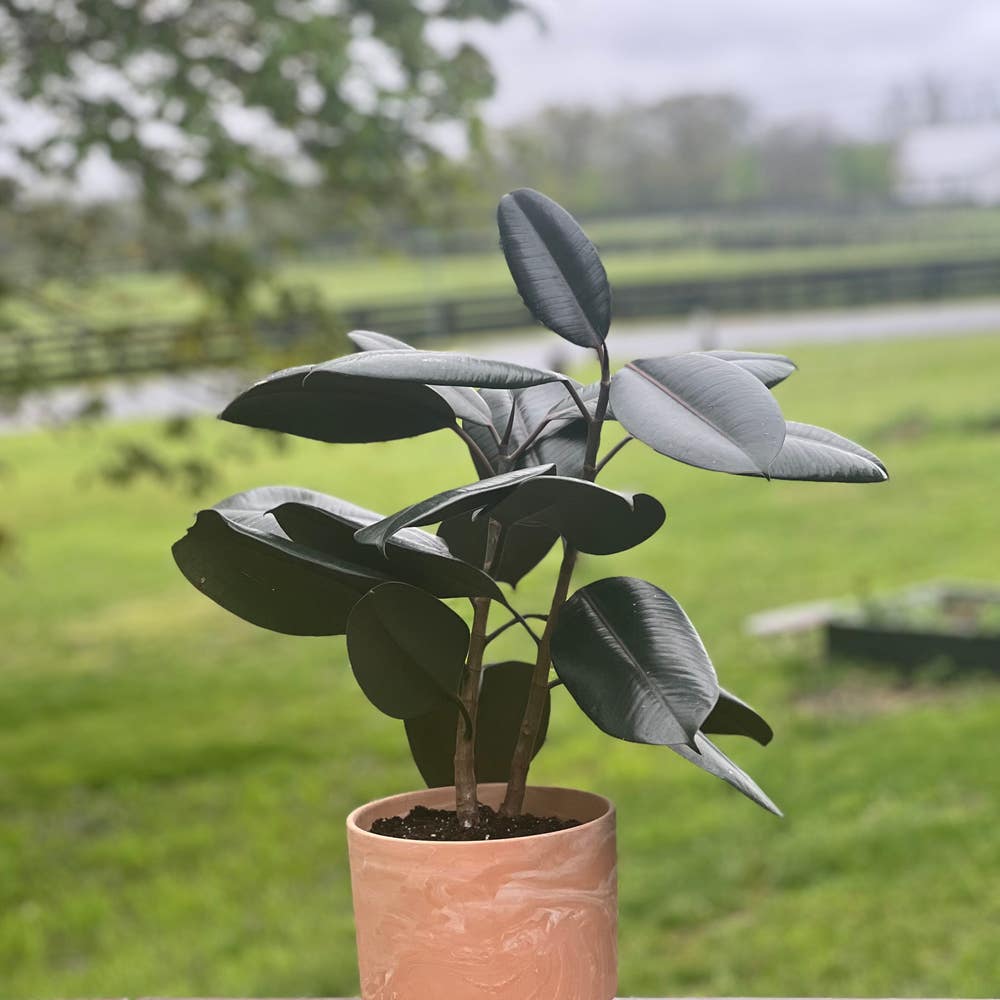
💜 Ultimate Guide to Temperature for Purple Rubber Plant
Ficus elastica 'Burgundy'
By the Greg Editorial Team
Oct 17, 2024•3 min read
This article was created with the help of AI so we can cover more plants for you. May contain errors. See one? Report it here.
Master temperature management 🌡️ to keep your purple rubber plant thriving and stress-free all year round!
- 🌡️ Purple rubber plants thrive between 50°F and 90°F for optimal health.
- ❄️ Cold stress below 50°F causes leaf drop; heat stress above 90°F leads to curling.
- 🏡 Stable environments and proper placement prevent temperature-related issues for your plant.
Temperature Tolerance Limits
Minimum Temperature 🌡️
Purple rubber plants can tolerate temperatures as low as 50°F (10°C). However, exposure to this cold can lead to stress, which is something you definitely want to avoid.
Signs of cold stress include leaf drop, discoloration, and slowed growth. If you notice these symptoms, it’s time to take action.
Maximum Temperature 🔥
On the flip side, purple rubber plants can handle temperatures up to 90°F (32°C). Yet, just like with the cold, excessive heat can also cause stress.
Look out for signs of heat stress, such as leaf curling, wilting, and browning edges. These indicators suggest your plant is not happy in its environment.
Understanding these temperature limits is crucial for keeping your purple rubber plant thriving. By monitoring both ends of the temperature spectrum, you can ensure a healthy, vibrant plant.
Next, let’s explore the signs of temperature stress in more detail.
Signs of Temperature Stress
🥶 Symptoms of Cold Stress
Cold stress can manifest in a couple of noticeable ways. One of the first signs is leaf drop, where older leaves suddenly fall off the plant.
Another indicator is discoloration. Leaves may turn yellow or develop dark spots, signaling that your purple rubber plant is struggling with the chill.
🔥 Symptoms of Heat Stress
On the flip side, heat stress presents its own set of symptoms. Leaf curling is common, where the edges of leaves curl inward or become crispy.
You might also notice wilting. Even with adequate watering, leaves may droop, indicating that the plant is overwhelmed by the heat.
🔍 How to Identify Temperature-Related Issues
Identifying temperature-related issues involves careful observation. Start by monitoring growth patterns; stunted growth or abnormal leaf development can be telltale signs.
Additionally, pay attention to leaf health. Changes in color, texture, and overall vitality can provide crucial clues about your plant's temperature stress.
Understanding these signs will help you take action before your purple rubber plant suffers too much. Next, let’s explore the causes of temperature stress and how to prevent it.
Causes of Temperature Stress
🌡️ Sudden Temperature Changes
Rapid shifts in temperature can be a real shocker for your purple rubber plant. Moving from a warm environment to a cold one—or vice versa—can trigger immediate stress symptoms.
🌬️ Prolonged Exposure to Drafts or Heat Sources
Drafts are another culprit. Cold air sneaking in from windows or doors can stress your plant, making it feel like it's in a freezer.
On the flip side, heat sources like radiators or direct sunlight can lead to overheating. Keeping your plant away from these extremes is crucial for its health.
Understanding these causes helps you create a stable environment for your purple rubber plant. This knowledge sets the stage for effective temperature management strategies, ensuring your plant thrives.
Temperature Management Strategies
Best Practices for Maintaining Stable Temperatures 🌡️
To keep your purple rubber plant thriving, placement is key. Choose spots away from drafts and direct heat sources to create a stable environment.
Insulation can also play a significant role. Use window treatments like curtains or blinds to help moderate indoor temperatures, keeping your plant cozy year-round.
Use of Thermometers and Temperature Monitoring 📱
Regular checks are essential for optimal plant health. Invest in indoor thermometers to monitor the temperature and ensure it stays within the ideal range.
For tech-savvy plant parents, consider using temperature monitoring apps. These smart devices can send alerts, helping you stay ahead of any temperature-related issues.
By implementing these strategies, you can create a nurturing environment for your purple rubber plant, ensuring it remains healthy and vibrant. Next, let’s explore the signs of temperature stress to watch for in your plant.
⚠️ Safety First
This content is for general information and may contain errors, omissions, or outdated details. It is not medical, veterinary advice, or an endorsement of therapeutic claims.
Always consult a qualified healthcare professional before using any plant as food, medicine, or supplement.
Never eat any plant (or feed one to pets) without confirming its identity with at least two trusted sources.
If you suspect poisoning, call Poison Control (800) 222-1222, the Pet Poison Helpline (800) 213-6680, or your local emergency service immediately.
Spotted an error? Please report it here.
Keep your purple rubber plant thriving 🌱 by using Greg's personalized alerts to maintain the perfect temperature range and prevent stress from sudden changes!