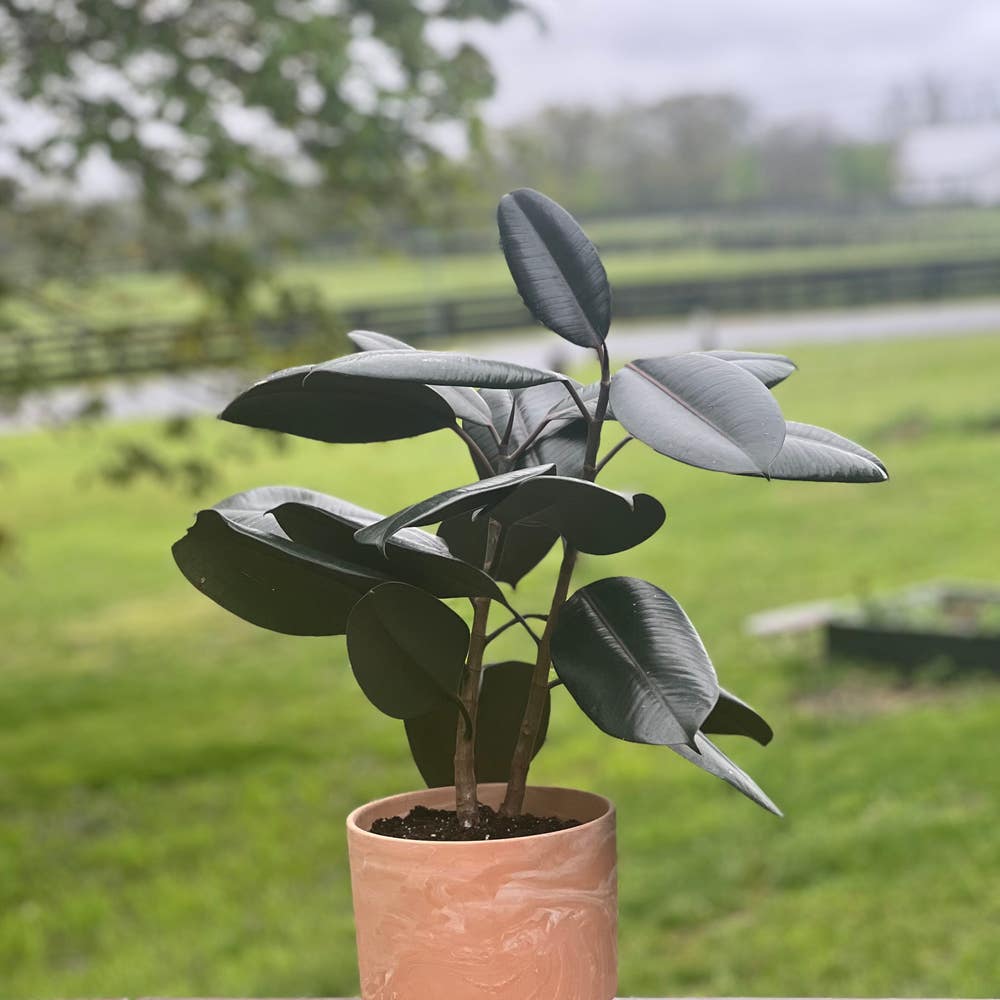
💜 Ultimate Guide to Soil for Purple Rubber Plant
Ficus elastica 'Burgundy'
By the Greg Editorial Team
Oct 17, 2024•6 min read
This article was created with the help of AI so we can cover more plants for you. May contain errors. See one? Report it here.
Boost your purple rubber plant's health 🌱 by mastering soil pH and nutrients for vibrant growth!
- 🌱 Ideal soil pH for purple rubber plants is 6.0 to 7.0 for optimal health.
- 🔄 Repot every 1-2 years to prevent root binding and refresh nutrients.
- 🌿 Signs of unhealthy soil include mold, compacting, and stunted growth—act quickly!
Soil pH and Nutrient Needs
Ideal pH Range 🌱
The ideal pH range for a purple rubber plant is between 6.0 and 7.0, which is slightly acidic to neutral. This range is crucial because it affects nutrient availability, ensuring your plant gets the essential elements it needs to thrive.
How to Test Soil pH 🔬
To determine your soil's pH, consider using a reliable soil testing kit or pH meter. Testing should be done at least once a year to maintain optimal plant health and adjust care as needed.
Adjusting Soil pH ⚖️
If your soil's pH is too low, you can raise it by incorporating lime or wood ash. Conversely, to lower the pH, adding sulfur or peat moss can be effective.
Products to Consider
Look for specific soil amendments designed for pH adjustment. These products can help you achieve the desired pH level more efficiently, ensuring your purple rubber plant flourishes.
Understanding soil pH and nutrient needs is essential for your plant's health. Next, we’ll explore how to identify and resolve unhealthy soil conditions.
Identifying and Resolving Unhealthy Soil
🕵️♂️ Signs of Unhealthy Soil
Recognizing unhealthy soil is crucial for your purple rubber plant's well-being.
Moldy Soil
Moldy soil often appears with a white or gray film on the surface. This usually indicates overwatering or poor air circulation, both of which can create a breeding ground for mold.
Compacted Soil
Compacted soil feels hard and dense, making it difficult for water to penetrate. If your soil retains water instead of draining, it's likely compacted and unhealthy.
⚠️ Effects of Unhealthy Soil on Plant Health
Unhealthy soil can lead to serious issues for your plant.
Root Rot
Root rot is a common problem caused by overly moist conditions. Symptoms include blackened roots and a foul smell, which can ultimately kill your plant if not addressed.
Stunted Growth and Leaf Drop
If your plant is struggling, you might notice stunted growth or leaves dropping prematurely. These are clear signs that the soil conditions are not conducive to healthy growth.
🛠️ Solutions for Moldy or Compacted Soil
Addressing unhealthy soil is essential for revitalizing your plant.
Solutions for Moldy Soil
To combat moldy soil, start by allowing it to dry out. This helps eliminate excess moisture and discourages mold growth.
Improving air circulation is also vital. Consider moving your plant to a location with better airflow or using a fan to promote drying.
Solutions for Compacted Soil
For compacted soil, aerating is key. You can use a garden fork to gently break up the soil, allowing water and nutrients to reach the roots more effectively.
If aeration doesn’t suffice, repotting with a fresh soil mix is a great option. This not only refreshes the soil but also gives your plant a new lease on life.
By recognizing and addressing these issues, you can ensure your purple rubber plant thrives in a healthy environment. Next, let’s explore how to create a homemade soil mix tailored to your plant’s needs.
Creating a Homemade Soil Mix
Step-by-Step Guide to Making a Custom Soil Mix 🌱
Creating the perfect soil mix for your purple rubber plant is a straightforward process. Start by gathering your ingredients: peat moss, perlite, pine bark, and worm castings.
Next, mix these ingredients in a large container. Aim for the following ratios: 40% peat moss, 30% perlite, 20% pine bark, and 10% worm castings. This combination provides excellent drainage and aeration, essential for healthy root growth.
Ensure even distribution of the ingredients for optimal texture. A well-mixed soil will support your plant's nutrient needs and promote robust growth.
Tips for Adjusting the Mix Based on Environmental Conditions 🌤️
Environmental factors can influence your soil mix's effectiveness. If you live in a drier climate, consider increasing the amount of perlite. This will enhance drainage and prevent root rot.
Conversely, if you're in a humid environment, adding more peat moss can help retain moisture. Tailoring your soil mix to your specific conditions ensures your purple rubber plant thrives year-round.
With the right homemade soil mix, you're setting the stage for a healthy, vibrant plant. Next, let’s explore how to maintain and care for your soil to keep it in top shape.
Soil Maintenance and Care
How to Refresh or Replace Soil 🌱
Recognizing when your soil needs refreshing is crucial for your purple rubber plant's health. Look for signs like poor drainage, a crusty surface, or a noticeable decline in plant vigor.
To refresh the soil without disturbing the roots, gently remove the top layer of soil, about an inch deep. Then, add fresh potting mix to replenish nutrients while keeping the roots intact.
Importance of Repotting and Timing ⏰
Repotting your purple rubber plant every 1-2 years is essential for its growth. This frequency helps prevent root binding and ensures the plant has access to fresh nutrients.
The best time to repot is in spring, as this aligns with the plant's active growth phase. Spring repotting allows your plant to bounce back quickly and thrive in its new environment.
Seasonal Considerations for Soil Care 🌦️
Adjusting your watering and fertilization routine based on the seasons is vital. In warmer months, your plant may require more frequent watering, while in winter, you should reduce it to prevent overwatering.
Keep an eye on soil moisture retention during different weather conditions. If your plant is in a humid environment, it may need less water, while drier conditions may necessitate more frequent checks.
By staying attuned to these seasonal changes, you can ensure your purple rubber plant remains healthy and vibrant throughout the year.
Common Soil Problems and Solutions
💧 Overwatering and Its Impact on Soil Health
Overwatering is a common issue that can severely affect your purple rubber plant. Look for signs like yellowing leaves and soggy soil, which indicate that your plant is drowning.
To remedy this, adjust your watering schedule. Ensure that the pot has proper drainage to allow excess water to escape.
🌱 Nutrient Deficiencies and How to Amend Soil
Nutrient deficiencies can stunt your plant's growth and vitality. Common deficiencies include nitrogen, phosphorus, and potassium, which are essential for healthy development.
To amend the soil, consider using organic fertilizers or compost. These amendments will help restore the necessary nutrients for optimal growth.
🐛 Pest Issues Related to Soil Quality
Unhealthy soil can attract pests that thrive in poor conditions. Keep an eye out for pests like fungus gnats and root aphids, which can wreak havoc on your plant.
Preventative measures include maintaining good soil health and ensuring proper drainage. If pests do appear, treatments like neem oil or insecticidal soap can help control the situation.
By addressing these common soil problems, you can ensure your purple rubber plant remains healthy and vibrant. Next, let’s explore how to create a homemade soil mix tailored to your plant’s needs.
⚠️ Safety First
This content is for general information and may contain errors, omissions, or outdated details. It is not medical, veterinary advice, or an endorsement of therapeutic claims.
Always consult a qualified healthcare professional before using any plant as food, medicine, or supplement.
Never eat any plant (or feed one to pets) without confirming its identity with at least two trusted sources.
If you suspect poisoning, call Poison Control (800) 222-1222, the Pet Poison Helpline (800) 213-6680, or your local emergency service immediately.
Spotted an error? Please report it here.
Keep your purple rubber plant thriving with optimal soil health 🌿 by using Greg's tailored pH monitoring and soil care tips to ensure it flourishes all year long!