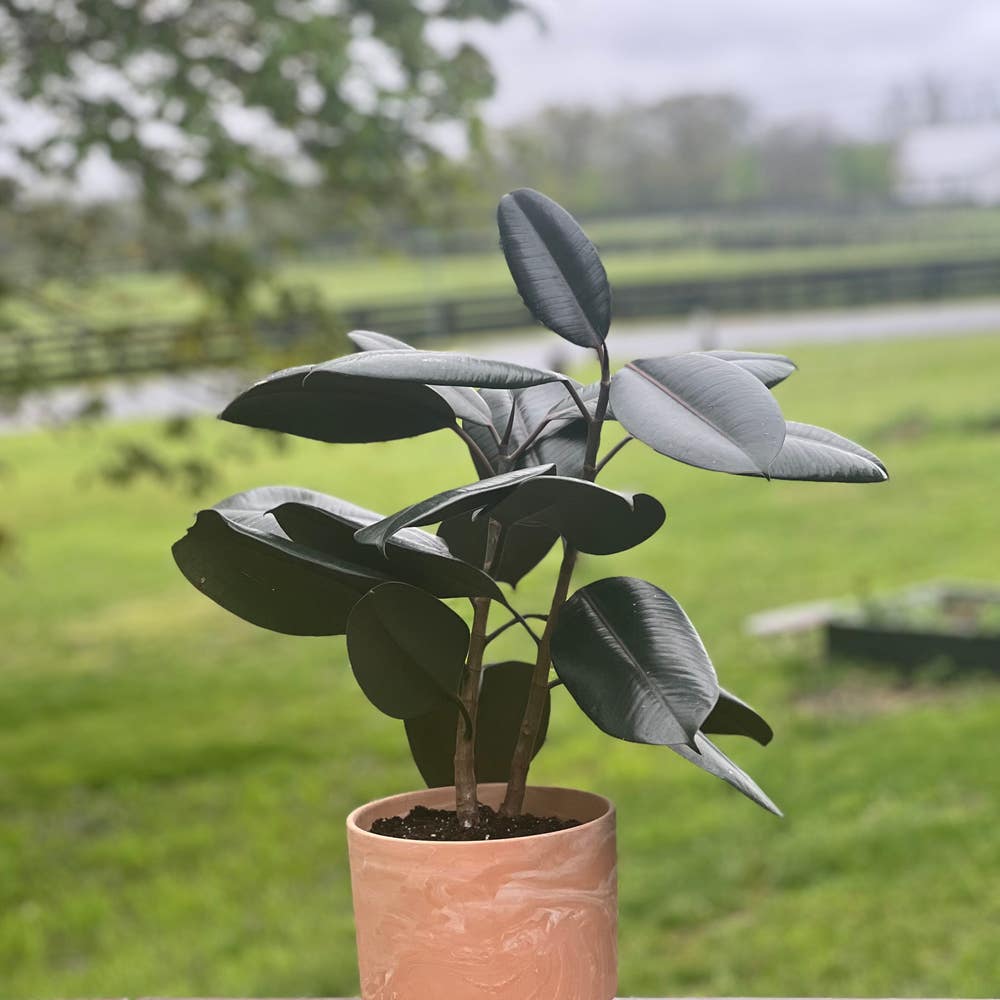
How to Cure Root Rot in Your Purple Rubber Plant 💧
Ficus elastica 'Burgundy'
By the Greg Editorial Team
Oct 17, 2024•5 min read
This article was created with the help of AI so we can cover more plants for you. May contain errors. See one? Report it here.
Save your purple rubber plant from root rot 🌱 with these vital tips for vibrant, healthy growth!
- 💧 Overwatering causes root rot; ensure soil drains well to protect roots.
- 🌱 Yellowing leaves indicate stress; check for root health and moisture levels.
- 🧼 Repot with well-draining soil and trim affected roots to promote recovery.
Causes of Root Rot
🔑 Key Factors
Root rot is a common issue for purple rubber plants, and understanding its causes is crucial for prevention. Here are the main culprits:
💧 Overwatering
Overwatering is the leading cause of root rot. When you give your plant too much water, it creates excessive moisture that the soil can't drain, leading to soggy roots.
🏞️ Soil Drainage Issues
Soil drainage plays a vital role in root health. Compacted or heavy soils retain water, preventing air from reaching the roots and creating a perfect environment for rot.
🦠 Fungal Infections
Fungal pathogens thrive in overly wet conditions. These invaders can quickly take hold, causing significant damage to your plant's root system.
🌧️ Environmental Factors
High humidity and low light conditions can exacerbate moisture retention. If your plant is in a dimly lit area with high humidity, it’s more susceptible to developing root rot.
Understanding these key factors can help you create a healthier environment for your purple rubber plant. By addressing these issues, you can significantly reduce the risk of root rot and keep your plant thriving.
Next, let’s explore how to identify the symptoms of root rot.
Symptoms of Root Rot
🕵️♂️ Identifying Signs
Recognizing root rot early can save your purple rubber plant from serious damage. Here are the key symptoms to watch for:
🍂 Yellowing Leaves
If your plant's leaves start to yellow, it’s a clear sign of stress. This often indicates nutrient deficiencies caused by poor root health.
😩 Wilting
You might notice wilting leaves even after watering. This drooping can be misleading, as it often signals that the roots are unable to absorb water effectively.
🥴 Brown, Mushy Roots
Inspecting the roots is crucial. If you find brown, mushy roots, it’s a strong indicator of decay and root rot.
🤢 Foul Odor
A musty smell coming from the soil is another red flag. This odor suggests the presence of rot and pathogens thriving in overly wet conditions.
By being vigilant about these symptoms, you can take action before the situation worsens. Next, let’s explore how to diagnose root rot effectively.
Diagnosing Root Rot
Methods 🌧️
Diagnosing root rot in your purple rubber plant is crucial for saving it. Start by checking soil moisture levels; a moisture meter or a simple finger test can reveal if the soil is too wet.
Root Inspection 🔍
Next, gently remove the plant from its pot. This allows you to inspect the roots directly for any signs of decay.
Assessing Overall Plant Health 🌿
Finally, evaluate the overall health of your plant. Look for yellowing leaves, drooping, or stunted growth, as these can indicate stress and potential root issues.
By following these steps, you can effectively diagnose root rot and take action before it’s too late. Understanding these signs will help you maintain a healthy, thriving purple rubber plant.
Treating Root Rot
Step-by-Step Treatment Process 🌱
Remove the plant from its pot: Start by gently loosening the soil around the roots. This helps minimize stress on the plant.
Inspect the roots: Carefully examine the roots to differentiate between healthy and rotting sections. Healthy roots should be firm and white, while rotting roots appear brown and mushy.
Trim affected roots: Using sterilized scissors, cut away any brown, mushy sections. This step is crucial for preventing further decay.
Clean the pot: Disinfect the pot with a bleach solution to eliminate any lingering pathogens. A clean pot is essential for the plant's recovery.
Repot with fresh soil: Use a well-draining soil mix suitable for Ficus elastica. This ensures that excess moisture can escape, reducing the risk of future root rot.
Tools and Materials Needed 🛠️
- Sterilized scissors or pruning shears: Essential for trimming affected roots safely.
- Disinfectant (bleach or rubbing alcohol): Necessary for cleaning the pot and tools.
- Well-draining potting mix: Consider using cactus mix or a blend with perlite for optimal drainage.
- New pot with drainage holes: Ensure your new pot allows excess water to escape.
By following these steps, you can effectively treat root rot and give your purple rubber plant a fighting chance. Next, let’s explore how to prevent root rot from occurring in the first place.
Preventing Root Rot
🌱 Soil Types
Choosing the right soil is crucial for your purple rubber plant's health. Opt for a well-draining potting mix and steer clear of heavy soils that retain too much moisture.
💧 Watering Techniques
Watering wisely can make all the difference. Allow the top 1-2 inches of soil to dry out before giving your plant another drink, ensuring it doesn’t sit in soggy conditions.
🌡️ Monitoring Environmental Conditions
Keep an eye on your plant's surroundings. Maintaining moderate humidity, adequate light exposure, and stable temperature levels will help prevent root rot and promote healthy growth.
📝 Final Thoughts
By implementing these best practices, you can significantly reduce the risk of root rot. A little attention goes a long way in keeping your purple rubber plant thriving and vibrant.
⚠️ Safety First
This content is for general information and may contain errors, omissions, or outdated details. It is not medical, veterinary advice, or an endorsement of therapeutic claims.
Always consult a qualified healthcare professional before using any plant as food, medicine, or supplement.
Never eat any plant (or feed one to pets) without confirming its identity with at least two trusted sources.
If you suspect poisoning, call Poison Control (800) 222-1222, the Pet Poison Helpline (800) 213-6680, or your local emergency service immediately.
Spotted an error? Please report it here.
Keep your purple rubber plant thriving and rot-free 🌿 with Greg's tailored watering alerts and expert advice to prevent root rot before it starts!