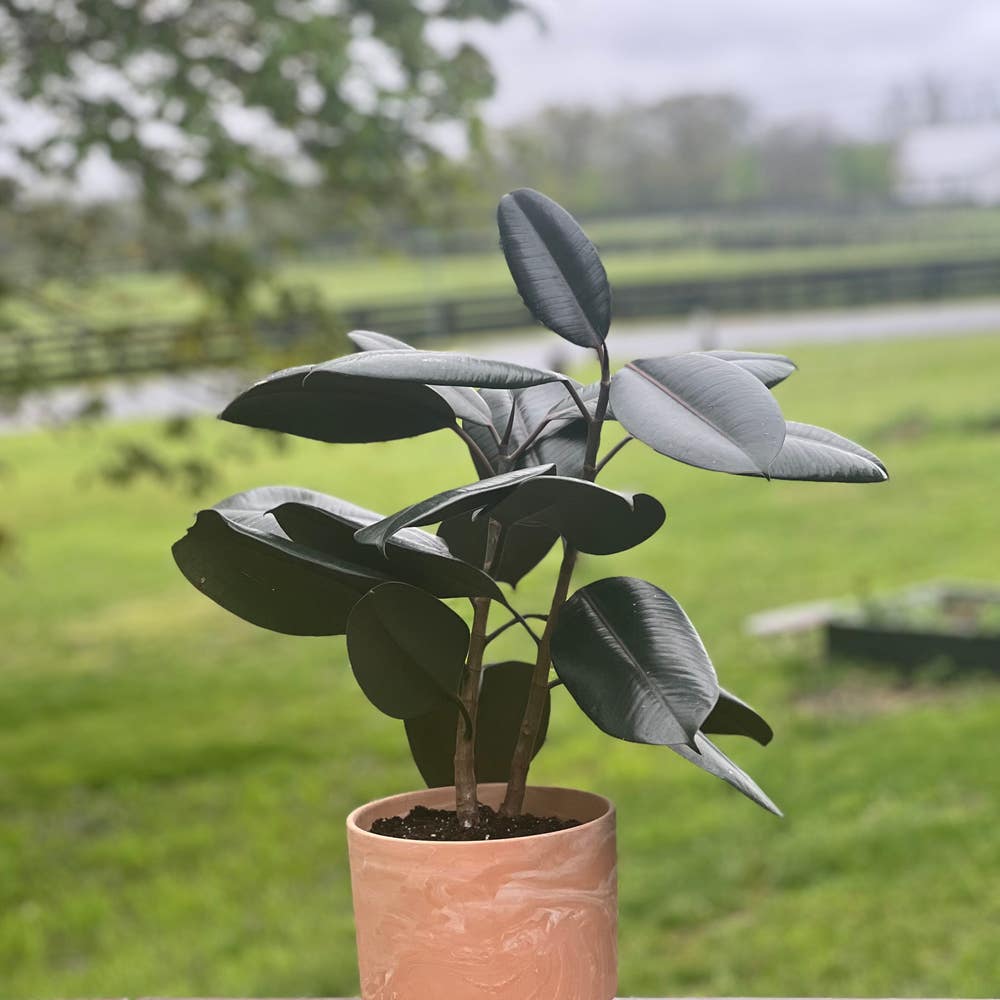
💜 Ultimate Guide to Humidity for Purple Rubber Plant
Ficus elastica 'Burgundy'
By the Greg Editorial Team
Oct 17, 2024•7 min read
This article was created with the help of AI so we can cover more plants for you. May contain errors. See one? Report it here.
Unlock your Purple Rubber Plant's full potential by mastering humidity levels for vibrant growth! 🌱
- 🌱 Maintain 50%-70% humidity for optimal growth of your Purple Rubber Plant.
- 🚨 Signs of low humidity include brown tips, drooping leaves, and stunted growth.
- 💧 Use hygrometers to accurately measure humidity and adjust care accordingly.
Ideal Humidity Levels for Optimal Growth
Optimal Range 🌴
For your Purple Rubber Plant to thrive, aim for a relative humidity level between 50% and 70%. This range closely mimics the plant's natural tropical habitat, promoting lush growth and vibrant leaves.
Signs of Inadequate Humidity 🚨
When humidity levels drop, your plant will show clear signs of distress. Look out for brown leaf tips and edges, as well as drooping leaves, which indicate that your plant is struggling.
Stunted growth and unexpected leaf drop are also common issues linked to low humidity. Over time, inadequate moisture can make your plant more vulnerable to pests and diseases, leading to further complications.
By keeping an eye on these symptoms, you can ensure your Purple Rubber Plant remains healthy and vibrant. Next, let’s explore the difference between absolute and relative humidity, which is crucial for understanding your plant's needs.
Difference Between Absolute and Relative Humidity
Definitions 🌧️
Absolute humidity refers to the actual amount of water vapor present in the air, measured in grams per cubic meter. This measurement gives a clear picture of how much moisture is in the environment.
Relative humidity, on the other hand, is the percentage of moisture in the air compared to the maximum amount the air can hold at a specific temperature. This concept is crucial for understanding how humidity affects your Purple Rubber Plant.
Importance for Plant Care 🌱
When it comes to plant care, relative humidity is the star of the show. It directly influences how plants absorb water and nutrients, making it essential for their overall health and growth.
Understanding these two types of humidity helps you tailor your care strategies effectively. By focusing on relative humidity, you can ensure your plant thrives in its indoor environment.
As you dive deeper into humidity management, you'll find practical ways to create the ideal conditions for your Purple Rubber Plant.
Assessing Local Humidity
🛠️ Tools for Measuring Humidity
To keep your Purple Rubber Plant thriving, accurate humidity measurement is key. Hygrometers come in two main types: digital and analog. Digital hygrometers offer precise readings, while analog models are often more affordable and straightforward.
For those who love tech, indoor humidity monitors can provide real-time tracking of moisture levels. These smart devices can alert you to changes, helping you adjust care as needed. Regular monitoring is crucial; it allows you to respond promptly to fluctuations that could affect your plant's health.
🌦️ Understanding Local Climate
Outdoor humidity can significantly impact your indoor environment. Seasonal variations mean that humidity levels can shift dramatically throughout the year. For instance, winter heating can dry out the air, while summer can bring excessive moisture.
Urban and rural settings also play a role in humidity levels. Urban areas may have higher humidity due to concrete and asphalt, while rural locations might experience more natural fluctuations. Understanding these differences helps you tailor your plant care effectively.
To adapt to local conditions, consider strategies like adjusting watering schedules or using humidity-boosting techniques. This proactive approach ensures your Purple Rubber Plant receives the care it needs, regardless of external factors.
As you assess local humidity, remember that small adjustments can lead to significant improvements in your plant's health. With the right tools and knowledge, you'll create an environment where your Purple Rubber Plant can flourish.
Next, let’s explore effective strategies for boosting humidity to support your plant's growth.
Strategies for Boosting Humidity
🌬️ Using Humidifiers
Humidifiers are a fantastic way to maintain the ideal humidity levels for your Purple Rubber Plant. You can choose between cool mist and warm mist options, each offering unique benefits.
For maximum effect, position the humidifier near your plant. This ensures that the moisture directly reaches the leaves, promoting healthy growth.
Regular maintenance is crucial; clean your humidifier often to prevent mold and bacteria growth. A clean humidifier means a healthier environment for your plant.
🌱 Grouping Plants Together
Clustering your plants can create a microenvironment with higher humidity. When plants are grouped, they naturally release moisture into the air, benefiting each other.
Ensure adequate airflow between plants to prevent mold. Aim for spacing that allows for both humidity retention and good air circulation.
Consider adding humidity-loving companion plants to your collection. They not only thrive in higher humidity but also enhance the overall aesthetic of your space.
🪨 Pebble Trays and Water Features
Creating pebble trays is a simple yet effective method to boost humidity. Fill a shallow tray with pebbles and water, then place your plant on top.
As the water evaporates, it increases local humidity around the plant. This method is particularly useful for those who prefer low-maintenance solutions.
Incorporating small water features, like fountains or aquariums, can also elevate humidity levels. The gentle evaporation from these sources can create a lush, tropical feel in your home.
💦 Misting Techniques
Misting can be a quick way to provide extra humidity, but timing is key. Aim to mist your plant early in the morning or late afternoon to avoid excess moisture on leaves overnight.
You can use handheld spray bottles for a manual approach or invest in automatic misting systems for convenience.
However, be aware of the limitations of misting. It may not be enough to meet your plant's humidity needs, especially in drier environments.
By employing these strategies, you can create an ideal humidity environment for your Purple Rubber Plant, ensuring it thrives. Next, let’s explore how to assess local humidity levels effectively.
Strategies for Reducing Humidity
Ventilation Techniques 🌬️
Proper airflow is crucial for managing humidity levels in your home. Good ventilation helps prevent moisture buildup, which can harm your Purple Rubber Plant.
Opening windows is a simple yet effective natural ventilation method. Fresh air circulation can significantly reduce indoor humidity, especially on dry days.
Exhaust fans are another great tool. Utilizing kitchen and bathroom fans can help control moisture levels, especially after cooking or showering.
Choosing the Right Location 📍
Identifying high humidity areas in your home is essential. Avoid placing your plant in basements or poorly ventilated spaces where moisture tends to accumulate.
Instead, look for bright, airy locations that balance light and humidity. These spots will provide your plant with the right environment to thrive.
Keep an eye on seasonal changes. Adjusting your plant's placement based on humidity shifts can make a big difference in its health.
Using Dehumidifiers 💧
When humidity levels are consistently high, a dehumidifier can be a lifesaver. There are two main types: portable units for specific rooms and whole-home systems for broader control.
Setting humidity targets is key. Aim for levels that maintain your plant's health, typically between 50% and 70%.
Regular maintenance is essential for optimal performance. Clean your dehumidifier frequently and monitor its effectiveness to ensure your plant remains happy and healthy.
With these strategies, you can effectively manage humidity levels, creating a thriving environment for your Purple Rubber Plant. Next, let's explore seasonal considerations that can impact humidity and plant care.
Seasonal Considerations
🌧️ Seasonal Humidity Fluctuations
Humidity levels can vary significantly with the seasons, impacting your Purple Rubber Plant's health. In winter, heating systems often dry out indoor air, leading to a drop in humidity that can stress your plant.
During the summer months, humidity can spike, creating a damp environment. This excess moisture can lead to issues like mold or pests if not managed properly.
🌱 Adapting Care
Adjusting your care routine is essential as the seasons change. In winter, consider increasing humidity through methods like misting or using pebble trays.
In summer, monitor moisture levels closely. You might need to reduce watering or enhance ventilation to prevent over-saturation.
By staying attuned to seasonal shifts, you can ensure your Purple Rubber Plant thrives year-round. This proactive approach will help you maintain the ideal humidity levels for optimal growth.
⚠️ Safety First
This content is for general information and may contain errors, omissions, or outdated details. It is not medical, veterinary advice, or an endorsement of therapeutic claims.
Always consult a qualified healthcare professional before using any plant as food, medicine, or supplement.
Never eat any plant (or feed one to pets) without confirming its identity with at least two trusted sources.
If you suspect poisoning, call Poison Control (800) 222-1222, the Pet Poison Helpline (800) 213-6680, or your local emergency service immediately.
Spotted an error? Please report it here.
Boost your Purple Rubber Plant's health by maintaining ideal humidity levels 🌧️ with Greg's tailored reminders and tips for a thriving tropical environment!