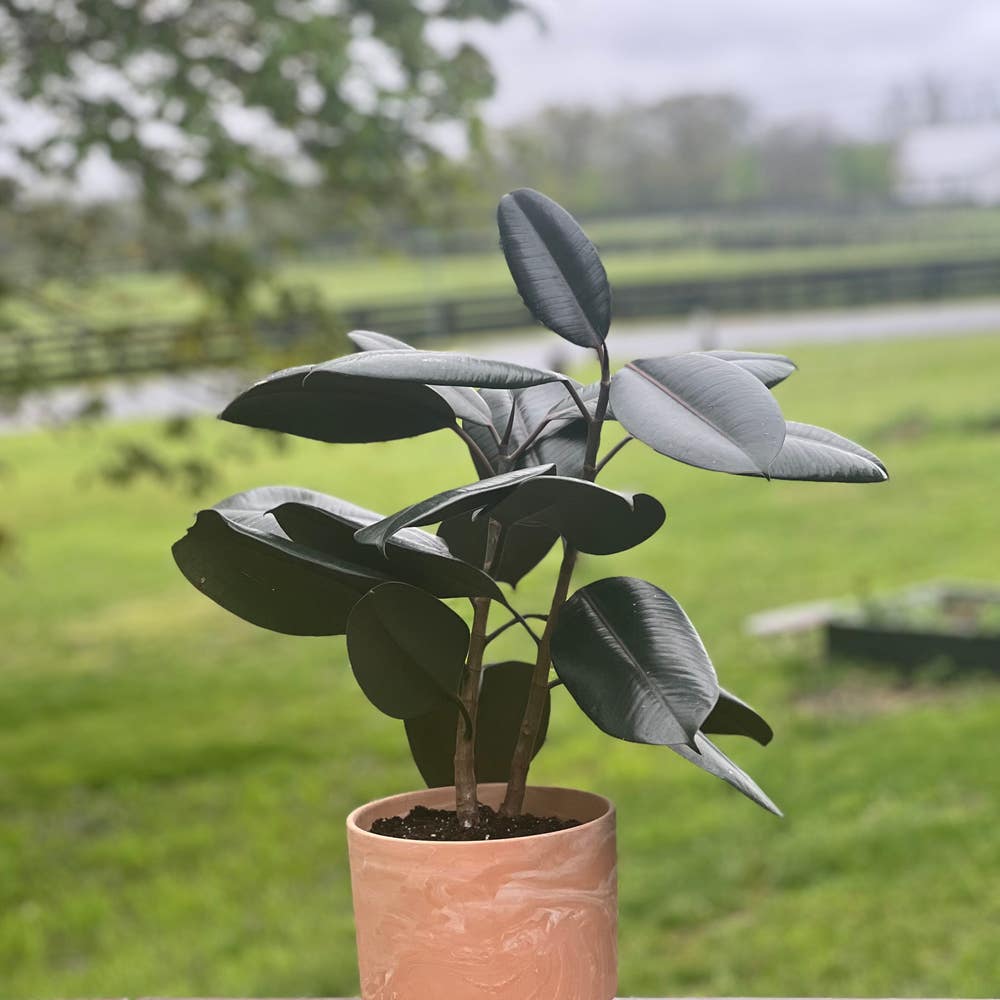
💜 How to Fix Droopy Leaves on Your Purple Rubber Plant
Ficus elastica 'Burgundy'
By the Greg Editorial Team
Oct 17, 2024•4 min read
This article was created with the help of AI so we can cover more plants for you. May contain errors. See one? Report it here.
Transform your droopy purple rubber plant into a thriving beauty with these essential care tips! 🌱
- 💧 Overwatering signs include yellow leaves and soggy soil; adjust watering accordingly.
- 🌞 Bright, indirect light is crucial; avoid direct sunlight to prevent droopy leaves.
- 🌿 Monitor humidity levels (40-60%) for optimal growth and leaf health.
Causes of Droopy Leaves
💧 Overwatering: Signs and Solutions
Overwatering is a common culprit behind droopy leaves on your purple rubber plant.
Signs of Overwatering:
- Yellowing Leaves: If your leaves are turning yellow and dropping off, it’s a red flag.
- Wilting Despite Wet Soil: You might notice leaves drooping even when the soil feels soggy.
Solutions:
- Check Soil Moisture: Use a moisture meter or stick your finger 2 inches into the soil to gauge moisture levels.
- Adjust Watering Schedule: Allow the top 2 inches of soil to dry out before watering again.
- Improve Drainage: Ensure your pot has drainage holes and consider repotting in a well-draining soil mix.
🚰 Underwatering: Signs and Solutions
Underwatering can also lead to droopy leaves, often mistaken for overwatering.
Signs of Underwatering:
- Crispy Leaf Edges: Leaves may become dry and brittle, signaling a lack of water.
- Leaf Droop: You might see leaves drooping and curling inward.
Solutions:
- Assess Soil Moisture: Check if the soil is completely dry.
- Water Thoroughly: Water until it drains from the bottom of the pot.
- Establish a Consistent Watering Routine: Water when the top inch of soil feels dry to the touch.
🌡️ Environmental Stress: Temperature and Humidity Effects
Environmental factors like temperature and humidity can significantly impact your plant's health.
Temperature Requirements:
- Ideal Range: Keep your plant in a temperature range of 60°F to 75°F (15°C to 24°C).
- Signs of Stress: Leaves may droop if temperatures drop below 50°F (10°C).
Humidity Requirements:
- Optimal Humidity: Aim for 40-60% humidity for healthy growth.
- Signs of Low Humidity: Look for browning leaf edges and drooping leaves.
Solutions:
- Maintain Stable Temperatures: Avoid placing your plant near drafts or heating vents.
- Increase Humidity: Use a humidifier or a pebble tray filled with water to boost humidity levels.
💡 Light Conditions: Impact on Leaf Health
Light conditions play a crucial role in the overall health of your purple rubber plant.
Ideal Light Conditions:
- Best in Bright, Indirect Light: While it can tolerate low light, inadequate light may lead to droopy leaves.
Signs of Inadequate Light:
- Stretched Stems and Drooping Leaves: These are clear indicators that your plant needs more light.
Solutions:
- Relocate the Plant: Move it to a brighter location, but avoid direct sunlight.
- Rotate the Plant: Ensure even light exposure on all sides to promote balanced growth.
🐛 Pest Infestation: Identifying and Treating Common Pests
Pests can wreak havoc on your plant, leading to droopy leaves and other issues.
Common Pests:
- Spider Mites: Look for webbing and stippled leaves as signs of infestation.
- Mealybugs: These appear as white, cotton-like clusters on leaves.
Solutions:
- Inspect Regularly: Check the undersides of leaves for any signs of pests.
- Treatment Methods: Use insecticidal soap or neem oil to control infestations effectively.
Understanding these causes and solutions will empower you to keep your purple rubber plant thriving. Next, let’s explore recovery strategies for droopy leaves.
Recovery Strategies for Droopy Leaves
🌱 Step-by-Step Recovery Process
Identifying the cause of droopy leaves is your first step. Check for signs of overwatering, underwatering, or environmental stress.
Next, adjust your care practices based on what you find. Implement the appropriate solutions to address the specific issue.
Finally, monitor your plant’s progress closely. Observe any changes over the next few weeks to ensure recovery.
✂️ When to Prune Affected Leaves
Timing is crucial when it comes to pruning. Only prune leaves that are severely damaged or yellowing to encourage new growth.
Make sure to use clean, sharp scissors. This helps avoid any potential infections that could hinder recovery.
🌿 Fertilization After Stress
After your plant shows signs of recovery, wait at least a month before fertilizing. This gives it time to stabilize.
When you do fertilize, opt for a balanced, water-soluble fertilizer. Dilute it to half strength to avoid overwhelming your plant.
🪴 Re-potting Considerations
Consider re-potting if your plant is root-bound or if the soil drainage is poor. This can significantly improve its health.
When re-potting, choose a pot that is 1-2 inches larger in diameter. Use fresh, well-draining soil to give your plant a fresh start.
Lastly, water thoroughly after re-potting. This helps settle the soil and provides immediate hydration.
With these recovery strategies, your purple rubber plant can bounce back beautifully. Next, let’s explore how to maintain its health for the long term.
⚠️ Safety First
This content is for general information and may contain errors, omissions, or outdated details. It is not medical, veterinary advice, or an endorsement of therapeutic claims.
Always consult a qualified healthcare professional before using any plant as food, medicine, or supplement.
Never eat any plant (or feed one to pets) without confirming its identity with at least two trusted sources.
If you suspect poisoning, call Poison Control (800) 222-1222, the Pet Poison Helpline (800) 213-6680, or your local emergency service immediately.
Spotted an error? Please report it here.
Revive your droopy purple rubber plant by mastering its watering and light needs, and let Greg's tailored reminders and moisture tracking keep your plant thriving 🌿!