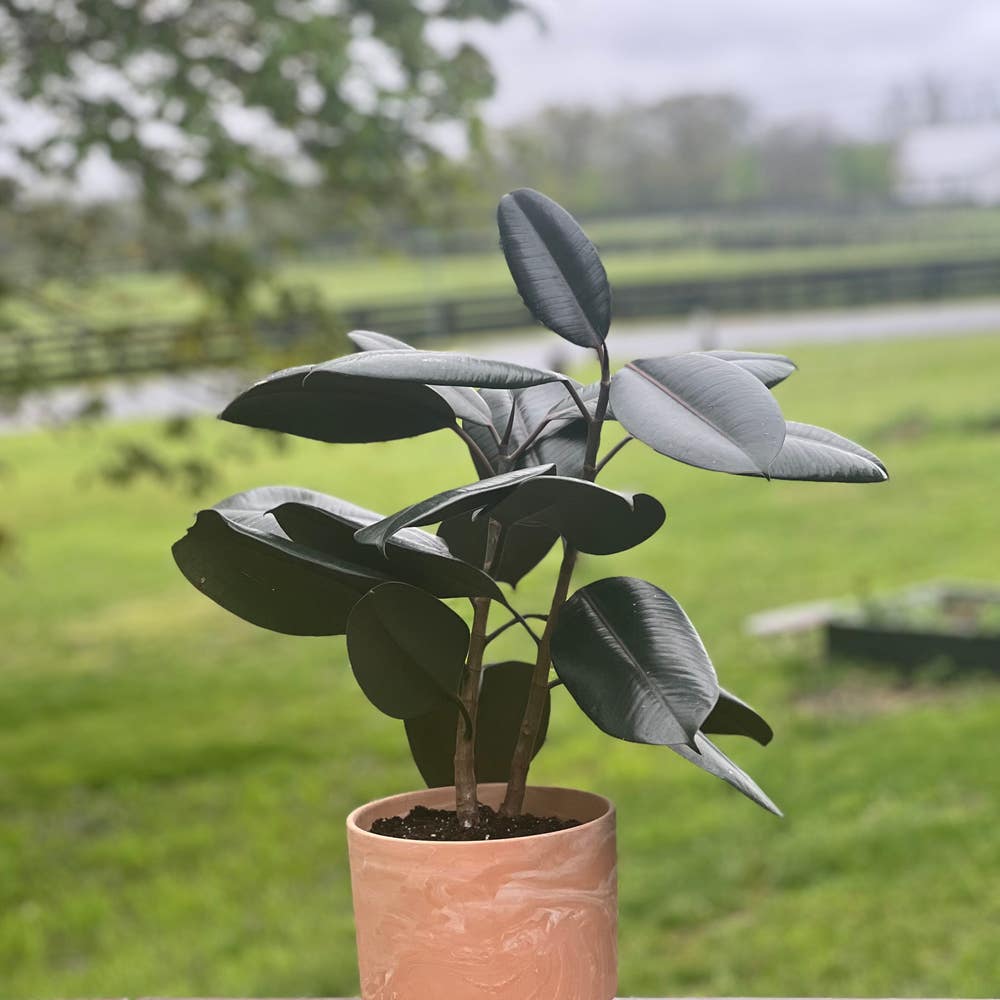
When and Where to Cut Back Your Purple Rubber Plant ✂️
Ficus elastica 'Burgundy'
By the Greg Editorial Team
Oct 17, 2024•2 min read
This article was created with the help of AI so we can cover more plants for you. May contain errors. See one? Report it here.
Elevate your purple rubber plant's beauty 🌿 with essential pruning techniques for vibrant, healthy growth!
- ✂️ Gather sharp tools and disinfect to ensure a safe pruning process.
- 🌱 Prune dead or leggy growth to promote bushier, healthier plants.
- ⏰ Timing is key; regular pruning enhances your purple rubber plant's health and appearance.
Pruning Techniques
🛠️ Tools Needed for Pruning
To effectively prune your purple rubber plant, gather the right tools. You'll need sharp pruning shears for clean cuts, a disinfectant like alcohol or bleach solution to sterilize your tools, gloves to protect your hands from sap, and a measuring tape to maintain the desired height and shape.
📋 Step-by-Step Pruning Instructions
- Assess the plant: Start by identifying areas that need pruning based on growth habits.
- Prepare tools: Sterilize your pruning shears to avoid introducing infections.
- Remove dead or damaged leaves: Cut at the base of the leaf stem to promote new growth.
- Trim back leggy growth: Identify any stems that are longer than desired and cut back to a node or growth point.
- Shape the plant: Step back and evaluate the overall shape, making additional cuts as needed for symmetry.
- Clean up: Dispose of cuttings promptly to prevent pest issues.
🌼 Deadheading and Its Benefits
- Identify spent leaves: Look for yellowing or damaged foliage that detracts from your plant's appearance.
- Use sterilized shears: Cut at the base of the leaf stem to remove these leaves.
- Dispose of cut leaves: This helps prevent potential pest problems.
Benefits of Deadheading
Deadheading encourages new leaf growth, helping your plant maintain a lush appearance. It also reduces energy expenditure, allowing the plant to focus on healthy growth.
❌ Common Pruning Mistakes
⚠️ Over-Pruning: Signs and Consequences
Over-pruning can lead to excessive leaf drop and stunted growth. This stress can make your plant more susceptible to diseases.
✂️ Incorrect Cutting Techniques
Using dull tools can lead to tearing instead of clean cuts. Cutting too close to the main stem risks damaging the plant, so always aim for precision.
📏 Where to Cut Back
🔍 Identifying Nodes and Growth Points
Understanding nodes is crucial; these are the points on the stem where leaves emerge. Cutting above these nodes promotes new growth from the cut area.
🔪 Recommended Cutting Techniques
Make cuts at a 45-degree angle to promote healing and ensure clean cuts to minimize stress on the plant.
With these techniques in hand, you're well-equipped to keep your purple rubber plant thriving. Next, let’s explore the importance of identifying nodes and growth points for effective pruning.
⚠️ Safety First
This content is for general information and may contain errors, omissions, or outdated details. It is not medical, veterinary advice, or an endorsement of therapeutic claims.
Always consult a qualified healthcare professional before using any plant as food, medicine, or supplement.
Never eat any plant (or feed one to pets) without confirming its identity with at least two trusted sources.
If you suspect poisoning, call Poison Control (800) 222-1222, the Pet Poison Helpline (800) 213-6680, or your local emergency service immediately.
Spotted an error? Please report it here.
Transform your purple rubber plant into a lush beauty 🌿 with Greg's tailored pruning reminders and expert tips that ensure you cut back at just the right time!