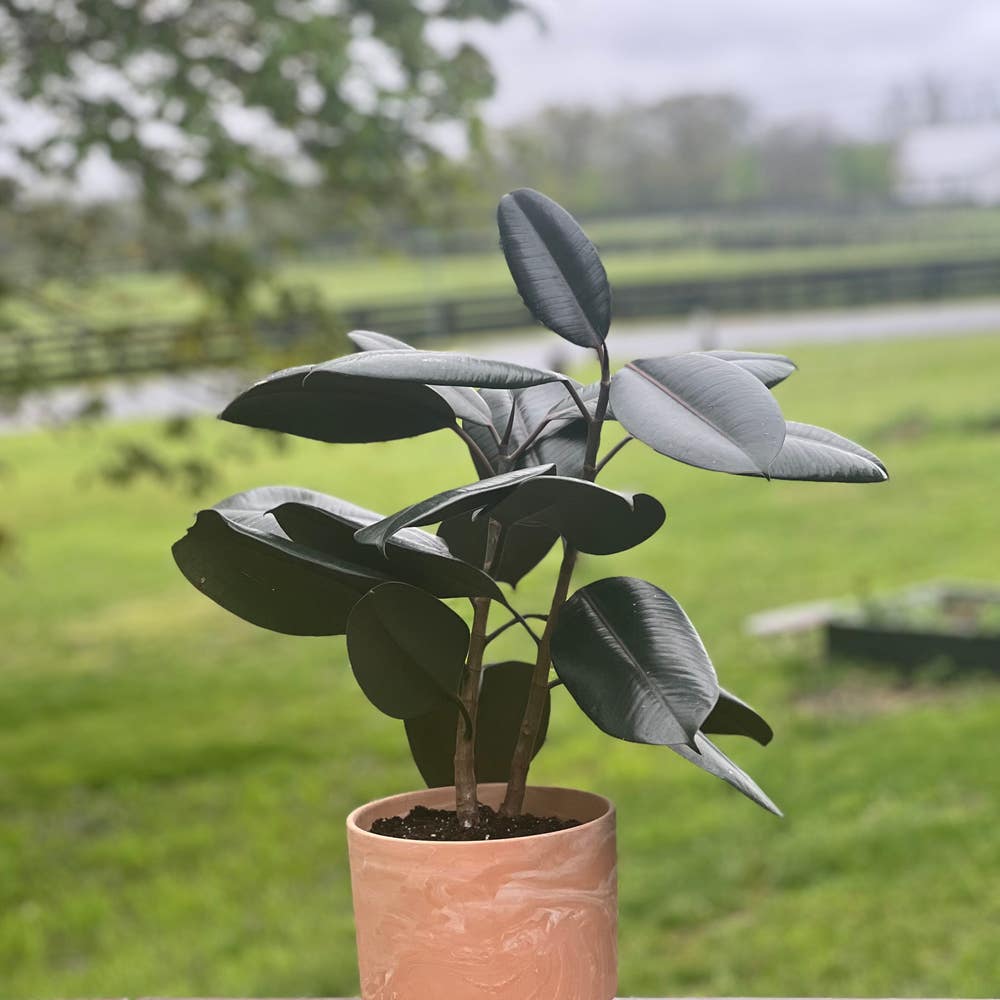
💜 Why Your Purple Rubber Plant Leaves Are Dropping
Ficus elastica 'Burgundy'
By the Greg Editorial Team
Oct 17, 2024•6 min read
This article was created with the help of AI so we can cover more plants for you. May contain errors. See one? Report it here.
Transform your Purple Rubber Plant care 🌱 with essential tips to prevent leaf drop and ensure vibrant growth!
- 💧 Overwatering and underwatering are primary causes of leaf drop in Purple Rubber Plants.
- 🌡️ Maintain 65°F to 80°F temperature and 40%-60% humidity to prevent stress.
- 🐛 Regular pest inspections are essential to avoid infestations that weaken your plant.
Causes of Leaf Drop
💧 Overwatering and Its Effects
Overwatering is a common culprit behind leaf drop in Purple Rubber Plants. Symptoms include yellowing leaves and mushy stems, indicating that the roots are struggling.
Root rot can severely impact leaf health, leading to further deterioration. Ensuring proper soil drainage is crucial; a well-draining potting mix is ideal to prevent waterlogging.
🚰 Underwatering and Its Symptoms
On the flip side, underwatering can also cause distress. Look for wilting leaves and dry, crispy edges as signs that your plant is thirsty.
Leaf drop often occurs as a stress response to insufficient water. Maintaining a consistent watering schedule is vital; aim to water when the top inch of soil feels dry.
🐛 Pest Infestations
Pests can wreak havoc on your Purple Rubber Plant. Common offenders include spider mites, which leave behind webbing and stippled leaves, and mealybugs, identifiable by their cotton-like clusters.
These infestations weaken the plant, leading to leaf drop as a secondary effect. Regular inspections can help catch these pests early.
🌡️ Environmental Stress
Temperature fluctuations can stress your plant significantly. The ideal temperature range is between 65°F to 80°F (18°C to 27°C), so be mindful of drafts and sudden changes.
Humidity levels also play a role; Purple Rubber Plants thrive in 40% to 60% humidity. Low humidity can cause symptoms like leaf curling and browning.
💡 Poor Light Conditions
Light conditions are crucial for optimal growth. Purple Rubber Plants prefer moderate to bright indirect light.
Too much light can scorch leaves, while too little can result in leggy growth and leaf drop. Adjusting your plant's position based on seasonal light changes can make a big difference.
Understanding these causes can help you take proactive steps to keep your Purple Rubber Plant healthy and thriving. Next, let’s explore how to prevent leaf drop effectively.
Preventing Leaf Drop
🌊 Proper Watering Techniques
Watering your Purple Rubber Plant correctly is crucial for its health. Always check the soil moisture before watering; this ensures you’re not overdoing it.
Using pots with drainage holes is essential to prevent waterlogging. This simple step can save your plant from root rot.
🌱 Ideal Soil Mix for Purple Rubber Plant
The right soil mix can make all the difference. A blend of potting soil, perlite, and orchid bark provides excellent aeration.
Don't forget to repot your plant every 1-2 years. This refreshes the soil and supports healthy growth.
☀️ Optimal Light Conditions
Light plays a vital role in your plant's well-being. Place your Purple Rubber Plant near east or west-facing windows for the best light exposure.
As seasons change, be ready to adjust your plant's position. This ensures it receives the right amount of light year-round.
💧 Maintaining Humidity Levels
Humidity is key for a thriving Purple Rubber Plant. You can increase humidity by using humidifiers or pebble trays filled with water.
Grouping plants together can create a microclimate, boosting humidity levels naturally. This simple trick can work wonders for your plant's health.
🐞 Regular Pest Inspections and Treatments
Routine checks for pests are essential to keep your plant healthy. Aim to inspect your Purple Rubber Plant every 1-2 weeks.
If you spot any pests, treatments like neem oil or insecticidal soap are effective. Early intervention can prevent infestations from becoming a bigger problem.
By following these preventive measures, you can significantly reduce the risk of leaf drop. Your Purple Rubber Plant will thrive, showcasing its beautiful foliage for years to come.
Diagnosing Leaf Drop
🌊 Identifying Signs of Overwatering vs. Underwatering
Understanding the signs of overwatering and underwatering is crucial for your Purple Rubber Plant's health.
- Overwatering often presents as yellow leaves and soggy soil, indicating root rot.
- Underwatering shows up as dry, crispy leaves and wilting, signaling that your plant is stressed.
🐛 Recognizing Pest Damage on Leaves
Pest infestations can wreak havoc on your plant's health.
Look for visual signs like leaf discoloration, webbing, and sticky residue. Early detection is key; catching pests early can save your plant from severe damage.
🌡️ Assessing Environmental Factors Affecting the Plant
Environmental conditions play a significant role in your plant's well-being.
Evaluate temperature and humidity levels using tools like thermometers and hygrometers. Also, keep an eye out for drafts or sudden temperature changes that could stress your plant.
🎨 Understanding Leaf Color Changes and Their Meanings
Leaf color changes can provide insight into your plant's needs.
- Yellowing leaves may indicate overwatering or a nutrient deficiency.
- Browning edges often point to underwatering or low humidity levels.
By diagnosing these issues early, you can take proactive steps to restore your Purple Rubber Plant to its vibrant self. Next, let’s explore effective treatments for leaf drop.
Treating Leaf Drop
Step-by-Step Guide to Adjusting Watering Habits 🌊
- Check Soil Moisture: Use your finger or a moisture meter to gauge the soil's dampness.
- Watering Schedule: Only water when the top inch of soil feels dry to the touch.
- Drainage: Ensure excess water drains out of the pot to prevent root rot.
How to Treat Pest Infestations Effectively 🐛
- Identify the Pest: Look closely at your plant to determine which pest is causing the issue.
- Apply Treatment: Use neem oil or insecticidal soap according to the product instructions.
- Monitor Recovery: Keep an eye on your plant for signs of improvement after treatment.
Remedies for Environmental Stress 🌬️
- Temperature and Humidity: Move your plant away from drafts and heat sources to stabilize its environment.
- Use a Humidifier: Maintain preferred humidity levels by using a humidifier or placing a pebble tray filled with water nearby.
Soil Amendment Techniques for Better Drainage 🪴
- Inspect Roots: Carefully remove the plant from its pot and check the roots for any signs of rot.
- Amend Soil: Mix in perlite or orchid bark to improve aeration and drainage.
- Repot: Use the ideal soil mix for Purple Rubber Plants to ensure healthy growth.
Fertilization Schedule to Promote Healthy Growth 🌱
- Fertilization Frequency: Fertilize monthly during the growing season, which is spring and summer.
- Suitable Fertilizers: Opt for a balanced NPK fertilizer to support optimal growth.
By following these steps, you can effectively treat leaf drop in your Purple Rubber Plant and set it on the path to recovery. Next, let’s explore how to care for your plant after it has experienced leaf drop.
Post-Drop Care
🌱 How to Care for a Purple Rubber Plant After Leaf Drop
After experiencing leaf drop, your Purple Rubber Plant needs a little extra TLC. Focus on consistent watering and ensure it receives optimal light conditions to support its recovery.
Patience is key during this time. Plants can take a while to bounce back, so don’t rush the process.
🌿 Signs of Recovery and New Growth
Look for indicators that your plant is on the mend. New leaf growth and improved leaf color are great signs that your Purple Rubber Plant is bouncing back.
Keep an eye out for any recurring issues. Monitoring your plant closely will help you catch problems early.
🌍 When to Repot or Change Soil
Repotting may be necessary if you notice root-bound conditions or soil degradation. These signs indicate that your plant needs more space or fresh nutrients.
The best time to repot is early spring, just before the growing season begins. This timing allows your plant to thrive in its new environment.
⚠️ Safety First
This content is for general information and may contain errors, omissions, or outdated details. It is not medical, veterinary advice, or an endorsement of therapeutic claims.
Always consult a qualified healthcare professional before using any plant as food, medicine, or supplement.
Never eat any plant (or feed one to pets) without confirming its identity with at least two trusted sources.
If you suspect poisoning, call Poison Control (800) 222-1222, the Pet Poison Helpline (800) 213-6680, or your local emergency service immediately.
Spotted an error? Please report it here.
Revive your Purple Rubber Plant and watch it flourish 🌿 with Greg's tailored care reminders and pest management tips that keep your plant thriving!