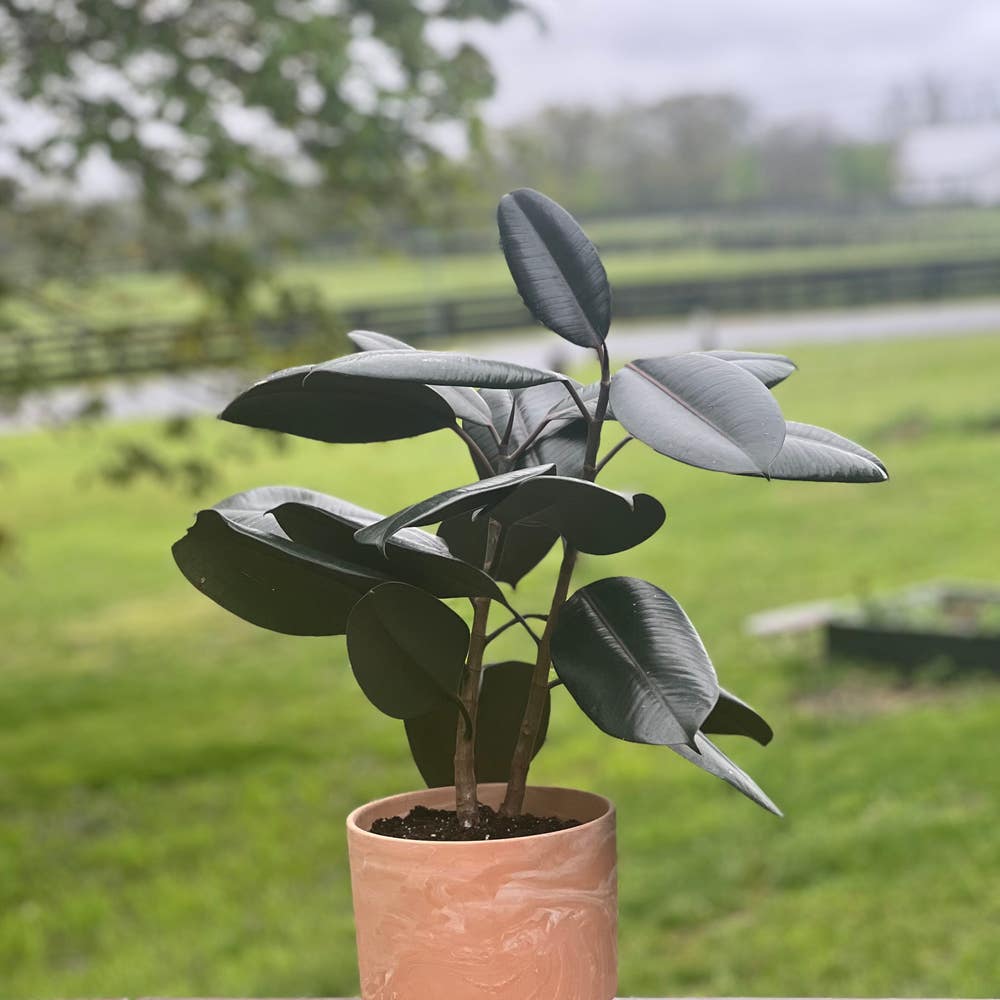
Managing Direct Sunlight for Your Purple Rubber Plant ☀️
Ficus elastica 'Burgundy'
By the Greg Editorial Team
Oct 17, 2024•5 min read
This article was created with the help of AI so we can cover more plants for you. May contain errors. See one? Report it here.
Master your Purple Rubber Plant's light needs to keep it thriving and sunburn-free! 🌞🌱
- ☀️ Direct sunlight can harm your Purple Rubber Plant; prefer bright, indirect light.
- 🌱 'Robusta' variety tolerates more sun than 'Variegata'; choose wisely!
- 🔍 Monitor leaf health for signs of distress; adjust light exposure accordingly.
Direct Sunlight and Purple Rubber Plant
🌞 Definition of Direct Sunlight
Direct sunlight refers to sunlight that shines directly on a plant without any obstruction. Imagine standing outside on a sunny day, completely exposed to the sun's rays—this is what direct sunlight feels like for your Purple Rubber Plant.
🌱 Tolerance to Direct Sunlight
Does the Purple Rubber Plant need direct sunlight? Not at all! It thrives best in bright, indirect sunlight and doesn't require direct exposure for healthy growth.
Can it tolerate direct sunlight? Yes, but only to a limited extent. The 'Robusta' variety can handle more light than the 'Variegata', making it a better choice for sunnier spots.
🔥 Effects of Direct Sunlight
Excessive direct sunlight can lead to noticeable signs of distress. Look out for browning edges and crispy leaves—these are clear indicators of leaf burn.
Additionally, the plant's growth patterns can be affected. In low light, you might see stunted growth or a leggy appearance, while too much direct sunlight can lead to leaf drop. Keeping an eye on these signs will help you maintain a healthy plant.
Understanding these aspects of direct sunlight is crucial for your Purple Rubber Plant's well-being. Next, we’ll explore how window direction impacts its light exposure.
Window Direction and Its Impact
Importance of Window Direction 🌞
The direction of your windows plays a crucial role in the health of your Purple Rubber Plant.
- North-facing windows receive the least direct sunlight, making them ideal for this plant.
- South-facing windows offer the brightest light, but you might need to filter it to prevent damage.
- East-facing windows provide gentle morning light, which is perfect for growth.
- West-facing windows expose the plant to intense afternoon light, increasing the risk of sunburn.
Recommendations for Placement 🗺️
Placement varies depending on your hemisphere.
- In the Northern Hemisphere, position your Purple Rubber Plant near north or east windows for optimal light exposure.
- For those in the Southern Hemisphere, south or east windows are best to shield the plant from harsh afternoon sun.
Understanding window direction can significantly enhance your plant's growth and overall health. This knowledge sets the stage for seasonal adjustments, ensuring your Purple Rubber Plant thrives year-round.
Seasonal Considerations
🌞 Seasonal Changes in Sunlight Intensity
As the seasons change, so does the intensity of sunlight. In summer, days are longer, providing your Purple Rubber Plant with ample light, while winter brings shorter days and less sunlight.
This variation impacts your plant's light needs significantly. During the summer, it may thrive in brighter conditions, but in winter, it might require a bit more care to ensure it gets enough indirect light.
🍂 Adjusting Care Based on Seasons
Adjusting your plant care routine with the seasons is essential for its health. Consider moving your Purple Rubber Plant closer to a light source during the winter months.
You might also want to tweak your watering schedule. In winter, the plant may need less water due to reduced growth, while summer may call for more frequent watering to keep it hydrated.
By being proactive about these seasonal changes, you can help your Purple Rubber Plant flourish year-round. This attention to detail will ensure it remains vibrant and healthy, ready to soak up the sun when the days grow longer again.
Common Issues with Direct Sunlight
🌞 Signs of Excessive Sunlight
Excessive direct sunlight can be detrimental to your Purple Rubber Plant. Look out for leaf discoloration, such as yellowing or browning leaves, which are clear indicators that your plant is struggling.
Another sign to watch for is changes in leaf texture. If the leaves become crispy or dry, it’s a strong indication of sunburn, signaling that your plant needs immediate attention.
🛠️ Solutions for Managing Excessive Sunlight
If you notice these signs, consider relocating your plant to a less intense light area. A simple shift can make a world of difference in your plant's health.
Additionally, using sheer curtains or blinds can help diffuse direct sunlight. This allows your Purple Rubber Plant to thrive without the harsh effects of unfiltered rays.
By keeping an eye on these signs and making adjustments, you can ensure your plant remains vibrant and healthy. Now, let’s explore how to monitor and adjust care effectively.
Monitoring and Adjusting Care
Best Practices for Monitoring Light Conditions 🌞
Regularly checking your Purple Rubber Plant's response to light exposure is crucial. Look for changes in leaf color and texture; these are key indicators of how well your plant is adapting.
Tools for Measuring Light Intensity 📏
To get a precise understanding of your plant's light environment, consider using light meters. These handy devices measure light levels, while smartphone apps can also help you gauge the intensity of sunlight your plant receives.
Adjusting Care Based on Plant's Response 🔄
Pay attention to your plant's growth patterns and leaf health. If you notice any signs of stress, such as discoloration or stunted growth, it may be time to adjust your care routine accordingly.
By staying vigilant and responsive to your plant's needs, you can ensure a thriving environment for your Purple Rubber Plant. This proactive approach will set the stage for the next section, where we’ll explore common issues related to direct sunlight.
⚠️ Safety First
This content is for general information and may contain errors, omissions, or outdated details. It is not medical, veterinary advice, or an endorsement of therapeutic claims.
Always consult a qualified healthcare professional before using any plant as food, medicine, or supplement.
Never eat any plant (or feed one to pets) without confirming its identity with at least two trusted sources.
If you suspect poisoning, call Poison Control (800) 222-1222, the Pet Poison Helpline (800) 213-6680, or your local emergency service immediately.
Spotted an error? Please report it here.
Keep your Purple Rubber Plant thriving 🌱 by using Greg's tailored light monitoring and care reminders to navigate its sunlight needs effortlessly!