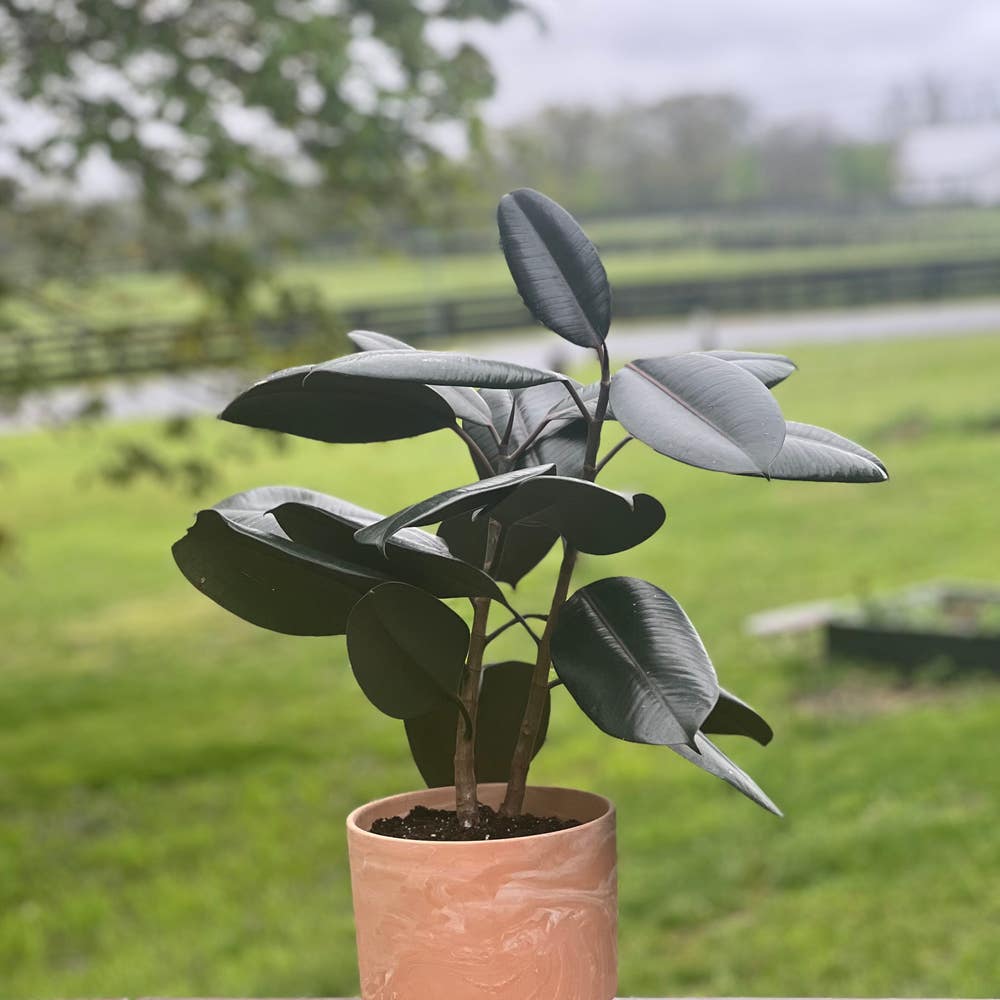
Purple Rubber Plant Care: Preventing Wilting 💧
Ficus elastica 'Burgundy'
By the Greg Editorial Team
Oct 17, 2024•6 min read
This article was created with the help of AI so we can cover more plants for you. May contain errors. See one? Report it here.
Transform wilting leaves into thriving greenery 🌱 with expert tips for diagnosis and care that every plant lover needs!
- 💧 Wilting in purple rubber plants often results from water stress or temperature changes.
- 🌡️ Maintain stable temperatures and humidity levels to prevent wilting and promote health.
- 🪴 Regularly check soil moisture to avoid overwatering or underwatering issues.
Common Causes of Wilting Leaves
💧 Water Stress
Water stress is a primary culprit behind wilting leaves.
Overwatering can lead to yellowing leaves and soggy soil, creating an environment where roots struggle to breathe.
On the flip side, underwatering manifests as dry, crispy leaves, often accompanied by soil pulling away from the pot edges.
☀️ Heat Stress
Heat stress is another significant factor.
When temperatures soar, leaves may droop or curl as the plant attempts to conserve moisture.
Additionally, sudden temperature changes can shock the plant, causing immediate wilting and distress.
🦠 Disease-Related Wilting
While less common, disease-related wilting can occur.
Pathogenic wilt is rare, so it's wise to prioritize environmental factors first.
Keep an eye out for signs of disease, such as discoloration, spots, or mold on leaves, which can indicate underlying issues that need addressing.
Understanding these causes is crucial for effective plant care, setting the stage for diagnosing and treating wilting.
Diagnosing Wilting
🕵️♂️ Step-by-Step Guide
Diagnosing wilting in your purple rubber plant starts with assessing soil moisture. Check if the soil is too wet or too dry, as both extremes can lead to wilting.
Next, evaluate environmental conditions by measuring temperature and humidity levels. Plants thrive in stable environments, so fluctuations can stress them.
Inspect the leaves for signs of pests, discoloration, or damage. Healthy leaves should be vibrant and firm, not limp or discolored.
Finally, check pot drainage to ensure that the pot has adequate drainage holes. Poor drainage can lead to waterlogged soil, exacerbating wilting issues.
🔍 Signs to Look for
Pay attention to leaf texture, as it can reveal a lot about your plant's health. Soft, mushy leaves typically indicate overwatering, while dry, brittle leaves suggest underwatering.
Soil condition is equally important. Moldy or overly compacted soil can signal poor drainage or overwatering, both of which can lead to wilting.
By following these steps and observing these signs, you can effectively diagnose the cause of wilting in your purple rubber plant. This knowledge will empower you to take the necessary actions to restore your plant's health.
Next, let’s explore actionable solutions to address wilting leaves effectively.
Solutions for Wilting Leaves
💧 Actionable Advice for Water Stress
Overwatering can be a sneaky culprit behind wilting leaves. If you suspect this, allow the soil to dry out completely before watering again. You might also want to consider repotting in fresh, well-draining soil to give your plant a fighting chance.
On the flip side, underwatering can lead to dry, crispy leaves. To remedy this, water thoroughly until excess moisture drains from the bottom. Make it a habit to ensure consistent moisture moving forward.
🌡️ Actionable Advice for Heat Stress
Heat stress can make your purple rubber plant droop dramatically. If you notice this, relocate the plant to a cooler area, away from direct sunlight or heat sources.
Additionally, adjusting humidity can work wonders. Use a humidifier or a pebble tray filled with water to maintain optimal humidity levels, keeping your plant happy and thriving.
🦠 Actionable Advice for Disease-Related Wilting
Disease-related wilting is less common but still worth addressing. If you suspect your plant is sick, isolate it immediately to prevent the spread of potential pathogens.
Treating with fungicides can be effective if disease is suspected. Always follow the product instructions carefully to ensure the best results for your plant's recovery.
With these actionable solutions, you can tackle wilting leaves head-on. Next, let’s explore preventive measures to keep your plant thriving in the long run.
Preventive Measures
Tips to Minimize Future Wilting 🌱
Regularly monitoring soil moisture levels is crucial for your purple rubber plant's health. Using a moisture meter can provide accurate readings, ensuring you know exactly when to water.
Establishing a consistent watering schedule is equally important. Water your plant when the top inch of soil feels dry to the touch, preventing both overwatering and underwatering.
Environmental Adjustments 🌤️
Maintaining stable temperatures is vital for your plant's well-being. Aim to keep it in a room with consistent temperatures between 65°F to 80°F (18°C to 27°C) to avoid stress.
Increasing humidity can also make a significant difference. Aim for humidity levels of 40-60% to mimic the plant's native habitat, helping to keep those leaves lush and vibrant.
By implementing these preventive measures, you can create an optimal environment for your purple rubber plant. This proactive approach will help you enjoy a thriving, healthy plant for years to come.
Next, let's explore how to revive a wilted plant effectively.
Reviving a Wilted Plant
🌊 Techniques for Bottom Watering
One effective method to revive a wilted plant is bottom watering. Simply place the pot in a basin of water for about 30 minutes; this allows the soil to absorb moisture from the bottom up, promoting even hydration.
🏡 Relocating the Plant Temporarily
If your plant is struggling, consider relocating it temporarily. Move it to a shaded area to provide a cooler environment, which can help it recover from heat stress and wilting.
✂️ Pruning Damaged Leaves
Pruning can also aid in the revival process. Use clean, sharp scissors to remove any wilted or damaged leaves, making sure to do this during the growing season for the best recovery results.
Reviving a wilted plant requires a combination of proper watering techniques, environmental adjustments, and careful pruning. By taking these steps, you can help your purple rubber plant bounce back and thrive once again. Next, let's explore when it's time to seek expert assistance for persistent issues.
When to Seek Help
Signs That Require Expert Assistance 🌱
If your purple rubber plant continues to wilt despite your best care efforts, it may be time to seek help. Persistent wilting can indicate underlying issues that need professional attention.
Unusual leaf discoloration or growth patterns can also signal trouble. If you notice leaves turning colors that are out of the ordinary, don’t hesitate to reach out for guidance.
Resources for Support 🛠️
Local nurseries can be a treasure trove of expert advice on plant health. Their staff often have hands-on experience and can provide tailored solutions for your specific situation.
Additionally, online plant care communities are fantastic resources. Engaging with fellow plant enthusiasts can offer new insights and support as you navigate your plant care journey.
With the right help, you can get your purple rubber plant back on track and thriving once more.
⚠️ Safety First
This content is for general information and may contain errors, omissions, or outdated details. It is not medical, veterinary advice, or an endorsement of therapeutic claims.
Always consult a qualified healthcare professional before using any plant as food, medicine, or supplement.
Never eat any plant (or feed one to pets) without confirming its identity with at least two trusted sources.
If you suspect poisoning, call Poison Control (800) 222-1222, the Pet Poison Helpline (800) 213-6680, or your local emergency service immediately.
Spotted an error? Please report it here.
Keep your purple rubber plant thriving 🌿 by using Greg's personalized watering reminders and moisture monitoring to prevent wilting and ensure it stays healthy!