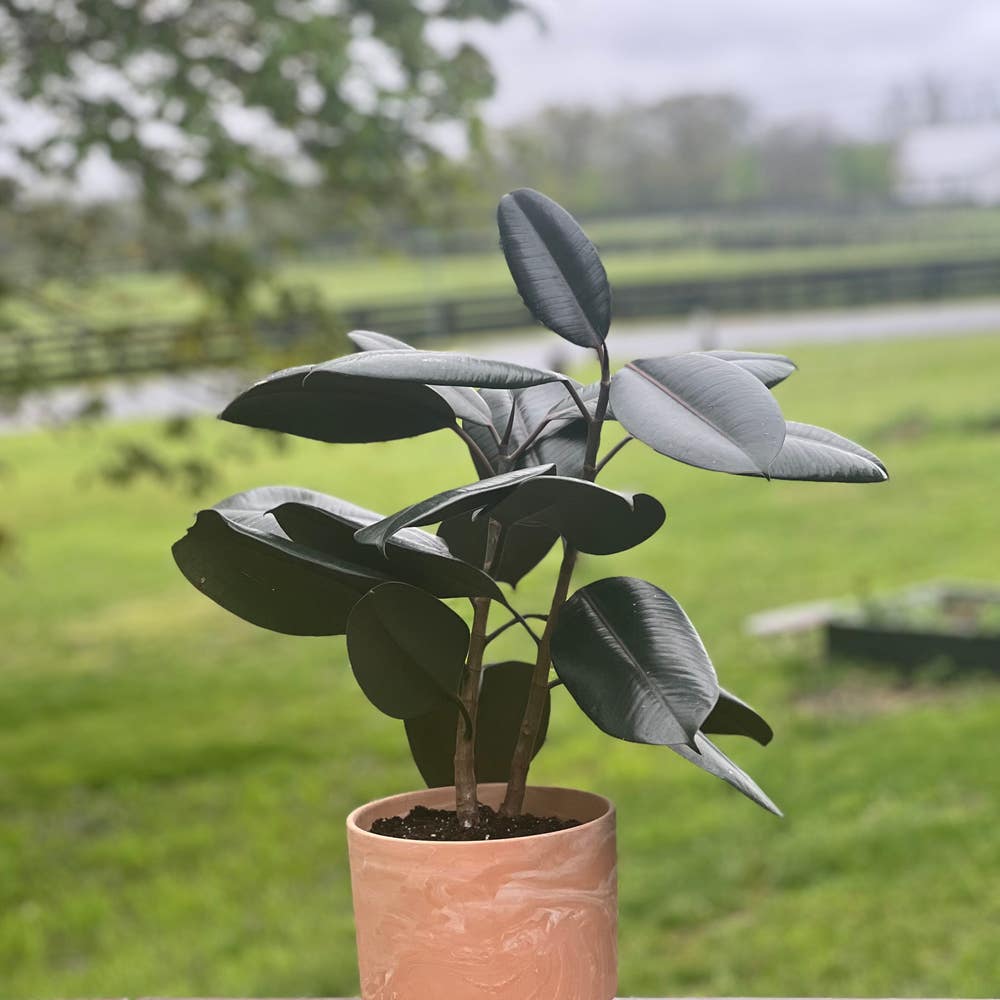
💜 All About Your Purple Rubber Plant's Roots
Ficus elastica 'Burgundy'
By the Greg Editorial Team
Oct 17, 2024•7 min read
This article was created with the help of AI so we can cover more plants for you. May contain errors. See one? Report it here.
Master your Purple Rubber Plant's root care 🌱 for vibrant growth and resilience in any environment!
- 🌱 Purple Rubber Plants have fibrous roots for efficient nutrient and water absorption.
- 🌍 Adaptable roots thrive in various soil conditions, perfect for indoor and outdoor growth.
- 💧 Proper watering prevents root rot; let the top inch of soil dry out.
Root System Characteristics
🌱 Type of Root System
The Purple Rubber Plant features a fibrous root system, characterized by a network of thin, branching roots. Unlike taproot systems, which have a single dominant root, fibrous roots spread out horizontally, allowing the plant to efficiently absorb nutrients and water from the top layers of soil.
Fibrous roots are incredibly adaptable, thriving in various soil conditions. This adaptability enhances their nutrient absorption efficiency, making them well-suited for both indoor and outdoor environments.
🔍 Specific Characteristics of Roots
These roots are fine and dense, spreading horizontally to maximize their reach. This structure enables them to penetrate different soil types, ensuring optimal nutrient uptake.
Moreover, the roots play a crucial role in anchoring the plant, providing stability and support. A strong root system is essential for the overall health and vigor of your Purple Rubber Plant, allowing it to flourish in its environment.
Understanding these root characteristics is vital for effective care and maintenance, setting the stage for deeper insights into root growth patterns and care techniques.
Root Growth Patterns
Root Depth and Spread 🌱
The root system of your Purple Rubber Plant can reach impressive depths of 2-3 feet under optimal conditions. Additionally, roots can spread out 3-4 feet wide, depending on the pot size and soil conditions.
Several factors influence this growth, including soil type, moisture levels, and the size of the pot. A well-draining potting mix and adequate moisture can significantly enhance root development.
Growth Patterns in Different Conditions 🌤️
Environmental factors play a crucial role in root growth. Light, temperature, and humidity can either promote or hinder root expansion.
For instance, higher humidity levels can encourage more vigorous root growth, while extreme temperatures may slow it down. Seasonal variations also affect root patterns, with spring and summer typically being the most active growth periods. Understanding these dynamics can help you tailor your care routine effectively.
As you consider these growth patterns, remember that healthy roots are foundational to a thriving plant. This knowledge will guide you in providing the best care for your Purple Rubber Plant.
Care Techniques Related to Roots
💧 Watering Practices Based on Root System
Fibrous roots thrive with specific watering techniques. Allow the top inch of soil to dry out between waterings to prevent over-saturation.
Deep watering is essential for encouraging both root depth and spread. This method ensures that moisture reaches the lower roots, promoting a robust root system.
🌱 Fertilizing Methods for Optimal Root Health
Using the right fertilizers can significantly enhance your Purple Rubber Plant's root health. Balanced NPK fertilizers are ideal, as they provide essential nutrients for strong root development.
During the growing season, fertilize monthly. In winter, reduce the frequency to allow the plant to rest.
🌍 Transplanting Considerations for Root Care
Recognizing when to transplant is crucial for your plant's health. Signs include rootbound conditions and stunted growth, indicating that your plant needs more space.
When transplanting, follow these best practices:
- Choose a pot that is 2 inches larger than the current one.
- Prepare the new pot with fresh, well-draining soil.
- Handle the roots gently to minimize damage during the process.
These steps will help ensure your Purple Rubber Plant continues to thrive in its new environment. With proper care, your plant will flourish, setting the stage for the next section on common root issues.
Common Root Issues
Identifying Root-Related Problems 🌱
Your Purple Rubber Plant can face several root-related challenges. The most common issues include root rot, pests, and nutrient deficiencies.
Watch for signs like yellowing leaves, wilting, and stunted growth. These symptoms often indicate that something is amiss below the surface.
Solutions and Prevention Tips for Root Issues 🛠️
Preventing root rot starts with ensuring proper drainage. Always use pots with drainage holes and avoid overwatering.
Regular inspections can help you catch pests early. Employ organic pest control methods to keep your plant healthy and thriving.
If you notice nutrient deficiencies, adjust your fertilization practices based on the plant's symptoms. A little attention can go a long way in maintaining root health.
With these tips, you can keep your Purple Rubber Plant's roots in top shape, ensuring vibrant growth and resilience. Next, let’s explore how to identify indicators of root health.
Indicators of Root Health
👀 Visual Cues of Healthy vs. Unhealthy Roots
Healthy roots are a joy to see. They should be firm, with a white or light tan color, and they won’t emit any foul odors.
In contrast, unhealthy roots tell a different story. Look for brown, mushy, or black roots that come with a rotten smell—these are clear signs that something is wrong.
📊 Other Indicators of Root Health
Overall plant vigor is another key indicator of root health. Lush foliage and robust growth suggest that your roots are thriving.
On the flip side, if you notice leaf drop or discoloration, it might be time to investigate your roots. These symptoms can signal potential root issues that need addressing.
By keeping an eye on these indicators, you can ensure your Purple Rubber Plant remains healthy and vibrant. Next, let’s explore common root issues and how to tackle them effectively.
Rootbound Plants
Definition and Recognition of Rootbound Conditions 🌱
Rootbound plants occur when roots circle the pot, leading to limited growth space. This condition can hinder the plant's overall health and growth potential.
Signs that your plant is rootbound include roots emerging from drainage holes, stunted growth, and poor water absorption. If you notice these symptoms, it’s time to take action.
When and How to Address Rootbound Issues 🛠️
Intervention is crucial when your plant shows signs of being rootbound. Addressing this issue promptly can rejuvenate your plant and promote healthy growth.
To remedy rootbound conditions, follow these steps:
- Carefully remove the plant from its pot. Gently loosen the soil to avoid damaging the roots.
- Trim circling roots to encourage new growth. This helps the plant spread out in its new environment.
- Replant in a larger pot with fresh soil. Choose a pot that’s at least 2 inches larger than the current one to give your plant room to thrive.
By recognizing and addressing rootbound conditions, you can ensure your Purple Rubber Plant continues to flourish. Next, let’s explore propagation and division techniques to expand your plant collection.
Propagation and Division
🌱 Importance of Root Health in Propagation
Healthy roots are crucial for successful propagation and new growth. They provide the necessary nutrients and stability for young plants to thrive.
Timing is also key; the best time for propagation is in spring or early summer when the plant is actively growing. This ensures optimal conditions for root development.
✂️ Techniques for Dividing and Propagating
There are two primary methods for propagation: stem cuttings and division. Both techniques can lead to vibrant new plants when done correctly.
Step-by-Step Guide for Stem Cuttings
- Select a Healthy Stem: Choose a stem with at least two leaves for the best chance of success.
- Make the Cut: Cut below a node, which is where roots will emerge, and place the cutting in either water or soil.
- Create the Right Environment: Maintain humidity and warmth around the cutting. Roots typically develop within 2-4 weeks.
Best Practices for Dividing Established Plants
When dividing established plants, ensure each division has a healthy root system. This promotes robust growth and helps the new plants adapt quickly.
By focusing on root health, you set the stage for thriving plants. Now that you understand propagation and division, let’s explore how to identify and address common root issues.
⚠️ Safety First
This content is for general information and may contain errors, omissions, or outdated details. It is not medical, veterinary advice, or an endorsement of therapeutic claims.
Always consult a qualified healthcare professional before using any plant as food, medicine, or supplement.
Never eat any plant (or feed one to pets) without confirming its identity with at least two trusted sources.
If you suspect poisoning, call Poison Control (800) 222-1222, the Pet Poison Helpline (800) 213-6680, or your local emergency service immediately.
Spotted an error? Please report it here.
Nurture your Purple Rubber Plant's roots for a thriving display 🌿 with Greg's tailored watering reminders and expert care tips that keep your plant flourishing!