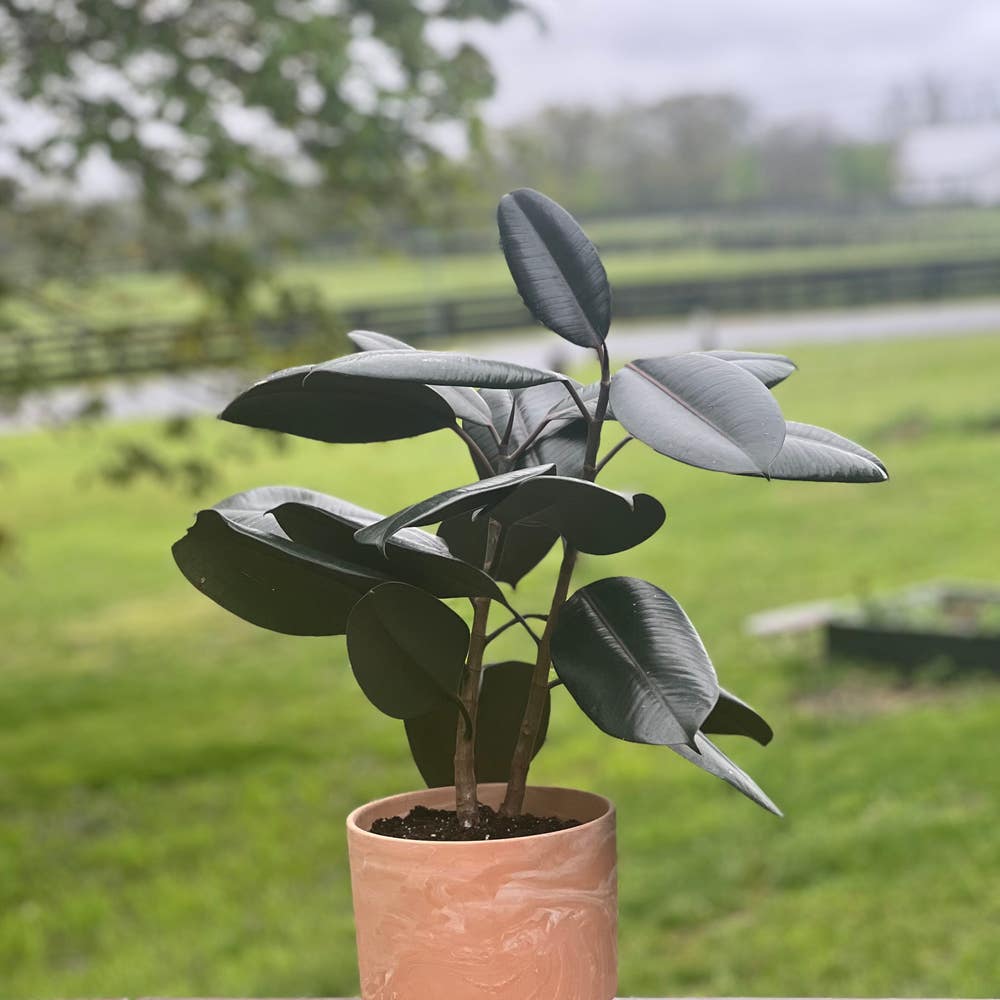
💜 How to Fix Curling Leaves on Your Purple Rubber Plant
Ficus elastica 'Burgundy'
By the Greg Editorial Team
Oct 17, 2024•6 min read
This article was created with the help of AI so we can cover more plants for you. May contain errors. See one? Report it here.
Revive your purple rubber plant by mastering the secrets to diagnosing and preventing curling leaves! 🌿
- 🌧️💧 Curling leaves indicate overwatering, underwatering, or humidity issues—diagnose carefully.
- 🐜 Pests like spider mites can cause damage; use neem oil for effective control.
- 🌱 Nutrient deficiencies lead to curling; fertilize monthly during the growing season.
Causes of Curling Leaves
💧 Overwatering and Its Effects
Overwatering is a common culprit behind curling leaves on your purple rubber plant. Symptoms include leaf curl, where the edges turn downwards, yellowing leaves, and even root rot.
To prevent these issues, ensure your plant is in well-draining soil. A good rule of thumb is to water every 1-2 weeks, adjusting based on environmental conditions.
🚰 Underwatering and Its Symptoms
On the flip side, underwatering can also lead to curling leaves. Here, the edges of the leaves turn upwards, and you might notice dry, crispy tips.
To avoid this, regularly monitor the soil moisture. Establishing a consistent watering schedule is crucial for your plant's health.
🌬️ Low Humidity and Its Impact
Purple rubber plants thrive in humidity levels between 40-60%. When humidity is too low, you may see leaf curl and browning edges.
To boost humidity, consider using humidifiers or pebble trays filled with water. These simple solutions can make a significant difference.
🐛 Pest Infestations
🕷️ Common Pests
Pests can wreak havoc on your plant's health. Spider mites are notorious for leaving fine webbing and stippled leaves, while aphids can cause sticky residue and distorted leaves.
🧼 Control Methods
For pest control, organic options like neem oil and insecticidal soap are effective. Regular inspections are essential for early detection and management.
🌱 Nutrient Deficiencies
⚠️ Common Deficiencies
Nutrient deficiencies can also lead to curling leaves. A nitrogen deficiency often results in yellowing leaves and stunted growth, while magnesium deficiency manifests as interveinal chlorosis, where the area between leaf veins turns yellow.
🌿 Solutions
To combat these deficiencies, establish a monthly fertilizing schedule during the growing season. Use balanced NPK fertilizers or specific nutrient blends to keep your plant thriving.
Understanding these causes will empower you to take action and restore your purple rubber plant's health. Next, we’ll explore how to diagnose curling leaves effectively.
Diagnosing Curling Leaves
🌪️ Identifying the Type of Curl
When diagnosing curling leaves on your purple rubber plant, start by observing the direction of the curl. An inward curl typically indicates overwatering, while an outward curl suggests underwatering.
🎨 Assessing Leaf Color Changes
Next, pay attention to the color of the leaves. Yellowing leaves may signal overwatering or a nutrient deficiency, whereas browning leaves often point to underwatering or low humidity.
🐜 Checking for Pests and Signs of Infestation
Conduct a thorough visual inspection for pests. Look closely under the leaves and at the leaf joints, as these are common hiding spots for pests like spider mites and aphids.
💧 Evaluating Soil Moisture Levels
To check soil moisture, use simple methods. The finger test involves inserting your finger 1-2 inches into the soil, while a soil moisture meter can provide a more accurate reading.
🌡️ Observing Environmental Conditions
Finally, assess the environmental conditions surrounding your plant. Ensure it receives adequate light without direct sun exposure and monitor the temperature to avoid drafts and heat sources.
By carefully evaluating these factors, you can pinpoint the cause of curling leaves and take appropriate action. This proactive approach will help your purple rubber plant thrive.
Solutions for Curling Leaves
🌊 Adjusting Watering Practices
Proper watering is crucial for your purple rubber plant's health. Start by checking soil moisture before watering.
- Insert your finger 1-2 inches into the soil to gauge moisture.
- Water thoroughly until excess drains out of the pot.
- Allow the soil to dry slightly between waterings, typically every 1-2 weeks.
💧 Increasing Humidity Levels
Humidity plays a significant role in preventing leaf curl. Here are some effective methods to boost humidity around your plant:
- Use humidifiers to maintain optimal moisture levels.
- Group your plants together; they create a microclimate.
- Place pebble trays filled with water beneath your pots to increase humidity.
🐛 Treating Pest Infestations
Pests can wreak havoc on your rubber plant. Follow these steps for effective pest control:
- Identify the pest causing the issue.
- Apply appropriate treatments, such as neem oil or insecticidal soap.
- Monitor your plant for signs of re-infestation to ensure pests are gone.
🌱 Fertilizing for Nutrient Deficiencies
A balanced fertilization schedule can help your plant thrive. Fertilize monthly during the growing season with:
- A balanced NPK fertilizer or specific nutrient blends.
- Adjust the type based on the nutrient deficiency you suspect.
🏡 Creating a Stable Environment
Maintaining a stable environment is key to preventing curling leaves. Here are some tips:
- Avoid temperature extremes by keeping your plant away from drafts and heat sources.
- Ensure adequate light without direct sun exposure to prevent leaf burn.
By implementing these solutions, you can help your purple rubber plant recover from curling leaves and thrive in its environment. Next, let’s explore preventative measures to keep your plant healthy long-term.
Preventative Measures
Best Practices for Watering 🌊
Effective watering is crucial for your Purple Rubber Plant's health. Adjust the frequency and amount based on the season and the size of your plant to avoid issues like curling leaves.
Ideal Humidity Levels 💧
Maintaining humidity levels between 40-60% is essential for your plant's well-being. Use tools like hygrometers to measure humidity accurately and ensure your plant thrives.
Regular Pest Inspections 🐜
Conduct pest inspections bi-weekly or monthly to catch infestations early. Look for signs such as webbing or sticky residue, which can indicate spider mites or aphids.
Seasonal Care Adjustments 🍂
Adjust your care routine with the changing seasons. In winter, consider reducing watering frequency to prevent overwatering during the plant's dormant phase.
Soil Selection and Repotting Tips 🌱
Choose well-draining soil types to promote healthy root growth. Repot your plant every 1-2 years or when it becomes root-bound to ensure it has enough space to thrive.
By implementing these preventative measures, you can maintain a healthy environment for your Purple Rubber Plant, minimizing the risk of curling leaves. Next, let’s dive into common misconceptions that can lead to misunderstandings about plant care.
Common Misconceptions
Myths About Leaf Curl and Plant Health 🌿
Many plant owners mistakenly believe that leaf curl is always a sign of severe distress. In reality, curling can be a response to various factors, including environmental changes and watering practices.
Understanding these signals is crucial for effective plant care. Recognizing that not all curling indicates a dying plant can help you take the right steps to restore its health.
Clarifying the Role of Light in Leaf Curling 💡
A common misunderstanding is that all plants thrive in direct sunlight. While some plants enjoy bright light, others can suffer from leaf curl due to excessive exposure.
Ideal light conditions vary by species. For your Purple Rubber Plant, bright, indirect light is best to prevent stress and curling.
Understanding the Difference Between Natural Leaf Drop and Curling 🍂
Natural leaf drop is a normal process for many plants, especially as they age. It's essential to differentiate between healthy leaf drop and curling, which often signals a problem.
Healthy leaves may fall off as part of the plant's life cycle, while curling usually indicates an underlying issue. Observing these behaviors can help you maintain your plant's vitality.
With these misconceptions clarified, you can better address the needs of your Purple Rubber Plant and ensure it thrives. Next, let’s explore preventative measures to keep your plant healthy and happy.
⚠️ Safety First
This content is for general information and may contain errors, omissions, or outdated details. It is not medical, veterinary advice, or an endorsement of therapeutic claims.
Always consult a qualified healthcare professional before using any plant as food, medicine, or supplement.
Never eat any plant (or feed one to pets) without confirming its identity with at least two trusted sources.
If you suspect poisoning, call Poison Control (800) 222-1222, the Pet Poison Helpline (800) 213-6680, or your local emergency service immediately.
Spotted an error? Please report it here.
Transform your purple rubber plant's curling leaves into a thriving 🌿 beauty by using Greg's tailored care tips and moisture alerts to keep it happy and healthy!