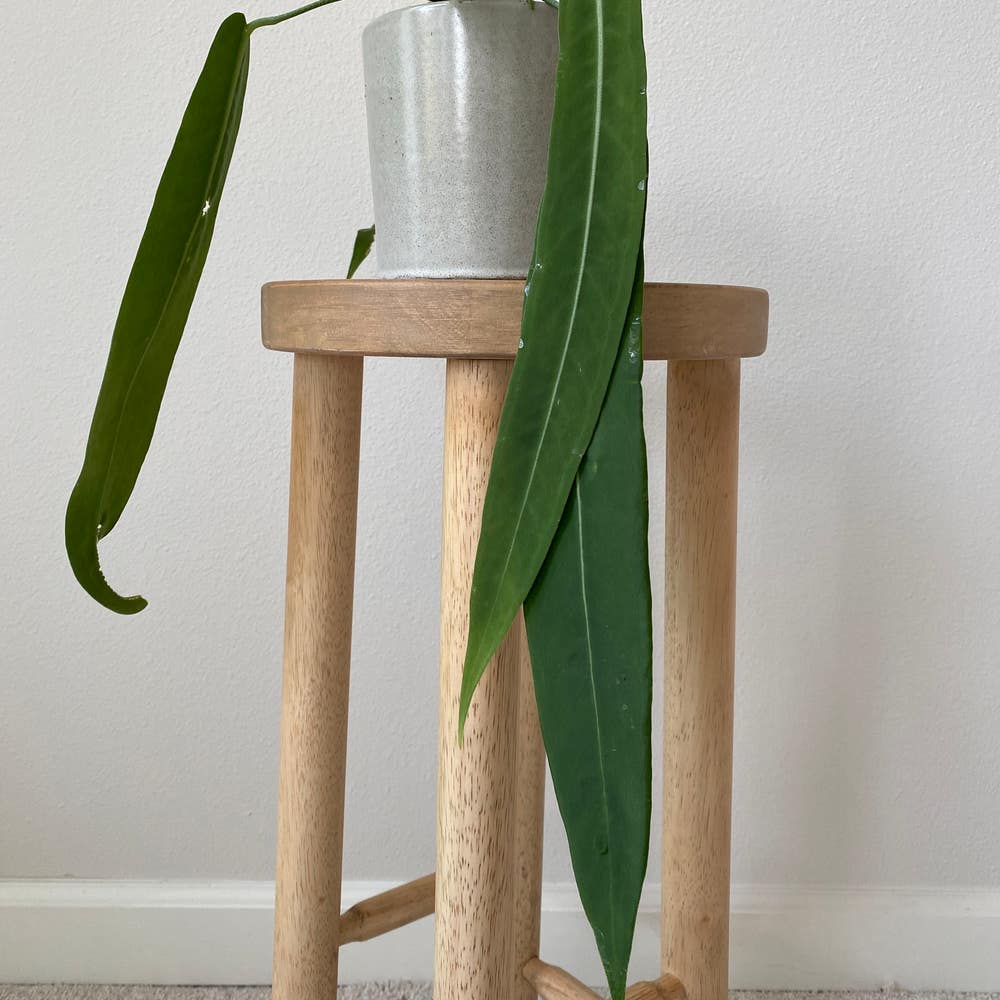
💧 Why Are My Anthurium pallidiflorum Leaves Mushy?
Anthurium pallidiflorum
By the Greg Editorial Team
Jun 18, 2024•3 min read
This article was created with the help of AI so we can cover more plants for you. May contain errors. See one? Report it here.
- Overwatering? Let top inch of soil dry out before watering.
- Root rot? Remove mushy roots, repot with well-draining soil.
- Keep it cozy: 60-70% humidity, 65-85°F, good air circulation.
Spotting Trouble: Signs Your Anthurium pallidiflorum is Unhappy
💦 Overwatering Overload
Yellow leaves and a soggy soil are your Anthurium pallidiflorum waving a white flag. Overwatering can lead to a cascade of issues, including root rot. Droopy leaves and brown, mushy spots are not just an eyesore; they're a billboard for overzealous watering.
🌱 Root Rot Rundown
Beneath the surface, root rot lurks like a silent saboteur. If your plant's roots are brown and slimy instead of white and firm, you've got trouble. An earthy smell that's less 'fresh rain' and more 'forgotten potato' is a dead giveaway.
🚰 Drainage Drama
Your plant's pot should be a home, not a swimming pool. If water pools on the surface or the pot lacks proper drainage holes, it's time for a change. Think of it as upgrading your Anthurium's shoes to ones that actually fit—essential for healthy roots.

First Aid for Mushy Leaves
💧 Watering Wisdom
Overwatering is the fast track to mushy leaves. To avoid this, let the top inch of soil dry out before watering again. A moisture meter isn't overkill—it's your ally in the battle against root rot. Check the soil with your finger or use the meter; if it's damp, skip the watering can.
🌱 Soil Savvy
Your Anthurium pallidiflorum craves a soil mix that drains like a dream. Opt for a blend that's one part cactus mix, one part orchid bark, and one part perlite. This trio is the holy grail for roots needing to breathe. Terra cotta pots with drainage holes are your best bet, ensuring excess water has an escape route.
🩹 Root Rehab
If root rot has set in, it's time for some tough love. Gently remove your plant from its pot and inspect the roots. Snip away any that are black or mushy—think precision, not hacking. After surgery, let the roots air out before repotting in fresh, well-draining soil. Airflow is key, so consider a spot with more circulation or add a fan to speed up the recovery.

Tailoring the Environment
💦 Humidity Hacks
Humidity is a balancing act for Anthurium pallidiflorum. Too little, and the leaves go limp; too much, and you're inviting fungi to a feast. Aim for that tropical vibe without turning your living room into a rainforest.
- Keep it steady: 60-70% humidity is the sweet spot.
- Get techy: A humidifier can be your best friend in dry climates.
- Go natural: Group plants together to create a mini ecosystem.
- Stay alert: Watch out for stagnant air—good circulation is key.
🌡️ Temperature Tips
Your Anthurium pallidiflorum doesn't need to sunbathe nor does it want to build a snowman—it craves consistency.
- Thermostat love: Keep it between 65-85°F (18-29°C).
- Avoid drafts: Position away from vents and drafty windows.
- Seasonal sense: Water less in winter when the air is cooler.
- No surprises: Sudden changes in temperature are as welcome as a pop quiz.
Remember, your Anthurium isn't just a plant, it's a roommate with preferences. Keep the air cozy, and you'll both breathe easier.

⚠️ Safety First
This content is for general information and may contain errors, omissions, or outdated details. It is not medical, veterinary advice, or an endorsement of therapeutic claims.
Always consult a qualified healthcare professional before using any plant as food, medicine, or supplement.
Never eat any plant (or feed one to pets) without confirming its identity with at least two trusted sources.
If you suspect poisoning, call Poison Control (800) 222-1222, the Pet Poison Helpline (800) 213-6680, or your local emergency service immediately.
Spotted an error? Please report it here.
Avoid mushy leaves and root rot in your Anthurium pallidiflorum by ensuring proper care, and count on Greg 🛎️ for precise watering reminders and environment tips to keep your tropical beauty thriving.