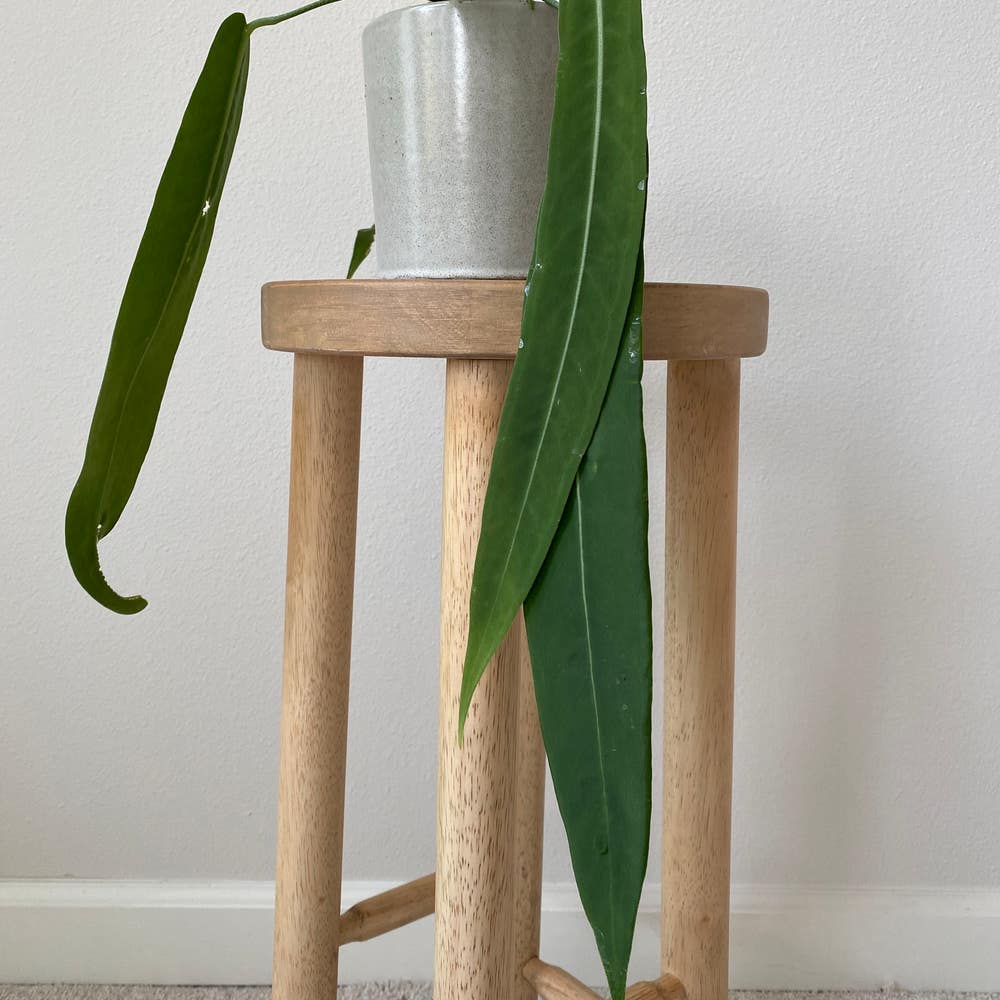
🌞 How Much Sunlight For Your Anthurium pallidiflorum
Anthurium pallidiflorum
By the Greg Editorial Team
Jun 18, 2024•5 min read
This article was created with the help of AI so we can cover more plants for you. May contain errors. See one? Report it here.
- 🌞 Bright, indirect sunlight is key for growth and flowering.
- 🏡 East-facing windows and sheer curtains protect from harsh rays.
- 🕒 12-14 hours of light daily with grow lights for indoor plants.
Basking in the Right Glow: Indoor Light Perfection
🌞 Finding the Sweet Spot
Bright, indirect sunlight is the gold standard for your Anthurium pallidiflorum. To pinpoint the best spots, observe where light is soft and diffused. East-facing windows often provide the gentle morning rays that this plant craves. Rotate your Anthurium periodically to promote even growth and prevent it from stretching awkwardly towards the light.
🛡️ Shielding from the Harsh Rays
Direct sunlight is a no-go. Use sheer curtains or adjustable blinds to create a buffer against intense rays. If you catch your Anthurium with leaves as crisp as autumn leaves, it's time to move it to a less exposed location. Remember, the goal is to emulate a cloud's passing shadow, not the relentless sun of a desert noon.

Embracing the Great Outdoors: Light for Garden-Grown Anthuriums
🌤️ Crafting a Partial Shade Paradise
Finding the ideal spot for your Anthurium pallidiflorum outdoors means embracing the art of partial shade. This plant doesn't bask in the full glare of the sun but thrives under conditions that mimic the dappled light of its natural habitat.
Morning sun and afternoon shade work wonders. Consider positioning your Anthurium under a tree with a high canopy or behind taller plants that filter the sun's intensity. For those without natural shade, a pergola or shade cloth can create the perfect environment.
🌿 Transitioning to Outdoor Light
Acclimation is crucial. Start by placing your Anthurium pallidiflorum in a shaded area, gradually exposing it to more light over a week or more. This prevents the shock of sudden changes, which can lead to leaf burn or stress.
Monitor the plant's response closely. If the leaves show signs of distress, dial back the exposure. Remember, the outdoor light is more intense, and what seems like a comfortable spot indoors could be a solar frying pan outside.

Let There Be Light: Flower Power Connection
💡 Light's Role in Anthurium pallidiflorum Flowering
Light isn't just for show; it's the power source for your Anthurium pallidiflorum's floral fireworks. Without enough of it, you're looking at a bloom bust. But with the right touch, you can coax out those stunning flowers. It's about hitting that sweet spot of bright, indirect light—think of it as the plant's preferred espresso shot.
Intensity and duration are the dynamic duo here. Too little light, and your Anthurium pallidiflorum might as well be hibernating. Too much, and it's like a sunburn at the beach—ouch. Aim for a photoperiod that mimics the tropics, where these beauties hail from. That means a steady 10-12 hours of quality light daily. If you're using grow lights, set a timer to keep things consistent. Remember, your Anthurium is a creature of habit.
💡 Adjusting Light for Flower Encouragement: Duration and Intensity Tips
To get those flowers popping, monitor light levels like a hawk. Use a light meter if you have to, or just pay attention to how the sun moves through your space. If you're indoors, play around with placement—near a window but out of the direct firing line of the sun's rays.
When it comes to grow lights, think of them as your personal lighting director. LEDs are the go-to for many, offering a full spectrum of light without the heat drama. Keep them a safe distance from your plant—close enough to embrace but far enough to avoid a scorching.
And here's a pro tip: red wavelengths are like the secret handshake for flowering. If you can, choose bulbs that lean into the red end of the spectrum. It's like whispering sweet nothings to your Anthurium pallidiflorum, urging it to show off its blooms.

Supplementing Sunlight: The Grow Light Game-Changer
💡 Choosing Your Champion Light
When the sun's rays are more elusive than a good parking spot during the holidays, grow lights step in. LED lights are the high-tech heroes, offering a full spectrum of light that's like the sun's embrace without the risk of a sunburn. On the other hand, fluorescent lights are the reliable old-timers, less flashy but kind on the wallet.
Positioning is no less important than the light itself. Imagine a spotlight on a stage—it has to hit just right. Keep grow lights about 6 to 12 inches above your Anthurium pallidiflorum, but remember, the light's intensity might prompt you to adjust this distance. Too close and you're cooking your plant; too far and it's barely getting a tan.
⏰ Timing is Everything
Think of using grow lights like baking; it's all about timing. Your Anthurium pallidiflorum needs its light diet to be just right—not too little, not too much. Generally, aim for about 12 to 14 hours of light per day. It's like setting a curfew for your plant; it needs its rest in darkness to thrive.
Mimicking natural light patterns isn't just for show; it's about keeping your plant's internal clock ticking correctly. Use a timer to regulate the light exposure, ensuring your Anthurium gets a consistent cycle. It's like setting an alarm clock—your plant will thank you for the regular schedule.
⚠️ Safety First
This content is for general information and may contain errors, omissions, or outdated details. It is not medical, veterinary advice, or an endorsement of therapeutic claims.
Always consult a qualified healthcare professional before using any plant as food, medicine, or supplement.
Never eat any plant (or feed one to pets) without confirming its identity with at least two trusted sources.
If you suspect poisoning, call Poison Control (800) 222-1222, the Pet Poison Helpline (800) 213-6680, or your local emergency service immediately.
Spotted an error? Please report it here.
Ensure your Anthurium pallidiflorum gets just the right amount of indirect sunlight 🌿 with Greg's personalized reminders tailored to your home's unique lighting conditions.