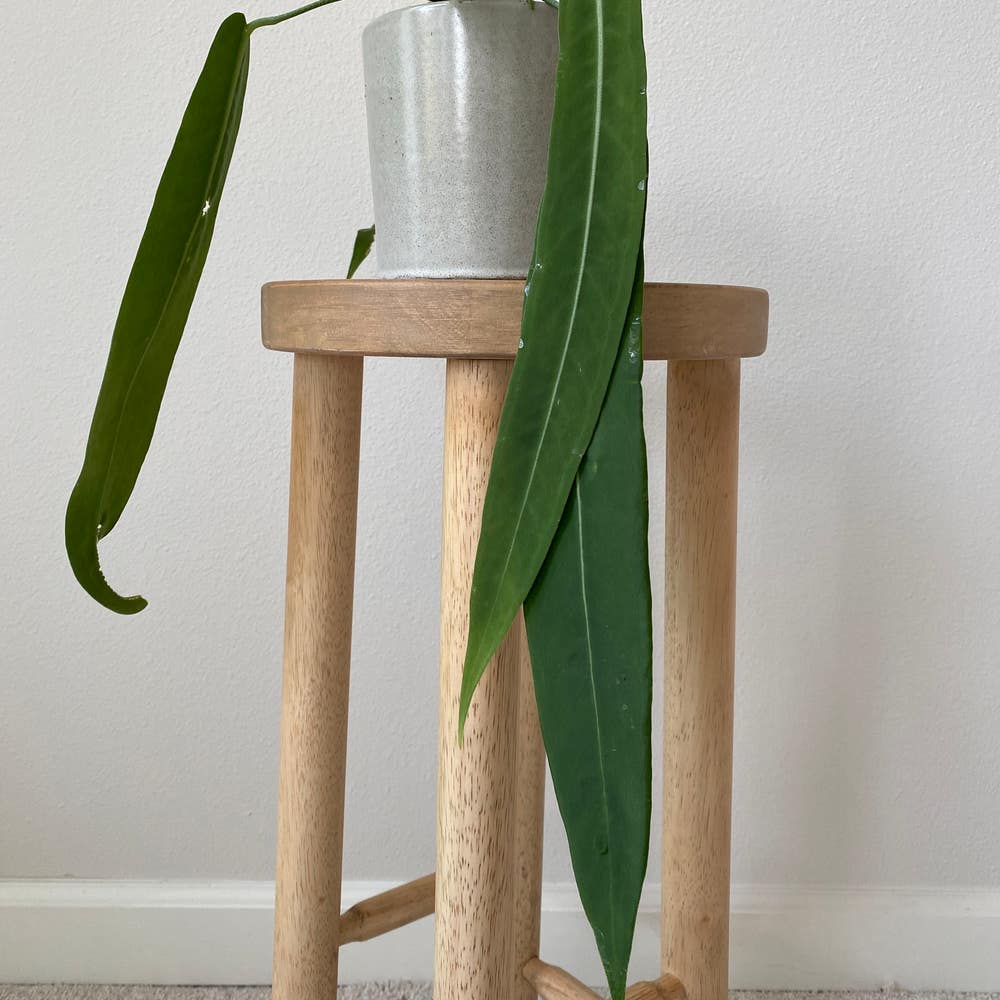
💧 How Much Humidity Does My Anthurium pallidiflorum Need?
Anthurium pallidiflorum
By the Greg Editorial Team
Jun 18, 2024•4 min read
This article was created with the help of AI so we can cover more plants for you. May contain errors. See one? Report it here.
- 60-80% RH ideal for Anthurium pallidiflorum's health and vibrancy.
- 🌡️ Hygrometers measure humidity; use them to maintain perfect levels.
- DIY and high-tech solutions like pebble trays and humidifiers help regulate moisture.
Spotting Your Anthurium Pallidiflorum's Humidity Sweet Spot
💧 What's the Deal with Relative Humidity?
Relative humidity (RH) is crucial for your Anthurium pallidiflorum's well-being. This plant thrives in 60-80% RH, a tropical comfort zone that keeps it lush and vibrant.
To measure RH, arm yourself with a hygrometer. It's your secret weapon in maintaining that perfect moisture level, letting you adjust your care routine with precision.
🌵 Recognizing Signs of Humidity Distress
Under-humidified Anthuriums will broadcast their discomfort through brown leaf tips and a general air of despondency. It's their way of crying out for a moisture boost.
Conversely, too much humidity can trigger a fungal fiesta. Watch for droopy leaves and a sullen, overwatered look—your plant's plea for a drier climate.

Making It Rain (Indoors) for Your Anthurium Pallidiflorum
💦 DIY Humidity Boosters
Creating a humid haven for your Anthurium pallidiflorum doesn't have to be complex. Pebble trays are a tried-and-true method. Just fill a tray with pebbles, pour in some water, and place your plant on top. Ensure the pot sits above the water to prevent root rot. This setup mimics a miniature ecosystem, boosting humidity as the water evaporates.
Misting can be a quick fix, a spritz here and there to perk up your plant. But remember, it's a short-term solution. Use distilled water to avoid leaf deposits, and don't overdo it—unless you're aiming for a fungal rave.
🌡️ High-Tech Humidity Helpers
When the stakes are high, and your Anthurium's health is on the line, consider a humidifier. It's a consistent and low-maintenance way to keep the air moist. Choose a model that suits your space, and keep it clean to avoid any moldy mishaps.
Grouping your plants can create a microclimate, a little community where shared transpiration ups the humidity. It's like a plant potluck where everyone brings moisture to the table. Just ensure there's enough air circulation to keep things fresh and not stuffy.

When the Air's Too Wet: Balancing High Humidity
⚠️ Spotting Over-Humidity Symptoms
Your Anthurium pallidiflorum might be suffering in silence if the air's too wet. Brown spots on leaves or a base that feels like a squishy sponge are your plant's way of waving a red flag. Watch out for a general lackluster appearance or leaves that look more like they've been in a bath than a rainforest.
🌬️ Dehumidifying Do's and Don'ts
Dehumidifiers are your go-to when the air feels like a Louisiana swamp. But don't just plug in and tune out; keep tabs on humidity levels to avoid turning your tropical paradise into a desert. Air circulation is your silent hero here—ensure your plant isn't stuck in a stagnant corner. Remember, your Anthurium pallidiflorum doesn't have gills; it shouldn't be swimming in moisture.

Keeping Tabs on Your Tropical Pal
🌡️ Monitoring Made Easy
Hygrometers are the MVPs of humidity monitoring, giving you the real-time scoop on what's going down in the air around your Anthurium pallidiflorum. Go for a model with a memory function to track the daily drama of humidity highs and lows.
- Place the hygrometer near your plant, but dodge direct sunlight and drafts like a pro.
- Monitor at different times to catch the full spectrum of daily fluctuations.
- Compare room readings to pinpoint your plant's preferred humidity hangout.
🌦️ Adjusting to the Seasons
Seasonal shifts in humidity aren't just small talk; they're a big deal for your Anthurium pallidiflorum.
- When winter hits and your heater starts hogging the air, your plant could be gasping for that tropical moisture. Consider a humidifier to bring back the balmy vibes.
- Come summer, if your home starts feeling like a swamp, it might be time to dial down the humidity help. Adjust your watering schedule to the rhythm of your local climate—less is more if the air's already doing the heavy lifting.
- Keep an eye on your heating and cooling systems. They're not just for your comfort; they're a tropical plant's weather gods.
⚠️ Safety First
This content is for general information and may contain errors, omissions, or outdated details. It is not medical, veterinary advice, or an endorsement of therapeutic claims.
Always consult a qualified healthcare professional before using any plant as food, medicine, or supplement.
Never eat any plant (or feed one to pets) without confirming its identity with at least two trusted sources.
If you suspect poisoning, call Poison Control (800) 222-1222, the Pet Poison Helpline (800) 213-6680, or your local emergency service immediately.
Spotted an error? Please report it here.
Keep your Anthurium pallidiflorum lush and vibrant 🌺 with Greg's tailored humidity tracking, ensuring your tropical beauty never misses the mark on moisture.