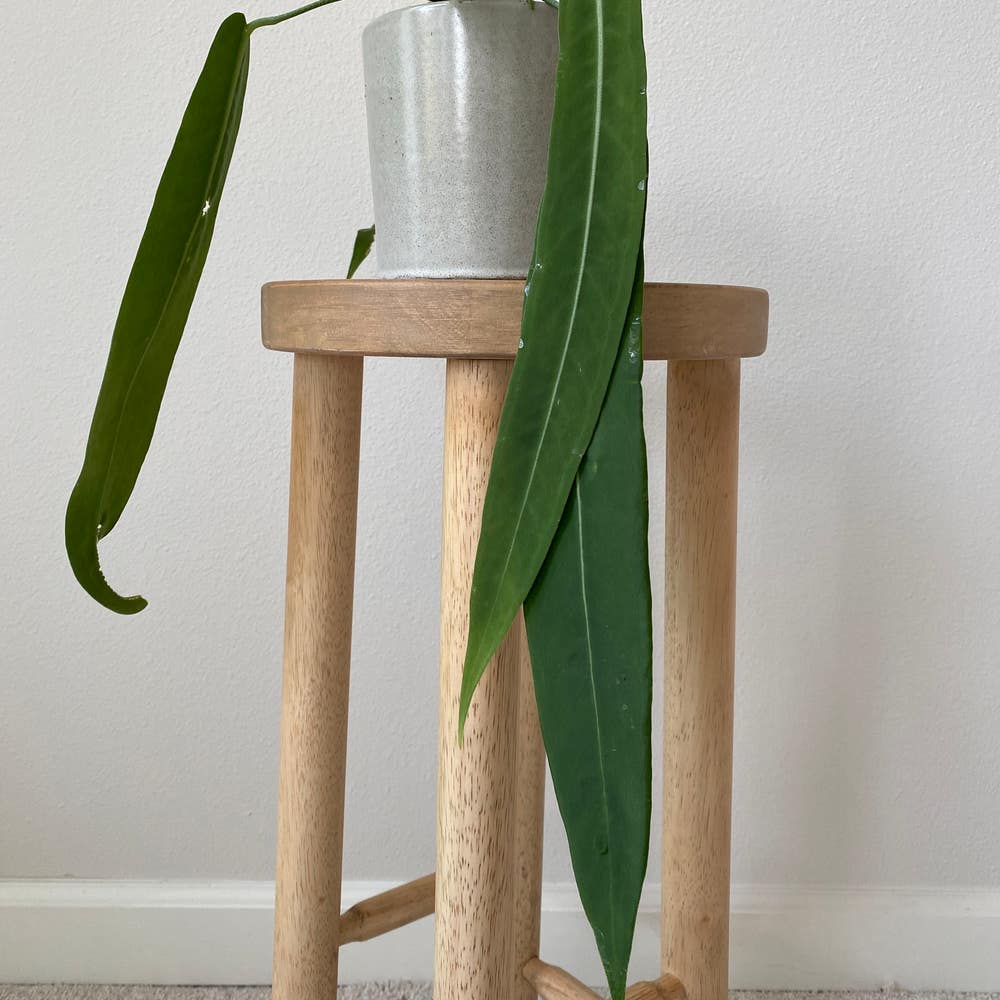
Why Are My Anthurium pallidiflorum Leaves Curling?
Anthurium pallidiflorum
By the Greg Editorial Team
Jun 18, 2024•5 min read
This article was created with the help of AI so we can cover more plants for you. May contain errors. See one? Report it here.
- 🌡️ Steady temperatures between 65-85°F prevent temperature-induced leaf curl.
- 💧 Aim for 70-80% humidity and bright, indirect light for healthy leaves.
- 🌱 Regular watering and proper drainage are key to avoiding curling.
When Your Anthurium Goes Wavy: Identifying the Curl Culprits
🌡️ Temperature Tantrums
Anthurium pallidiflorum leaves curling? Temperature might be throwing a fit. Too hot or too cold, and your plant's leaves will start to look like they're auditioning for a role in a horror movie.
Keep it steady: the sweet spot is between 65-85°F (18-29°C). Anything outside this range and your Anthurium might start to act out.
💦 Humidity and Light: A Balancing Act
Crispy or limp leaves are a cry for help in the humidity department. Dry air will have your Anthurium's leaves curling up tighter than a miser's fist.
Aim for 70-80% humidity. If your living room feels more like a desert than a rainforest, it's time to bring in a humidifier or set up a pebble tray.
Lighting is just as crucial. Too much and your Anthurium is at risk of sunburn, too little and it'll become a slacker in the growth department. Bright, indirect light is your goal.
Keep the air moving with a gentle fan to avoid stagnation, but don't turn your plant into a victim of a windstorm.

Thirsty Roots: The Watering Woes
🚰 Too Much Splash or Not Enough?
Overwatering turns your Anthurium pallidiflorum's roots into a swampy mess, leading to yellowing leaves and potential root rot. Conversely, underwatering leaves the soil bone-dry and your plant's leaves drooping and crisping at the tips. The key is to check the soil before watering; if it's damp, hold off, and if it's dry, it's time to quench your plant's thirst.
💧 The Perfect Pour: Watering Routines That Keep Leaves Flat and Happy
Establish a watering routine that's as regular as your morning coffee ritual. Use the finger test or a moisture meter to ensure the top inch of soil is dry before watering. This method prevents both over and underwatering, keeping your Anthurium's leaves flat and vibrant.
🚰 Drainage Drama
Poor drainage can mimic the signs of overwatering, with leaves curling as a distress signal. Ensure your pot has adequate drainage holes and that the soil isn't compacted, allowing water to flow through freely.
🚰 Fixing the Flow: Ensuring Your Anthurium's Pot Doesn't Hold a Grudge (or Water)
If water pools at the bottom of the pot, it's time for a change. Consider a pot with better drainage or adding materials like perlite to the soil mix to improve water flow. This will help prevent root rot and leave curling, ensuring your Anthurium stays healthy and hydrated.

Feeding Frenzy: Nutrients and Your Anthurium's Leaves
💪 The Starvation-Induced Curl
Detecting nutrient deficiencies in your Anthurium pallidiflorum can be straightforward. Look out for leaves that seem to be reaching for something more—perhaps a bit of nitrogen, potassium, or magnesium. Yellowing leaves or stunted growth are your Anthurium's way of whispering, "I'm hungry."
A balanced diet is key to keeping those leaves flat and fabulous. During the growing season, a half-strength liquid fertilizer rich in phosphorous, applied every couple of weeks, should satisfy your plant's appetite. When growth slows down, so should your feeding—your Anthurium's metabolism isn't cranking in the off-season.
🍔 Overfeeding Overkill
Overfeeding your Anthurium is like serving a full Thanksgiving dinner to someone who just finished a buffet. The result? Leaves curling up as if to say, "I can't take another bite." If you've potted your plant in a rich mix, hold off on the fertilizer feast.
Dialing it back to find the fertilization sweet spot is crucial. Start with bi-weekly feedings in early spring and watch for signs of excess, like browning leaf tips. As the Anthurium winds down in fall, taper off the feedings. Remember, it's a marathon of care, not a sprint—consistency will keep your plant in top form without the curl.

Bug Battles and Disease Defeats
🐛 Pests: The Sneaky Leaf Curlers
Your Anthurium pallidiflorum's leaves are curling, and pests might just be your culprits. These tiny invaders love to feast on your plant's leaves, causing them to twist and contort in distress. Spider mites, aphids, and mealybugs are the usual suspects, often leaving behind telltale signs like webbing or sticky residue.
Eviction notice
To kick these pests out, you'll need to get your hands dirty. Insecticidal soap or neem oil can be your weapons of choice, applied meticulously to every nook and cranny. For a more eco-friendly approach, introduce natural predators like ladybugs into the mix. They're not just cute; they're carnivorous when it comes to aphids. Regular leaf inspections are your best defense, acting as a constant surveillance system against these unwelcome guests.
🦠 Diseases: The Silent Curl Creators
Now, if it's not the bugs, you might be dealing with diseases. Fungal infections like powdery mildew strut in with a powdery white coat, while bacterial leaf and stem rot show off with dark, soggy spots. These are the drama queens of the plant world, causing your Anthurium's leaves to curl as they progress.
Clean and quarantine
The best offense against diseases is a good defense. Keep the air moving, avoid overly damp conditions, and sanitize your tools to prevent pathogen parties. If you spot early signs of disease, isolate your plant to stop the spread. Sometimes, the best solution is to remove affected areas entirely. Remember, a clean plant is less likely to succumb to these silent curl creators.
⚠️ Safety First
This content is for general information and may contain errors, omissions, or outdated details. It is not medical, veterinary advice, or an endorsement of therapeutic claims.
Always consult a qualified healthcare professional before using any plant as food, medicine, or supplement.
Never eat any plant (or feed one to pets) without confirming its identity with at least two trusted sources.
If you suspect poisoning, call Poison Control (800) 222-1222, the Pet Poison Helpline (800) 213-6680, or your local emergency service immediately.
Spotted an error? Please report it here.
Ensure your Anthurium pallidiflorum thrives with unfurled leaves 🌿 by letting Greg tailor your plant's care for optimal light, water, and nutrient balance.