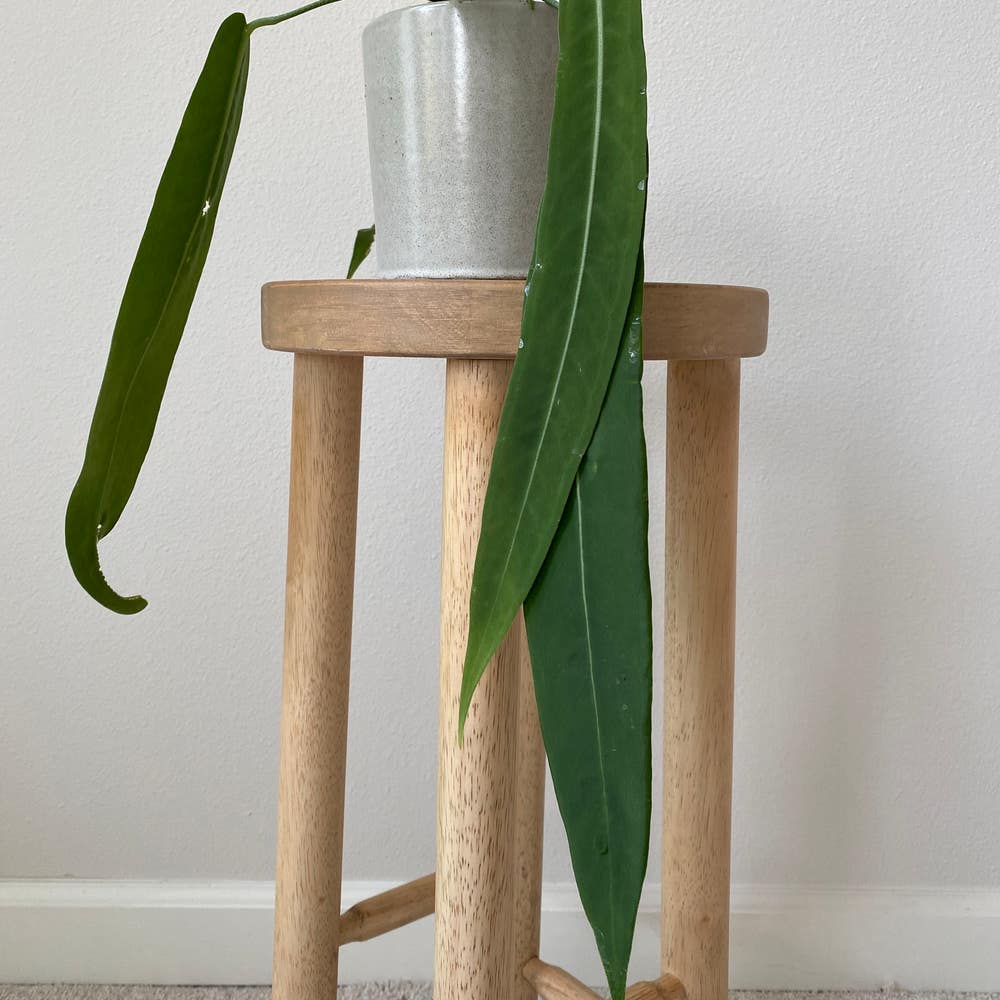
Why Are My Anthurium pallidiflorum Leaves Droopy? 😔
Anthurium pallidiflorum
By the Greg Editorial Team
Jun 18, 2024•4 min read
This article was created with the help of AI so we can cover more plants for you. May contain errors. See one? Report it here.
- 💧 Water when top inch of soil is dry; avoid overwatering and root rot.
- ☀️🌡️ Bright, indirect light and 65-80°F keep leaves perky.
- 🌱 Use high-phosphorus fertilizer monthly during growing season.
Spotting the Signs: Is Your Anthurium pallidiflorum Thirsty or Drowning?
🏜️ Underwatering Woes
Dry soil and droopy leaves are your Anthurium pallidiflorum waving a white flag. It's parched. The leaves may crisp up like overdone toast, and the soil will feel as barren as a desert.
To hydrate without overdoing it, water deeply when the top inch of soil feels like a dry sponge. Ensure the excess drains freely; your Anthurium's roots aren't fond of a bath.
🚰 Overwatering and Root Rot
Yellow leaves and a soggy soil base spell trouble. Overwatering is like giving your plant an unwanted swimming lesson. The stems may feel squishy, a tell-tale sign of root rot setting in.
To rescue your waterlogged friend, repot with fresh, well-draining soil. Trim any rotten roots with the precision of a surgeon. Going forward, water only when the topsoil feels lonely without moisture.

The Balancing Act: Light and Temperature for Happy Leaves
🌞 Too Much Sun or Not Enough?
Anthurium pallidiflorum leaves can reveal a lot about their light needs. Pale, limp leaves suggest a Netflix binge in a dark room, while a sunburnt look screams an overzealous day at the beach. Rotate your plant to ensure even exposure, and aim for bright, indirect sunlight. It's like giving each leaf its moment in the limelight without the risk of a sunburn.
❄️ Keeping Cool or Staying Toasty
Temperature plays a critical role in the health of your Anthurium pallidiflorum's leaves. Keep the thermostat steady between 65-80°F (18-27°C) to avoid shocking your tropical friend. Sudden changes in temperature are as unwelcome as a pop quiz on a Monday morning—consistency is key. Adjust your Anthurium's environment to maintain this cozy range, and watch those leaves perk up.

Feeding Your Anthurium pallidiflorum: A Nutrient Check-Up
💡 Spotting Nutrient Deficiencies
Yellow leaves waving a distress flag? Your Anthurium pallidiflorum might be starving for nutrients. Before you panic, check for a pale complexion or a lack of that characteristic luster. These are the tell-tale signs your green buddy needs a nutrient boost.
Choose a high-phosphorus fertilizer (think 15-30-15) to get those leaves perky again. But remember, it's a meal, not an all-you-can-eat buffet. Overdoing it can lead to a nutrient overdose, and nobody wants that.
🍽️ Fertilization Frequency
Once a month—mark it on your calendar. That's your Anthurium's dinner bell during the growing season. If your plant's looking particularly peaky, you can up the ante to every three weeks, but don't get carried away.
Once the party's over and your plant enters the off-season, it's time to cut back. Think of it as your plant's time to Netflix and chill—no heavy meals needed. Stick to this routine, and you'll avoid the dreaded fertilizer hangover.

First Aid for Droopy Leaves: Quick Fixes and Long-Term Care
💧 When to Water and How Much
Watering your Anthurium pallidiflorum is like hitting the snooze button—timing is everything. Check the top inch of soil; if it's dry, it's time to water. Go for room-temperature water to avoid shocking your plant's roots. Remember, it's a marathon, not a sprint—let the soil dry out a bit between waterings.
🌱 Soil SOS: Drainage and Aeration
Your Anthurium's roots need to breathe, and soggy soil is like a wet blanket at a bonfire—not fun. Ensure your pot has drainage holes; no holes, no hope. Opt for a potting mix that's the life of the party—light, airy, and never soggy.
🌞 Light and Temperature Fine-Tuning
Leaves drooping like a disappointed parent? It might be the light. Your Anthurium craves bright, indirect sunlight—too much and it'll fry, too little and it'll sulk. Temperature-wise, think of your plant as a Goldilocks—not too hot, not too cold. Keep it away from drafts and sudden temperature changes to avoid leafy drama.
⚠️ Safety First
This content is for general information and may contain errors, omissions, or outdated details. It is not medical, veterinary advice, or an endorsement of therapeutic claims.
Always consult a qualified healthcare professional before using any plant as food, medicine, or supplement.
Never eat any plant (or feed one to pets) without confirming its identity with at least two trusted sources.
If you suspect poisoning, call Poison Control (800) 222-1222, the Pet Poison Helpline (800) 213-6680, or your local emergency service immediately.
Spotted an error? Please report it here.
Ensure your Anthurium pallidiflorum stays perky and healthy 🍃 with Greg's custom care reminders, turning droops into delightful foliage!