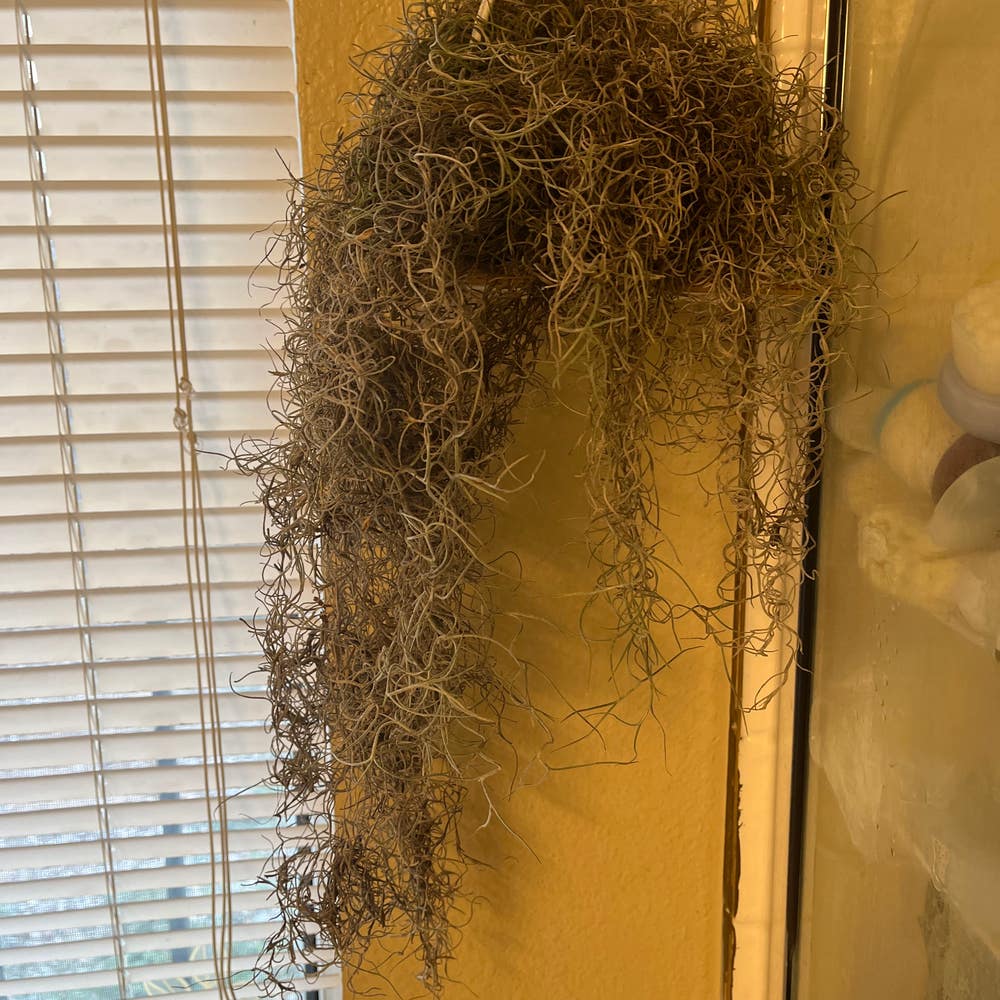
What Does It Mean When Spanish Moss Blooms?
Tillandsia usneoides
By the Greg Editorial Team
Jun 17, 2024•6 min read
This article was created with the help of AI so we can cover more plants for you. May contain errors. See one? Report it here.
Unveil the health of Spanish Moss by decoding its elusive blooms. 🌿🔍
- Optimal light, warmth, and humidity trigger Spanish Moss to bloom.
- Phosphorus and potassium are crucial nutrients for flowering.
- Blooming signifies health, not distress in Spanish Moss.
Optimal Conditions for Spanish Moss Flowering
🌞 Light Exposure
Light is the maestro, cueing Spanish Moss to strut its stuff and bloom. It's a bit of a Goldilocks scenario—not too little, not too much. Direct morning sunlight, especially from an eastern exposure, sets the stage for flowering. But remember, like a delicate pastry, too much heat and it's ruined.
🌡️ Temperature and Humidity
Spanish Moss is a bit of a diva when it comes to temperature and humidity. It craves the warmth, ideally hovering around 70°F, but it'll tolerate down to 22°F with a bit of a shiver. Humidity is its lifeblood, high levels are non-negotiable. Think swampy, think sultry, that's its jam.
🍂 Seasonal Adjustments
As the seasons flip the script, so must you. Move your Spanish Moss to keep it in its comfort zone. It's like adjusting the thermostat to keep the party vibes going all year round.
💦 Moisture Matters
When it comes to watering, it's a weekly misting affair—think of it as a spa day for your moss. And if you can, let it sip on some rainwater. Tap's fine, but it's like choosing tap water over a craft cocktail.
🌿 The Humidity Hack
If your air is drier than a stand-up comedian's wit, consider a greenhouse setup. It's like creating a mini tropical getaway for your Spanish Moss, minus the beach and the piña coladas.
Final Thought
Remember, Spanish Moss won't bloom just to make you happy. It's got its own rhythms and reasons. But get these conditions right, and you might just wake up to a floral surprise.

Nutrient Requirements for Flowering
Spanish Moss, or Tillandsia usneoides, isn't your typical garden plant, and its nutrient needs during blooming are just as unique. Let's get straight to the meat of it: nitrogen takes a backseat when it's showtime for flowers.
🌼 Key Nutrients for Blooming
Phosphorus and potassium are the VIPs for flowering, with phosphorus supporting energy transfer for blooming and potassium playing a role in overall plant health. Remember, Spanish Moss absorbs nutrients from the air and rainfall, so traditional soil fertilizers aren't on the menu.
🌱 Fertilizing Without Harming
To promote blooming, consider a foliar spray with lower nitrogen and higher phosphorus and potassium content. But here's the kicker: overdoing it can cause more drama than an overwatered succulent. Moderation is key—too much can lead to nutrient burn or unwanted salt buildup.
🌿 Micronutrient Mingle
Micronutrients like boron and manganese shouldn't be overlooked. They're like the supporting actors that deserve an Oscar—necessary for plant health and flower development, albeit in smaller doses.
💦 Real Talk on Application
When applying fertilizers, think of it as seasoning a steak—just enough to enhance, not overpower. A light misting every month during the growing season should suffice. And always, always water your Spanish Moss before fertilizing to avoid the equivalent of a chemical sunburn.
Remember, Spanish Moss won't send you a thank you note for feeding it, but the blooms will be your silent applause. Keep it simple, keep it balanced, and those tresses will be dressed to impress.

Encouraging Flowering in Spanish Moss
To coax Spanish Moss into its rare bloom, a bit of environmental tweaking is key. Light exposure is crucial; ensure your moss receives ample indirect sunlight. If indoors, a western-facing window is your best bet.
🌿 Adjusting the Environment
Temperature and humidity are the Spanish Moss's best friends when it comes to flowering. Aim for warm conditions with high humidity – think sultry Southern swamps. If you're greenhouse-equipped, you've hit the jackpot for creating a bloom-conducive atmosphere.
🛡️ Mitigating Plant Stress
While some plants throw a floral fit under stress, Spanish Moss is more laid-back. Overcrowding or extreme shifts in light and temperature can induce stress, but don't bank on distress blooms. Instead, focus on steady care; keep your moss's environment stable and avoid the temptation to stress it out for the sake of flowers.
🍽️ Fertilization: Less is More
A light touch with fertilizer can encourage blooming, but don't overdo it. Once a month during the growing season with a bromeliad-friendly fertilizer like Dyna-Gro Grow should suffice. Remember, Spanish Moss is more of a minimalist – it gets by on air and a prayer.
✂️ Pruning: A Gentle Nudge
Pruning isn't just for looks. It can signal your moss to redirect energy to flowering. But don't get snip-happy; a gentle trim is all it takes. Think of it as a polite suggestion rather than a command.
In essence, treat your Spanish Moss like a laid-back friend who needs just the right vibe to show their true colors. Keep it comfy, give it a little boost, and wait for those elusive blooms to make their understated appearance.

Debunking Flowering Myths
🌳 Chiggers and Tree Harm
Let's cut through the folklore: Spanish Moss does not harbor chiggers. This myth likely stems from individuals encountering these pests on the ground, not from the moss itself. Moreover, Spanish Moss is not a tree killer. It's an epiphyte, meaning it simply lives on the tree for support. Sickly trees often have more Spanish Moss because there's more space to grow, not because the moss is causing harm.
💧 Nutrient Misconceptions
Another common misconception is that Spanish Moss feeds off the tree it inhabits. In reality, it absorbs nutrients and moisture from the air and rainfall. It's a self-sufficient entity, not a parasitic leech. Birds and insects often find refuge in its strands, and it's a relative of the bromeliad family—think air plants, not vampires.
🌸 Flowering Facts
When it comes to blooming, Spanish Moss flowers are subtle and often overlooked. The plant doesn't need to be "stressed" to bloom, nor does it require the tree's nutrients to produce its tiny flowers. Blooms are a sign of the plant's health and its response to the right environmental conditions, not a distress signal.
🌿 Practical Takeaways
For the green-thumbed myth busters, remember: removing Spanish Moss won't revive an ailing tree, and chiggers won't leap from its tendrils. Appreciate the beauty and ecology of Spanish Moss, and if you're lucky enough to witness it bloom, know that you're seeing a natural marvel, not a symptom of plant stress.
⚠️ Safety First
This content is for general information and may contain errors, omissions, or outdated details. It is not medical, veterinary advice, or an endorsement of therapeutic claims.
Always consult a qualified healthcare professional before using any plant as food, medicine, or supplement.
Never eat any plant (or feed one to pets) without confirming its identity with at least two trusted sources.
If you suspect poisoning, call Poison Control (800) 222-1222, the Pet Poison Helpline (800) 213-6680, or your local emergency service immediately.
Spotted an error? Please report it here.
Experience the natural marvel of blooming Spanish Moss 🌸 with Greg's tailored care plan, ensuring the perfect balance of light, warmth, and moisture for your plant's peak health.