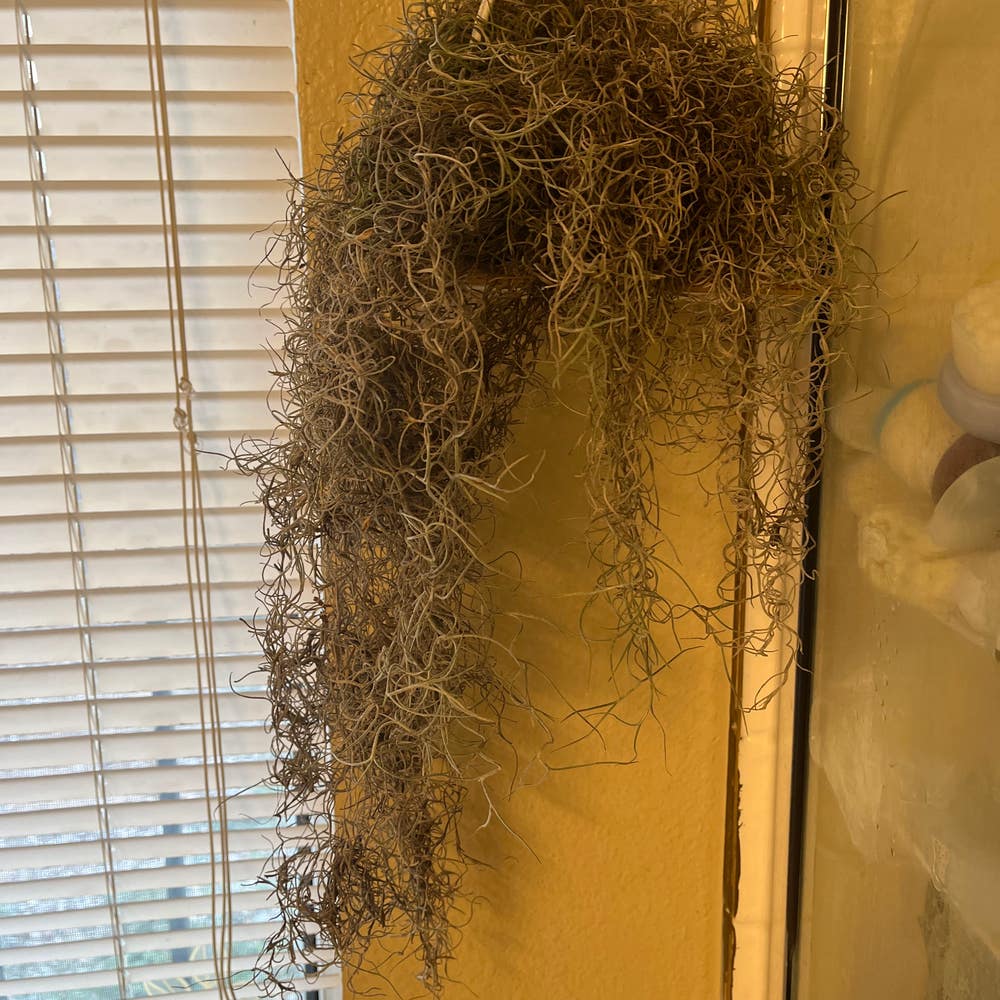
Why Does My Spanish Moss Have Yellow Leaves? 🍂
Tillandsia usneoides
By the Greg Editorial Team
Jun 17, 2024•6 min read
This article was created with the help of AI so we can cover more plants for you. May contain errors. See one? Report it here.
Nurture a vibrant Spanish Moss 🌿 by decoding and fixing the yellow leaf mystery!
- Environmental stressors like light and humidity cause yellow leaves in Spanish Moss.
- Nutrient deficiencies need correcting with nitrogen or magnesium fertilizers.
- Proper watering and placement prevent yellowing and maintain health.
Identifying Causes of Yellow Leaves in Spanish Moss
Spanish Moss, that ethereal drapery of the South, isn't immune to the siren call of stress. Yellow leaves can be the first whisper of discontent, signaling that all is not right in its world.
🌞 Environmental Stressors
Light, humidity, and temperature are the trinity of tranquility for Spanish Moss. Too much sunlight scorches its leaves, turning them a telltale yellow. Conversely, a lack of light can leave it languishing and pale.
Humidity is the moss's best friend; a dry spell can make it throw a yellow fit. Temperature swings are no less dramatic, with extremes causing it to sulk in shades of yellow.
🍽️ Nutrient Deficiencies
Spanish Moss feeds on air, like an atmospheric vampire. But sometimes, the air is just not enough. Deficiencies in nitrogen and magnesium can turn the moss from vibrant green to a sickly yellow.
Nitrogen is the lifeblood of chlorophyll production, while magnesium sits at the heart of the molecule. A dearth of either is like a dinner without dessert—unsatisfying and leaving the moss craving more.
The Takeaway
Yellow leaves on Spanish Moss are a cry for help, a signal that it's time to reassess its living conditions. Whether it's a need for shade, a drink of mist, or a nutrient boost, the moss communicates its needs through a change in color. Listen closely, and you can keep the Spanish Moss in your life a luscious green.

Correcting Environmental Stress-Related Yellowing
💡 Adjusting Light Exposure
Bright, indirect light is the sweet spot for Spanish Moss. Too much sun can leave your plant looking like it's been through a desert marathon without a water station. To prevent a yellowing mishap, place your Spanish Moss in a location where it can bask in filtered sunlight. If you notice the leaves starting to resemble a lemon, it's time to rethink your plant's sunbathing habits.
🌡️ Maintaining Humidity and Temperature
Spanish Moss craves that humid, tropical vibe, but don't turn its home into a rainforest. Aim for a humidity level that keeps it lush, not mush. As for temperature, think steady and stable. Sudden changes can shock your plant more than a plot twist in a telenovela. Keep it away from drafts and vents that could send its leaves to a yellow grave.
🏞️ Environmental Stability
Consistency is your new best friend when it comes to caring for Spanish Moss. Regularly rotating the plant ensures an even tan—er, I mean, even growth. And remember, this isn't a high-maintenance diva; it's a plant that thrives on stability. So, keep those conditions as constant as the Northern Star, and watch the yellowing fade away.

Addressing Nutrient Deficiencies
Identifying and correcting nutrient deficiencies is crucial for reviving the vibrant green of Spanish Moss. Nitrogen and magnesium are often the culprits behind the yellowing of leaves.
💚 Nitrogen Deficiency
When Spanish Moss lacks nitrogen, the older leaves at the base turn yellow, and the plant's growth slows. To remedy this, apply a fertilizer rich in nitrogen, such as one containing nitrate, ammonium, or urea. Organic options like manure can also boost nitrogen levels. However, remember that moderation is key; too much nitrogen can cause more harm than good.
💛 Magnesium Deficiency
Magnesium deficiency presents as yellowing between the veins of leaves, starting with the lower foliage. To correct this, use a fertilizer containing magnesium or apply Epsom salts, which are readily available and effective. This will not only green up the leaves but also encourage healthier growth.
🌱 Fertilizer Use
When using fertilizers, it's essential to strike a balance. Over-fertilization can lead to nutrient imbalances and exacerbate yellowing issues. Use a balanced fertilizer and follow the recommended application frequency. If you're unsure, err on the side of less is more. Always observe your plant's response after treatment to ensure you're on the right track.
Remember, while fertilizers can be a quick fix, they're not a cure-all. Consistent care and attention to the plant's overall environment are just as important for long-term health.

Watering Practices and Yellow Leaves
💧 The Role of Watering Frequency and Quality
Watering frequency and quality are pivotal in preventing yellow leaves in Spanish Moss. Overwatering can lead to root rot, while underwatering can cause the plant to dehydrate and its leaves to yellow. The trick is to maintain a Goldilocks zone – not too much, not too little.
💦 Best Practices for Watering Spanish Moss
🕰️ When to Water
Water your Spanish Moss when the top inch of the surrounding environment feels dry. This method ensures the plant gets just the right amount of moisture without becoming waterlogged.
🚰 How to Water
Submerge the moss in rainwater or distilled water, allowing it to soak up moisture like a sponge. After a few minutes, remove and gently shake off excess water, then hang it up to dry. This simulates the natural rainfall it would receive in its native habitat.
💧 Water Quality
Spanish Moss prefers rainwater or distilled water. Tap water can contain minerals that may build up and harm the plant. If tap water is your only option, let it sit out overnight to allow some of the chemicals to dissipate.
🔄 Frequency
In humid environments, watering may be needed less frequently. If the air is dry, misting the plant between soakings can help. Always allow the moss to dry out completely between watering sessions to prevent rot.
By following these guidelines, you'll help ensure your Spanish Moss remains vibrant and avoids the dreaded yellow leaf syndrome. Remember, it's all about understanding the plant's needs and responding with care.
Preventive Care and Common Mistakes
🌿 Recommendations for Placement and Maintenance
Spanish Moss, or Tillandsia usneoides, thrives in the right conditions. Placement is pivotal; aim for bright, indirect light. Too much sun can scorch its delicate leaves, while too little leaves it languishing.
Airflow is another unsung hero. Good circulation wards off pests and diseases, keeping your moss robust. Remember, stagnant air is to Spanish Moss what a stale joke is to a comedy routine – it just doesn't work.
🚫 Common Pitfalls in Spanish Moss Care
Overwatering is the bane of many a plant, and Spanish Moss is no exception. Wet leaves are an open invitation to mold and rot. Water sparingly, ensuring the moss has time to dry out between waterings.
Cold drafts are a no-go. These plants prefer the warmth, so keep them away from drafty windows or air conditioning vents. It's like avoiding a cold shower – nobody really wants that.
Ignoring early signs of distress, such as yellowing or browning, is akin to ignoring a check engine light. Address issues promptly to avoid a full-blown plant crisis.
Lastly, cleanliness around your plant can't be overstated. A tidy environment minimizes disease and pest risks. Think of it as good hygiene for your moss.
By steering clear of these pitfalls and providing preventive care, your Spanish Moss can remain the envy of the neighborhood.
⚠️ Safety First
This content is for general information and may contain errors, omissions, or outdated details. It is not medical, veterinary advice, or an endorsement of therapeutic claims.
Always consult a qualified healthcare professional before using any plant as food, medicine, or supplement.
Never eat any plant (or feed one to pets) without confirming its identity with at least two trusted sources.
If you suspect poisoning, call Poison Control (800) 222-1222, the Pet Poison Helpline (800) 213-6680, or your local emergency service immediately.
Spotted an error? Please report it here.
Keep your Spanish Moss evergreen 🍃 with Greg's personalized care reminders that tackle everything from light exposure to watering schedules, ensuring your plant stays vibrant and yellow-free!