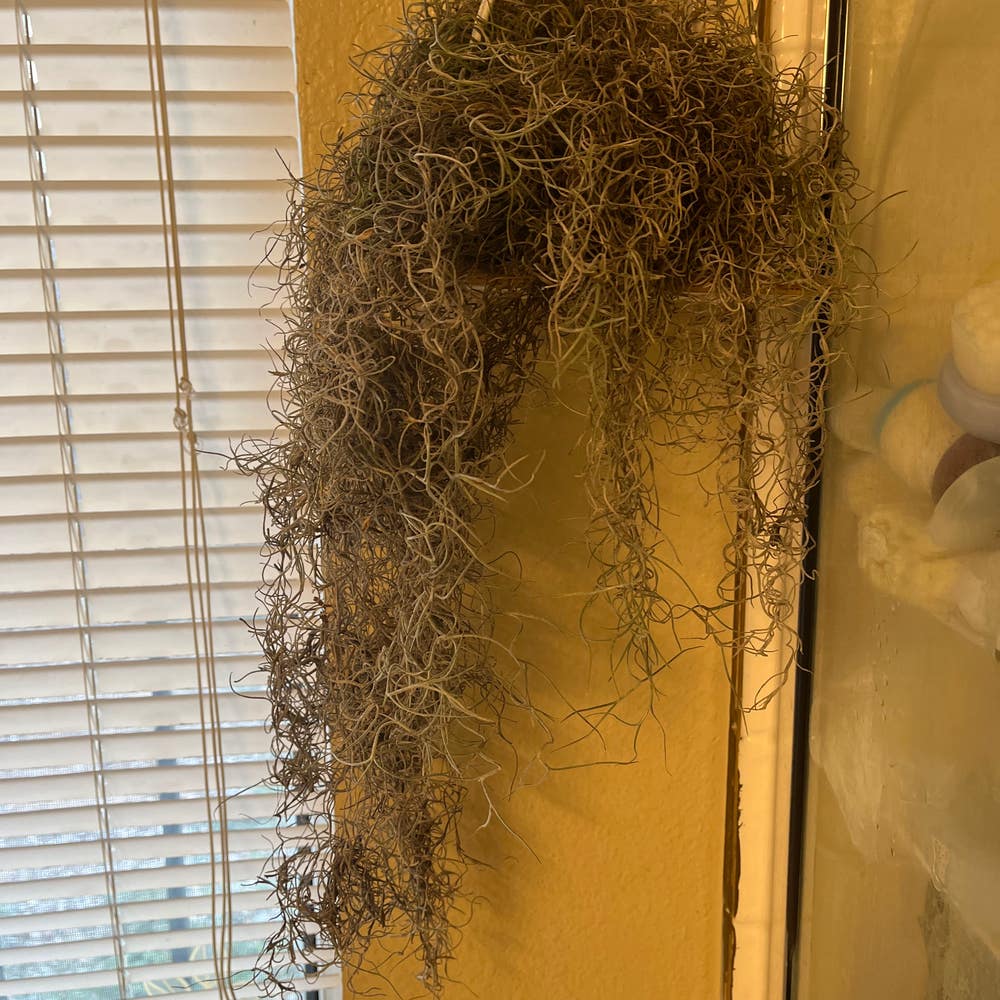
Why Are There Black Spots on My Spanish Moss Leaves?
Tillandsia usneoides
By the Greg Editorial Team
Jun 17, 2024•7 min read
This article was created with the help of AI so we can cover more plants for you. May contain errors. See one? Report it here.
Banish black spots on your Spanish Moss 🍃 and restore its ethereal charm with these proven care tips.
- Fungal infections, stress, pests cause black spots on Spanish Moss.
- Prevent spots with good air circulation, proper watering, and sunlight.
- Treat with fungicides and manage pests to maintain healthy moss.
Identifying Black Spots on Spanish Moss
Spanish Moss may not be a drama queen, but black spots on its leaves are a cry for help. Here's how to play plant detective.
🕵️♂️ Visual Symptoms
Black spots on Spanish Moss are like unwanted tattoos: distinctive and hard to miss. They're usually darker than the leaf itself and can be surrounded by a lighter halo. Unlike sunburn or dehydration, which cause browning, these spots are a sign of something more sinister.
🕵️♂️ Distinguishing Black Spots
Fungal infections often manifest as black or dark spots with a clear edge. If you're seeing a yellowish ring around the spot, it's likely a fungus gatecrashing your plant's party. Don't mix these up with the brownish hues from sunburn or the sticky residue from pest infestations, which are different beasts altogether.
🕵️♂️ Common Confusions
Remember, not all spots are created equal. Overwatering might lead to root rot, but that's more of a mushy, below-the-belt problem. And pests? They leave behind their own calling cards, like webbing from spider mites or the shiny trails of aphids. Keep your eyes peeled for these red flags.
🕵️♂️ Analyzing Causes
To pinpoint the culprit, compare the black spots on your Spanish Moss with images of known issues. If the spots are powdery or spotty, think fungi. Water-soaked lesions? Bacterial villains might be at play. And if the spots have buddies like crinkled leaves or a sticky film, you're dealing with insect drama.
🕵️♂️ Pro Tip: The Process of Elimination
When in doubt, eliminate what it's not. Check your watering habits, inspect for pests, and consider environmental factors like humidity and airflow. If the roots are healthy and the pests are absent, you're likely dealing with a fungal fiesta.

Causes of Black Spots on Spanish Moss
Fungal Infections:
Spanish Moss, though hardy, isn't immune to the drama of fungal infections. Fungi like Cercospora thrive in the moist, humid conditions that Spanish Moss often loves, leading to those notorious black spots. It's like throwing a fungi fiesta, and the black spots are the unwanted confetti.
Environmental Stress:
But don't just point fingers at fungi; environmental stress plays a role too. When Spanish Moss gets more sun than a tourist in Ibiza or experiences moisture levels as inconsistent as a teenager's mood, it can show its displeasure through black spots.
Pest Infestations:
And let's not forget the pests. They're the gate crashers at the party, leaving behind black spots as evidence of their feasting. While Spanish Moss is typically pest-resistant, it's not a fortress. Aphids and spider mites can sneak in, sap the life out of it, and leave those telltale marks.
🍄 Fungal Foes
Cercospora and Friends
These fungi are the main culprits, creating black lesions that are as unsightly as a wine stain on a white carpet. They love moisture and poor air circulation, so if you're keeping your Spanish Moss in a steamy bathroom with no vent, you're practically inviting them over for a sleepover.
🌿 Environmental Elements
Too Much of a Good Thing
Just like binge-watching your favorite show can lead to regret, too much water or sun can stress your Spanish Moss into developing black spots. It's all about balance—enough sun to feel loved, enough shade to avoid a burnout.
🐜 Pests: The Uninvited
Aphids and Spider Mites
These tiny vampires suck the life out of your Spanish Moss, leaving behind discolored, spotty leaves. They're not as common as on other plants, but they love a good surprise appearance.
🛡️ Combating the Causes
Prevention is Key
To keep your Spanish Moss spot-free, think like a bouncer at an exclusive club. Keep the conditions unfavorable for fungi, don't let pests cross the velvet rope, and make sure your plant isn't stressed out from environmental extremes. It's about creating an atmosphere that says, "Party's over, folks."

Treating Fungal Infections
🍄 Fungicidal Treatments: The First Line of Defense
When black spots mar the delicate strands of Spanish Moss, it's time to act swiftly. Fungal infections are no joke, and your moss is silently screaming for help. Grab a fungicide; liquid copper fungicides are a go-to for many gardeners. Follow the label's instructions to the letter, mixing the specified amount with water and dousing your moss thoroughly. If you're more of a DIY enthusiast, hydrogen peroxide sprays or cinnamon dusting can be your first foray into fungal warfare for minor infections.
🌿 Environmental Adjustments: Prevention is Key
Fungi are like that one guest who overstays their welcome; they love a humid, stagnant environment. To prevent their spread, you'll need to play around with your moss's living conditions. Cut down on watering—let the moss dry out a bit between drinks. Improve air circulation around the plant; a gentle breeze is the bane of fungal growth. And while you're at it, give your moss some sunshine. It's like a disinfectant but for plants. Remember, the goal is to create an environment that's about as welcoming to fungi as a desert is to a fish.

Addressing Environmental and Pest-Related Black Spots
🌧️ Remedial Actions for Environmental Stress
Environmental stress can leave your Spanish Moss vulnerable to the dreaded black spots. Overwatering and poor air circulation are often the culprits. To combat this, ensure your watering routine allows the plant to dry out between sessions. Early morning watering is best, as it gives the leaves time to dry during the day.
Airflow is your friend here. Increase circulation by spacing out your plants or using a fan. And remember, Spanish Moss loves humidity but despises soggy feet, so aim for moist, not waterlogged soil.
🐜 Pest Management Strategies
When it comes to pests, an ounce of prevention is worth a pound of cure. Regularly inspect your Spanish Moss for uninvited guests. If you spot trouble, insecticidal soaps or horticultural oils are your go-to. They're effective and less harsh than chemical pesticides.
For a DIY approach, a soapy water solution can work wonders against pests. Just a squirt of dish soap in water, sprayed directly on the affected areas, can help you show those pests the door without collateral damage to your plant.
🌱 Non-Toxic Solutions
Before you unleash chemical warfare, consider the environment. Organic treatments like neem oil can be a game-changer. It's a natural fungicide and pesticide that's tough on pests but gentle on plants. Always follow the label instructions to the letter.
✂️ Pruning and Cleanliness
Keep your Spanish Moss in top shape by pruning any dead or diseased material. This not only improves air circulation but also removes potential pest hideouts. Clean your tools after each use to prevent spreading any problems.
Lastly, don't let leaf litter accumulate. A clean plant base is less inviting to pests and diseases. Remember, cleanliness is next to godliness, especially in plant care.
Preventive Measures and Monitoring
🛡️ Proactive Care Practices
Early morning watering is your first move in the chess game against black spots. It's simple: water when the sun can help you out, drying the leaves and depriving fungi of their playground. Keep the soil's moisture just right—think of Goldilocks, not too wet, not too dry.
Good air circulation is non-negotiable. It's like social distancing for plants; give them their space to breathe. Prune with purpose, and remember, every snip should help light and air reach all the right places.
Cleanliness is next to godliness, even for your gardening tools. Sterilize them as if you were prepping for surgery to stop those microscopic troublemakers from hitchhiking between plants.
🕵️ Regular Monitoring Techniques
Be a plant detective; regular check-ups are your magnifying glass. Spot a problem early, and you can kick it out before it gets comfy. Look for the tell-tale signs of black spots and act swiftly.
New growth is your barometer. If it's spot-free and vibrant, your plant's giving you a high-five. But if those pesky spots show up again, it's back to the drawing board. Check for other culprits like nutrient imbalances or pests.
Stay vigilant. It's a marathon, not a sprint. Keep an eye on your Spanish Moss like it's the crown jewels. Changes in foliage health and color? Investigate. It's about being proactive, not reactive.
Remember, prevention is better than cure. It's a cliché because it's true, especially when it comes to black spots on Spanish Moss.
⚠️ Safety First
This content is for general information and may contain errors, omissions, or outdated details. It is not medical, veterinary advice, or an endorsement of therapeutic claims.
Always consult a qualified healthcare professional before using any plant as food, medicine, or supplement.
Never eat any plant (or feed one to pets) without confirming its identity with at least two trusted sources.
If you suspect poisoning, call Poison Control (800) 222-1222, the Pet Poison Helpline (800) 213-6680, or your local emergency service immediately.
Spotted an error? Please report it here.
Prevent black spots and keep your Spanish Moss thriving 🌿 with Greg's proactive care reminders, ensuring early detection and perfect environmental balance.