


Spanish Moss

5.0 out of 5 (5 experiences)
 Survivor
 Easy to propagate
About Spanish Moss
Spanish Moss is a super popular houseplant 🌿 that is easy to grow and needs very little water to thrive. They do best in long-lasting, direct light ☀️ and should be less than 1 foot from a window.
Plant parents describe this plant as being a survivor and easy to propagate with a whopping 1092 being grown with Greg around the world. Check out the reviews below for more details!🌟
Spanish Moss likes soil that is good at retaining moisture. Your plant shouldn't need added fertilizers if you repot each time it doubles in size.
Spanish Moss belongs to the Tillandsia genus, and is native to Southeastern North America and South America.
Taxonomy

Tillandsia usneoides
Tillandsia
Bromeliaceae
Poales
Also known as
Old Man's Beard and Air Plant

How to care for Spanish Moss
How often to water your Spanish Moss

every 12
Spanish Moss needs 0.5 cups of water every 12 when it doesn’t get direct sunlight and is potted in a 5" pot.
Use our water calculator to personalize watering recommendations to your environment or download Greg for more advanced recommendations for all of your plants.

Water 0.5 cups every
12
Finding light for Spanish Moss in your home

a window
Spanish Moss love being close to bright, sunny windows 😎.
Place it less than 1ft from a south-facing window to maximize the potential for growth.
Spanish Moss does not tolerate low-light 🚫.
Select your region to see how the current weather in your area affects the placement of Spanish Moss in your home 🏡.
How to fertilize Spanish Moss

Most potting soils come with ample nutrients which plants use to produce new growth.
By the time your plant has depleted the nutrients in its soil it’s likely grown enough to need a larger pot anyway.
To replenish this plant's nutrients, repot your Spanish Moss after it doubles in size or once a year—whichever comes first.
-
Presenting my newest project: Spanish mosssss!!! My oak tree in my backyard has a ton of Spanish moss so I decided to take a little bit and mount it to a branch a found that I think works perfectly! I soaked it in water for a while to remove any bugs and debris (there were lots of bugs 😭) and it’s overall healthy since about 90% of it turned green after the soak. Anyways, I’m excited to see what happens next! #SpanishMoss
-
Some of my #plants enjoying the #outdoor #rain #Caladiums #Monstera #monsterathaiconstellation #AlocasiaAddicts #Alocasia #alocasiamacrorrhizos #AlocasiaSilverDragon #AlocasiaMelo #alocasiametallicblue #AlocasiaBambino #alocasiablackvelvet #ChineseEvergreen #Dieffenbachia #PhilodendronPinkPrincess #philodendronringoffire #NervePlant #phildendronwhiteknight #AirPlant #SpanishMoss #PlantAddict
-
Spanish Moss: Should there be soil in the pot? Do I plant it? Or does it just exist in the ~air~ in the pot? #SpanishMoss
-
Is my Spanish moss dead? It came in a terrarium of a tillandsia and at first I thought it was decoration, I’ve watered it twice and let it dry fully but it’s still white and I can’t see any green in it - is it dead?? #SpanishMoss
-
New air plant owner #AirPlant #Tillandsia #SpanishMoss Please, any tips information or knowledge on how to get appreciated and to them I will take any advice I can get!
-
im reading the care guide and its telling me to put in soil. That doesn't sound right cuz its an air plant. It doesn't require soil does it? And its also saying to water every two weeks, and Google said every few days. Im confused. Help. #SpanishMoss #airplant
-
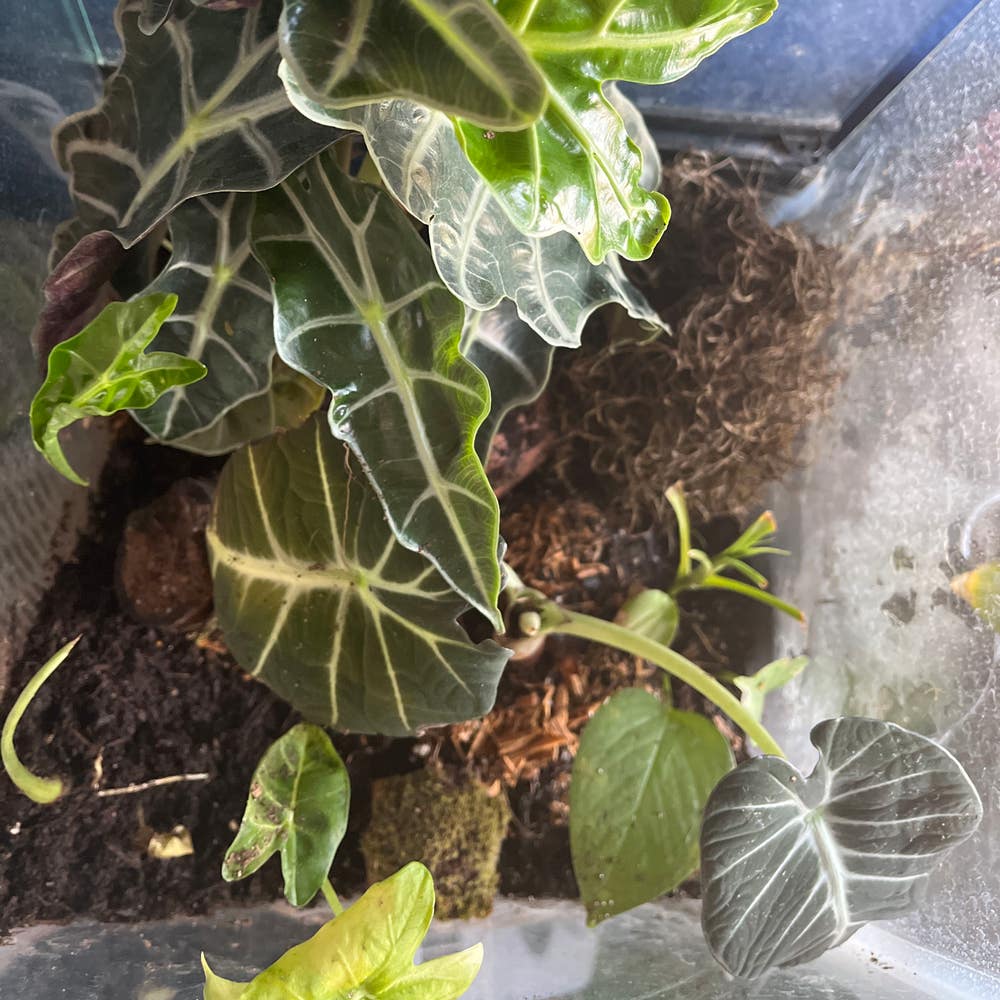
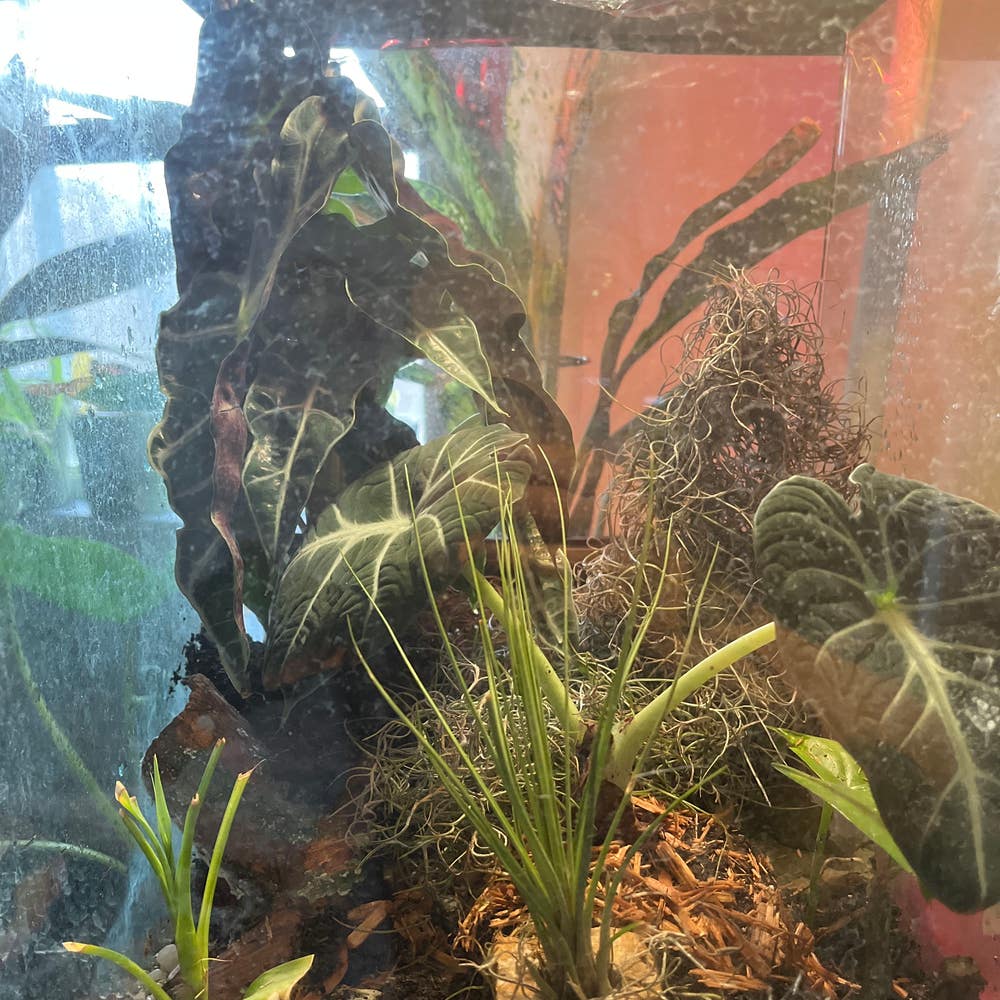
My terrarium plants are looking gorgeous! New growth healthy looking soil! #HappyPlants #PlantsMakePeopleHappy #PlantAddict #NewGrowth #GrowLights #PlantTherapy #AlocasiaAddicts #AlocasiaPolly #alocasiablackvelvet #Terrarium #PothosPack #Pothos #potsthatarenotpots #SpanishMoss #GregGang #Greggers
-
I have to work on the water spots but I planted some of my special plants in here. I hope I can make this happen! 🪴 #HappyPlants #PlantsMakePeopleHappy #PlantAddict #Terrarium #SpanishMoss #PothosPack #Pothos #bamboo #AlocasiaAddicts #AlocasiaPolly #alocasiablackvelvet #GregGang
-
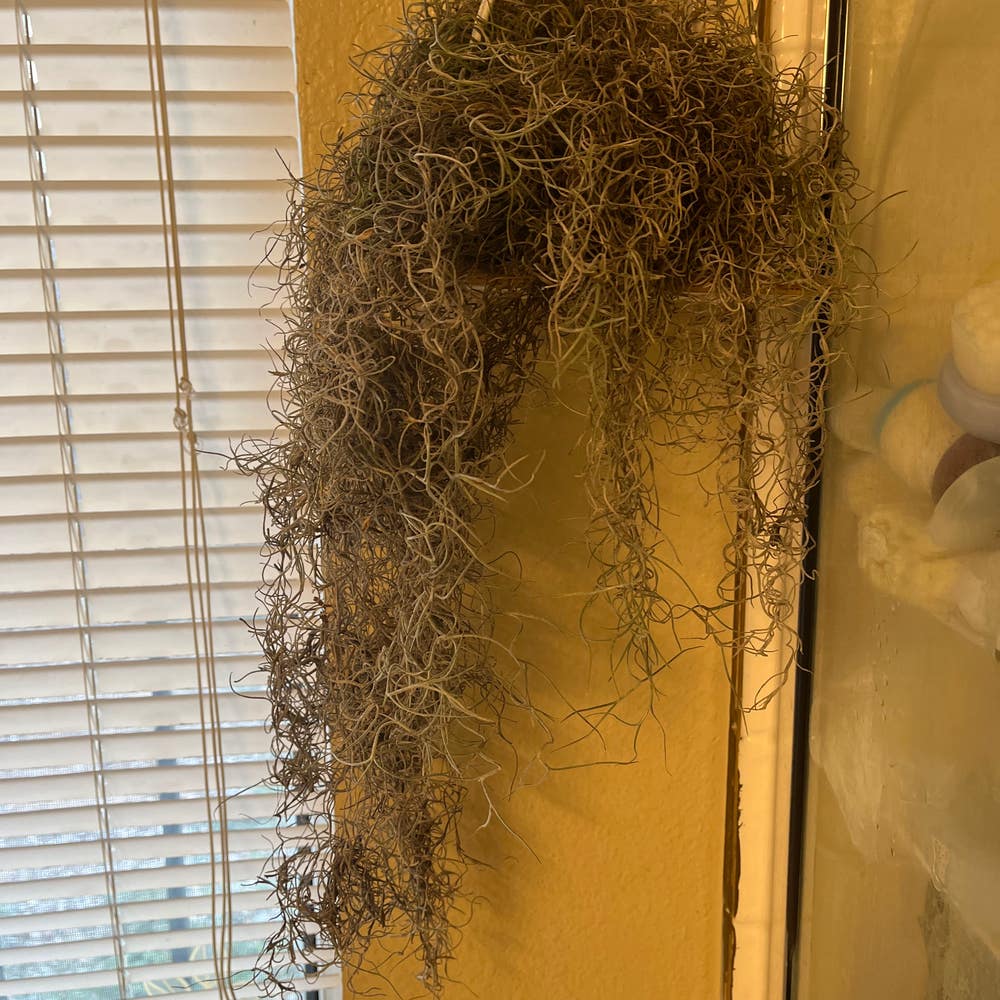
I have this Spanish moss in the bathroom. I live in the desert and it’s so dry. Hopefully I can keep it alive with the humidifier. Next year I plan to move to San Antonio, Texas and I will have a variety of plants to choose from! #HappyPlants #PlantsMakePeopleHappy #PlantAddict #GregGang #SpanishMoss
-
Is this Spanish moss dead? I have two of these and I thought they would be hard to kill. I was watering them every two weeks - spraying them down thoroughly with a spray bottle. But they seem like they might be dead. Someone told me they “hibernate” but they’re not turning green again.


Care Summary for Spanish Moss

Spanish Moss
 Greg recommends:
 Water
Water
0.5 cups every 12 days
 Placement
< 1ft from a window
 Nutrients
Repot after 2x growth
Based on the 4” pot your plant is in, and that it doesn’t get direct sunlight.
What other plant parents say
Survivor 5
Easy to propagate 1


 12/30/2021
Air plant. Slow grower. No pests
Survivor
 05/19/2021
It’s a type of air plant so it is super easy to keep and hard to kill
Survivor
 05/13/2021
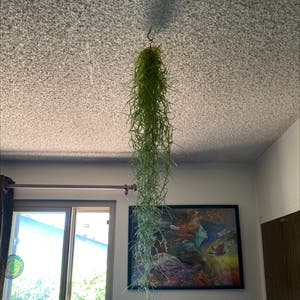
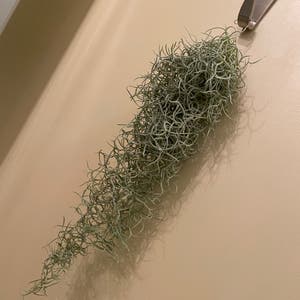
Spanish moss is a nifty, low-maintenance creature. They don’t seem to like hanging on certain types of metal (perhaps zinc, but I’m not sure). 10/10 best moss!
Survivor
 Trending in your area










 Similar to Spanish Moss

✨ Discover rare plants

Hoya 'Millie'
Skeleton Key Pothos

Bonsai Crassula
Hoya 'Memoria'

Crassula 'Purple Drag…

Ceropegia simoneae

Red Mistletoe Cactus

Graptoveria 'Douglas …

Electric Blue Gecko

Scotch Moss

Philodendron eximium

Rainbow Echeveria

Begonia lubbersii

Scindapsus pictus 'Si…

Haworthia emelyae com…

Orange Lipstick Plant
