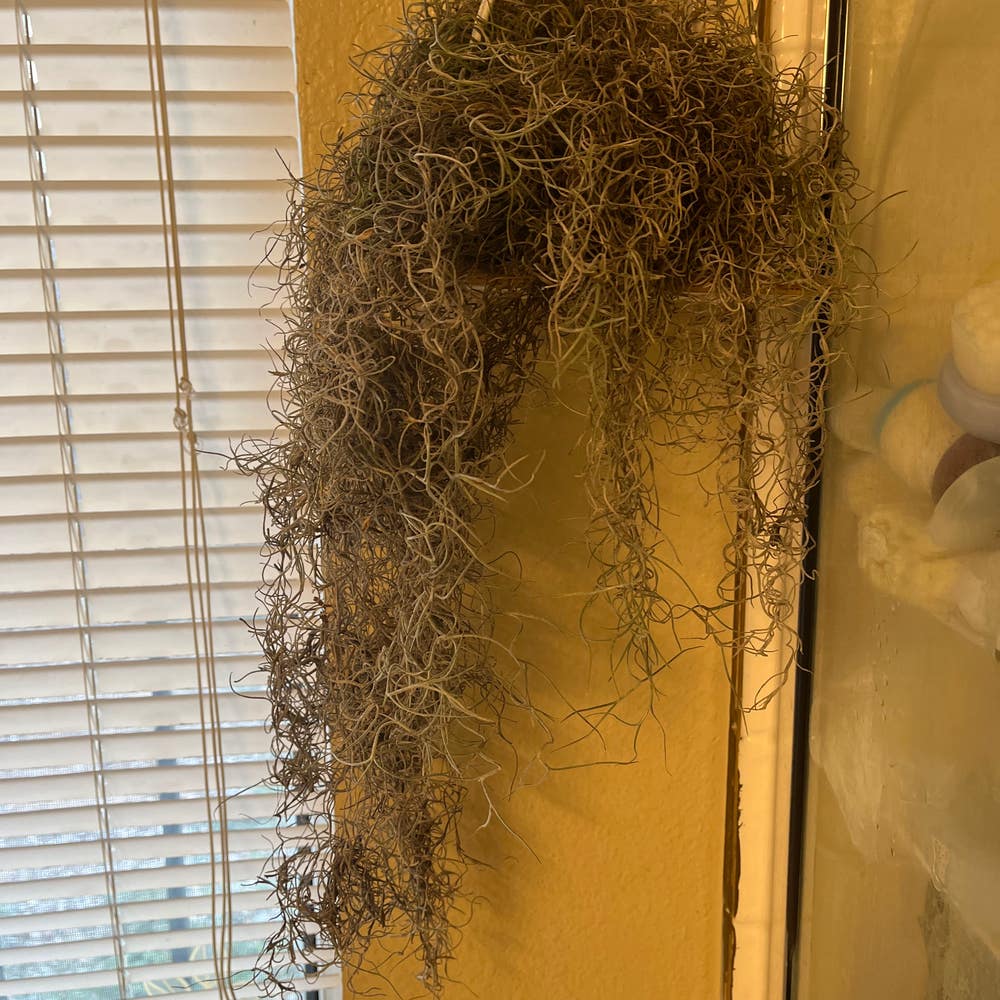
Why Are My Spanish Moss Leaves Mushy?
Tillandsia usneoides
By the Greg Editorial Team
Jun 17, 2024•5 min read
This article was created with the help of AI so we can cover more plants for you. May contain errors. See one? Report it here.
Prevent mushy Spanish Moss leaves 🍂 by nailing the right moisture and airflow balance!
- Excessive moisture and poor ventilation cause mushy Spanish Moss leaves.
- Modify watering habits; let soil dry out between waterings.
- Prune for airflow and avoid tight spaces to prevent fungal issues.
Identifying the Causes of Mushiness in Spanish Moss
Excessive moisture and lack of ventilation are the culprits behind your Spanish Moss's mushy leaves. Let's dive into the soggy details.
💦 Excessive Moisture: Overwatering's Role
Overwatering is like throwing a pool party for fungi, and your Spanish Moss is the unwilling host. Leaves get mushy, brown, and droopy, a classic sign of too much love from the watering can. If your plant's texture reminds you of overcooked pasta, it's time to reassess your watering schedule.
🌬 Lack of Ventilation: Airflow's Importance
Stale air is to fungi what a crowded elevator is to germs—a paradise. Without proper airflow, your Spanish Moss might as well be in a steam room, with fungal infections thriving in the damp stillness. Ensure your moss isn't packed tighter than a subway at rush hour; it needs room to breathe.
Quick Tips for Moisture and Airflow
- Water wisely: Spanish Moss prefers a sip over a soak.
- Air it out: Think open spaces, not plastic containers.
- Spot the signs: Yellow halos and brown spots are fungal red flags.
- Be proactive: If leaves are dropping like hot potatoes, it's time to act.
Remember, Spanish Moss is more independent than it looks; it can handle a bit of drought. Keep the water at bay and let the air flow, and you'll avoid turning your plant into a mushy mess.

Steps to Diagnose Mushy Leaves
🖐️ Examining the Texture
To assess the condition of your Spanish Moss, start with a hands-on approach. Gently squeeze the leaves between your fingers. If they collapse like a deflated balloon, you've got mushiness on your hands. This tactile test is crucial; it's the difference between a plant that's thriving and one that's just surviving.
👀 Spotting Signs of Fungal Infections
Visual cues are next on your detective checklist. Look for brown spots or a general look of despair in your plant—these are the SOS signals of fungal infections. If the leaves are more reminiscent of soggy cereal than vibrant greenery, it's time to act. Remember, a mushy stem is like a white flag of surrender from your plant's roots, signaling potential root rot.
💡 Quick Tips
- Avoid waterlogged roots; they're an open invitation to fungal fiestas.
- Leaves falling off on their own? You're in the red zone.
- Boost airflow and dial back the watering to crash the fungal party.
🚱 Overwatering Signs
Yellow or brown leaves that droop or drop are telltale signs of overwatering. If your plant's stem feels more mush than mighty, you've likely been too generous with the H2O. Fungal infections and root rot are the nightmares here, thriving in the damp and cozy conditions you might have accidentally rolled out the red carpet for.
🍄 Fungal Infections and Root Rot
A mushy stem is a distress signal for root rot. If your plant's roots are sitting in waterlogged soil, it's a ticking time bomb before the fungal infection turns them into a brown, mushy mess. Think of it as a zombie apocalypse for your plant's roots. Leaves turning yellow or brown, drooping, and feeling as limp as overcooked noodles are clear signs you've been too generous with the water.

Treating Mushy Leaves in Spanish Moss
💧 Modifying Watering Habits
Overwatering is the express lane to mushy-leaf city. Spanish Moss thrives on neglect when it comes to hydration. Cut back on the misting; let the plant's tendrils dry out between waterings. Remember, this air plant grabs moisture from the atmosphere, so it's not about how often, but how well it drinks.
🚰 Proper Drainage Techniques
No soil, no drainage holes, no problem. Spanish Moss doesn't need traditional potting, but it does need to avoid staying wet. If it's in a container, make sure it's airy and open, something like a wire basket that scoffs at the idea of holding water.
🌬 Improving Air Circulation
Airflow is the unsung hero in the fight against mushiness. Prune any dense clumps to open up the plant, allowing air to circulate like a gentle breeze through an open window. Strategic positioning is also key. Hang your Spanish Moss where it can sway freely, not shoved in a stagnant corner.
✂️ Pruning and Positioning
When pruning, think of yourself as a sculptor, removing just enough to enhance beauty and health. And when you position your Spanish Moss, imagine it's a kite that needs to catch the wind – elevate it, hang it, let it live its best life in the flow of fresh air.

Preventing Future Issues with Mushy Leaves
💧 Establishing a Balanced Watering Routine
Watering is a bit like dating – it's all about finding the right balance. Too much attention, and you risk smothering; too little, and you're neglectful. To avoid the dreaded mush, stick your finger into the soil. If the top inch feels like yesterday's sponge, skip the watering can. Only when it's dry should you give your Spanish Moss a drink. Remember, these plants aren't fish; they don't need to swim.
Adjust for the seasons. Your plant's thirst isn't static; it changes with the weather. In winter, water less frequently – think of it as your plant's hibernation mode.
👩⚕️ Conducting Regular Plant Checks
Routine inspections are the equivalent of a regular health check-up. Make it a habit to inspect your Spanish Moss for early signs of distress. If the leaves start to feel like a wet paper bag, you've got a problem.
Airflow is crucial. Make sure your moss isn't stuffed in a corner like a forgotten gym bag. Prune to promote good circulation, and consider the strategic positioning of your plant to ensure it gets enough air.
Lastly, if your Spanish Moss is sending out an SOS with yellow leaves or a funky smell, it's time to cut back on the H2O. Let the soil's top layer dry out before the next watering session. This isn't a desert mirage; it's about finding that sweet spot between parched and waterlogged.
⚠️ Safety First
This content is for general information and may contain errors, omissions, or outdated details. It is not medical, veterinary advice, or an endorsement of therapeutic claims.
Always consult a qualified healthcare professional before using any plant as food, medicine, or supplement.
Never eat any plant (or feed one to pets) without confirming its identity with at least two trusted sources.
If you suspect poisoning, call Poison Control (800) 222-1222, the Pet Poison Helpline (800) 213-6680, or your local emergency service immediately.
Spotted an error? Please report it here.
Prevent your Spanish Moss from turning into a mushy mess by mastering moisture 💧 with Greg's custom watering reminders, ensuring your plant stays perfectly hydrated without the guesswork.