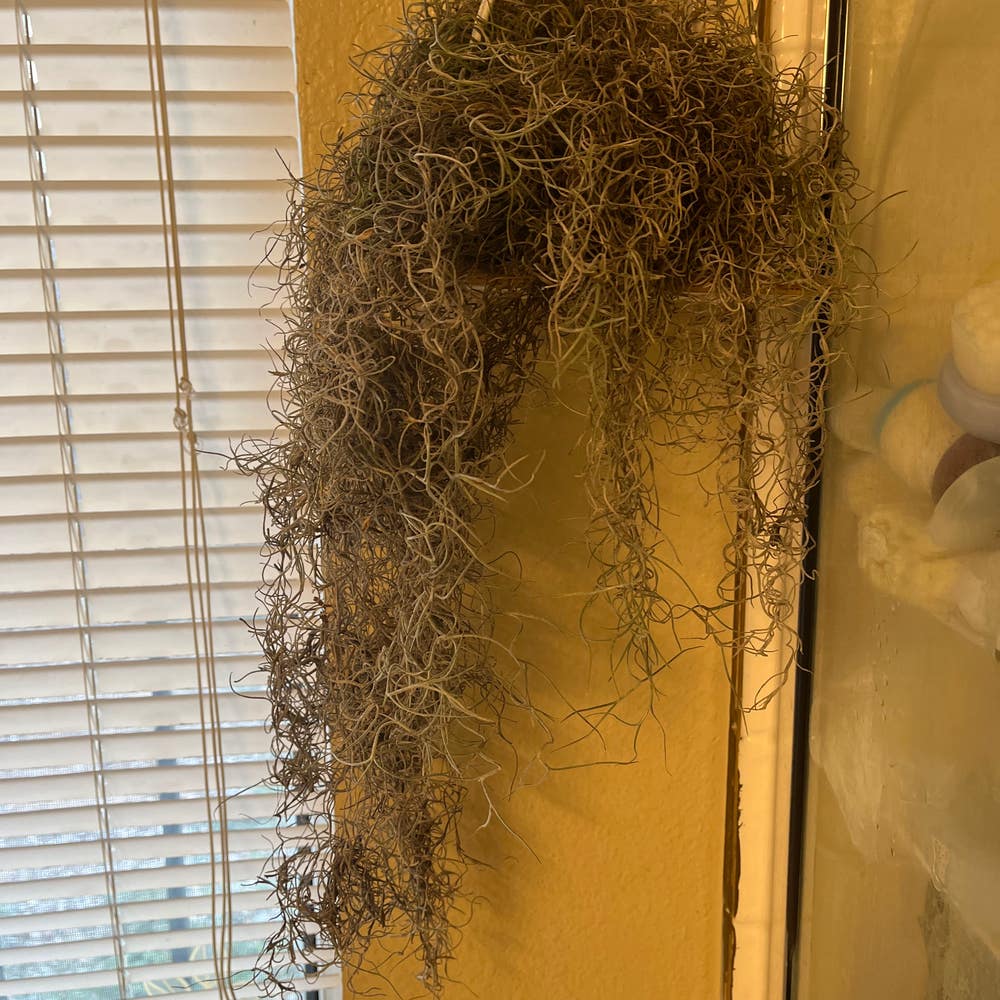
🦚 4 Indoor Spanish Moss Care Dos and Don'ts
Tillandsia usneoides
By the Greg Editorial Team
Sep 30, 2024•5 min read
This article was created with the help of AI so we can cover more plants for you. May contain errors. See one? Report it here.
Elevate your indoor garden with vibrant Spanish moss by mastering its light and watering needs! 🌿
- 🌞 Spanish moss needs 6-8 hours of bright, indirect sunlight for optimal growth.
- 💧 Water every 1-2 weeks, adjusting based on humidity to prevent yellowing or browning.
- 🌿 Maintain humidity between 50-70% for healthy Spanish moss; mist or use humidity trays.
Light Requirements
Ideal Indoor Light Levels 🌞
For thriving Spanish moss, the best light conditions are bright, indirect sunlight. Aim for 6-8 hours of light daily to keep your plant healthy and vibrant.
If your moss shows signs of slow growth or pale coloration, it may not be getting enough light. Adjusting its position can make a significant difference.
Role of Grow Lights 💡
In low-light conditions or during winter months, grow lights become essential. They provide consistent light levels and mimic the natural sunlight that Spanish moss craves.
Using grow lights can help maintain your plant's health when natural light is scarce. This is especially important for indoor gardening enthusiasts.
Choosing the Best Grow Light 🛠️
When selecting grow lights, consider the types available: LED and fluorescent. Both have their advantages, but full-spectrum lights that cover both blue and red wavelengths are highly recommended.
For optimal results, position your grow lights 12-24 inches above the plant. This ensures your Spanish moss receives the right amount of light without being scorched.
With the right light conditions, your Spanish moss will flourish, setting the stage for the next essential care aspect: watering needs.
Watering Needs
Proper Watering Techniques 🌊
When it comes to watering Spanish moss, the right technique is crucial. You can either soak the moss or mist it, depending on your preference and the humidity levels in your home.
For soaking, submerge the moss in water for about 30 minutes, then let it drain thoroughly. This method ensures the moss absorbs enough moisture without becoming waterlogged.
Frequency of Watering ⏰
Aim to water every 1-2 weeks. The exact timing will depend on the humidity levels in your environment; higher humidity may extend the time between waterings.
Signs of Watering Issues 🚨
Understanding how your Spanish moss reacts to watering is key to its health.
Overwatering Signs
If you notice yellowing leaves or a mushy texture, it’s likely a sign of overwatering. This can lead to root rot, which is detrimental to your plant.
Underwatering Signs
On the flip side, browning tips and dry, crispy leaves indicate underwatering. If you see these signs, it’s time to adjust your watering routine.
By keeping a close eye on these indicators, you can maintain the lush, vibrant appearance of your Spanish moss.
Next, let’s explore how humidity and temperature play vital roles in your plant's overall health.
Humidity and Temperature
🌧️ Humidity Control
Maintaining the right humidity is crucial for your Spanish moss. Aim for 50-70% relative humidity to keep it thriving.
Low humidity can lead to stunted growth and browning, making your plant look less than its best. Keep an eye on those humidity levels!
🌡️ Temperature Range
The optimal temperature for Spanish moss is between 20°C to 30°C (68°F to 86°F). This range helps your plant flourish and stay healthy.
Be cautious of cold drafts and temperatures below 10°C (50°F), as they can stress your moss and hinder its growth.
💧 Maintaining Humidity Levels
To boost humidity, consider using a humidity tray. Simply fill a shallow tray with water and pebbles, and place your plant on top.
Regular misting is also effective; aim to mist your Spanish moss 2-3 times a week. This simple act can significantly enhance its environment.
Grouping your Spanish moss with other humidity-loving plants can create a microclimate, further improving humidity levels. It’s a win-win for all your green friends!
With the right humidity and temperature, your Spanish moss will thrive, setting the stage for vibrant growth. Next, we’ll explore the best soil and fertilization practices to keep your plant healthy and happy.
Soil and Fertilization
Best Soil Type 🌱
For your Spanish moss, the right soil is crucial. Opt for well-draining, airy substrates like orchid bark or sphagnum moss to promote healthy growth.
Avoid heavy soils at all costs. They can lead to root rot, which is a quick way to ruin your plant’s health.
Fertilization Schedule 🗓️
Fertilizing your Spanish moss is essential for vibrant growth. Aim to fertilize every 4-6 weeks during the growing season for optimal results.
Use a diluted bromeliad or orchid fertilizer for the best effect. Mist the plant with this solution to ensure even distribution and absorption.
By following these soil and fertilization tips, you'll set your Spanish moss up for success. Next, let’s dive into common issues and solutions to keep your plant thriving.
Common Issues and Solutions
🐜 Pests and Prevention
Indoor Spanish moss can attract pests like spider mites, mealybugs, and aphids. Regular inspections are crucial; check your plant weekly to catch any infestations early.
Maintaining humidity is another effective prevention method. Higher humidity levels deter pests, and using insecticidal soap can help manage any outbreaks.
🛠️ Troubleshooting Problems
Browning
Browning leaves often signal low humidity or underwatering. If you notice this, increase your misting frequency and reassess your watering schedule.
Wilting
Wilting can indicate overwatering or root rot. Allow the plant to dry out and improve drainage to restore its health.
✨ Maintaining Appearance and Health
Regular cleaning is essential for your Spanish moss. Rinse it with water to remove dust and debris, keeping it vibrant and healthy.
Pruning is also important; trim any dead or damaged fronds to encourage new growth.
Finally, ensure proper placement by avoiding direct sunlight, which can scorch the delicate leaves.
With these tips, your Spanish moss will thrive, bringing a touch of nature indoors. Next, let’s explore the best soil and fertilization practices to support its growth.
⚠️ Safety First
This content is for general information and may contain errors, omissions, or outdated details. It is not medical, veterinary advice, or an endorsement of therapeutic claims.
Always consult a qualified healthcare professional before using any plant as food, medicine, or supplement.
Never eat any plant (or feed one to pets) without confirming its identity with at least two trusted sources.
If you suspect poisoning, call Poison Control (800) 222-1222, the Pet Poison Helpline (800) 213-6680, or your local emergency service immediately.
Spotted an error? Please report it here.
Transform your Spanish moss into a lush masterpiece 🌿 with Greg's custom watering reminders and expert care tips that ensure it thrives beautifully in your home!