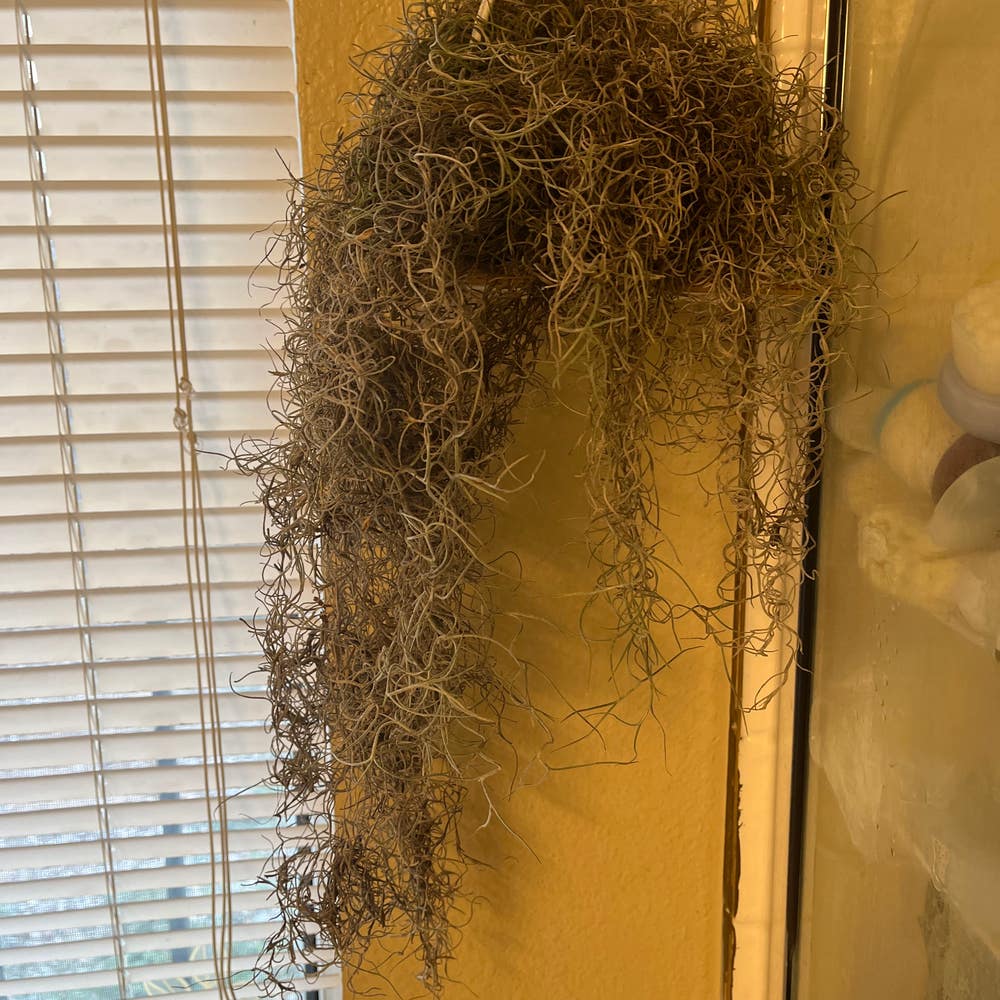
Why Is My Spanish Moss Not Doing Well?
Tillandsia usneoides
By the Greg Editorial Team
Jun 17, 2024•10 min read
This article was created with the help of AI so we can cover more plants for you. May contain errors. See one? Report it here.
Nurse your Spanish Moss back to lush health 🌿 by tackling these crucial care slip-ups!
- Brown leaves and wilting signal Spanish Moss distress; monitor for these signs.
- Bright, indirect light and 60-85°F are ideal for Spanish Moss health.
- Prevent mold and pests with proper moisture, airflow, and vigilance.
Symptoms of Unhealthy Spanish Moss
Identifying the warning signs of a struggling Spanish Moss is crucial for its revival.
🍂 Visual Cues of Distress
Spanish Moss communicates its discomfort through its appearance. Brown or crispy leaves scream dehydration. Discoloration hints at a light issue, while a wilted or shriveled look can mean temperature trouble.
💦 Moisture Mishaps
Soggy sections or darkened areas? You've got a moisture overload. On the flip side, excessive dryness and brittleness are the plant's plea for more humidity.
🌞 Light and Shadow Play
If your Spanish Moss is sporting scorched or bleached spots, it's practically wearing a sign saying, "Help, too much sun!" Conversely, etiolation, or stretching, indicates it's reaching for more light.
🌡️ Temperature Tantrums
A droopy demeanor is the moss's way of saying it's not too hot, not too cold, but just not right. Stable environments are key.
💨 Airflow and Over-watering
Reduced growth and a lack of vitality could be the result of poor air circulation or over-watering. The solution? Let it breathe and dry out.
🐜 Pests and Unwanted Guests
Visible insects, webbing, or leaf damage are clear indicators of pest issues. It's like finding out someone's been crashing at your place without permission.
🍄 Fungal Foes
White, fuzzy growth or spots? Mold and fungal issues are gate-crashing the Spanish Moss party. Time to dial down the moisture and maybe break out the fungicide.
Remember, these symptoms are the plant's way of waving a red flag. Pay attention, and you'll be on your way to nursing your Spanish Moss back to health.

Resolving Inconsistent Watering Issues
When your Spanish Moss sports brown or crispy leaves, it's not just going for an autumnal look—it's parched. This lack of growth isn't a trendy minimalist statement; it's a cry for help.
💧 Symptoms of Dehydration
- Brown, crispy leaves are the plant's equivalent of a thirst trap.
- Stunted growth is like hitting the pause button on your favorite playlist—nothing's moving forward.
💦 Solutions for Thirsty Moss
Establish a Misting Routine
- Consistency is your new mantra. Set a schedule, and stick to it like it's the last bus of the night.
- Misting should be as regular as your morning coffee ritual.
Adjusting for Humidity
- Humidity levels can be as fickle as spring weather. Keep an eye on them like you would a suspicious squirrel in your garden.
- If your air is drier than a comedian's humor, consider a humidity tray or a humidifier to bring the rainforest to your moss.
Remember, your Spanish Moss isn't just being dramatic. It's relying on you to dial in the watering sweet spot.

Addressing Insufficient or Excessive Light
💡 Recognizing the Symptoms
Discoloration or sunburn on your Spanish Moss isn't a sign of character; it's a cry for help. Etiolation, or stretching, means your plant is playing a dangerous game of limbo with the light levels.
💡 Finding the Light Balance
The right light for Spanish Moss is like a perfectly crafted latte – not too hot, not too cold. Aim for bright, indirect light and avoid the midday sun like it's last year's fashion trend.
💡 Solutions for Too Much Light
If your Spanish Moss is getting more sun than a lifeguard in July, it's time to intervene. Use shading techniques or relocate to prevent the leaves from turning into plant jerky.
💡 Solutions for Too Little Light
When your Spanish Moss looks like it's lost its will to live, it's probably starved for light. Consider moving it closer to a light source or introduce a grow light to give it a second chance at life.
💡 Practical Tips
Rotate your Spanish Moss occasionally; it's not just for show, it's to ensure even light distribution. If your indoor lighting is as dim as a candle in the wind, artificial lighting might just be your saving grace.
Remember, your Spanish Moss doesn't need a suntan; it needs a stable relationship with the right light.

Managing Temperature Fluctuations
Spanish Moss can be quite the drama queen when it comes to temperature changes. If you notice your moss looking wilted or shriveled, it's likely throwing a tantrum because it's not in its ideal climate.
🌡️ Symptoms: Wilted or Shriveled Appearance
When your Spanish Moss starts looking more like a raisin than lush greenery, it's a clear sign that it's not happy with the current temperature. Keep an eye out for these visual cues, as they can quickly lead to a plant's demise if not addressed.
🛠️ Solutions: Creating a Stable Environment
To keep your Spanish Moss from going into shock, aim to maintain a consistent temperature. The sweet spot lies between 60-85°F (15-29°C). Anything outside of this range and you might as well be asking it to live on Mars.
🚫 Avoiding Extreme Temperatures
Drafts are the enemy. Keep your moss away from air vents, radiators, and drafty windows. If you're dealing with a cold snap or heatwave, think on your feet. Use bubble wrap or plant cloches to protect your moss from the cold, and if it's too hot, find a cooler spot or crank up the AC. Just don't let it turn into a plant popsicle or a wilted weed.
🌡️ Keeping Temperatures Steady
Invest in a thermostat. It's like giving your Spanish Moss a personal climate concierge. And remember, consistency is key—don't let your home become a rollercoaster of highs and lows. Your plant will thank you by not looking like it's been through a botanical battle.
Combating Over-watering and Poor Air Circulation
Spanish Moss suffering from over-watering and poor air circulation often exhibits soggy or darkened areas and stunted growth. To remedy this, it's crucial to strike a balance between moisture and airflow.
🌊 Symptoms
- Soggy or darkened areas on the plant
- Noticeably reduced growth
🛠️ Solutions
Ensuring Adequate Drying Time
- Wait for the plant to dry completely before the next watering.
- Use the finger test: if the top inch feels dry, it's time to water.
Enhancing Airflow
- Position the plant in an area with good ventilation.
- Consider using a fan to promote air movement, but don't blast it directly.
Soil and Pot Considerations
- Mix in perlite or sand for better drainage.
- Verify that pot drainage holes are clear and functional.
Inspecting and Treating Roots
- Remove the plant to inspect for root rot; trim away any mushy, brown roots.
- If the soil is too water-retentive, repot with a well-draining mix.
Watering Techniques
- Water thoroughly but infrequently, allowing excess water to drain.
- Overhead watering can be beneficial if done during warm parts of the day so foliage dries quickly.
Monitoring and Adjusting Humidity
- Use a dehumidifier if indoor humidity is too high.
- Avoid placing the plant in stagnant, humid areas like unventilated bathrooms.
By implementing these strategies, Spanish Moss can recover from over-watering and poor air circulation, leading to a healthier and more vibrant plant.
Tackling Under-watering and Low Humidity
Spanish Moss thrives in humid environments, so when the air is drier than a stand-up comedian's wit, your moss might start to look more like a tumbleweed than lush greenery. Here's how to get that moisture back in the air and into your plant.
🏜️ Symptoms of Under-watering and Low Humidity
- Brittle or crispy leaves
- Lackluster growth and dryness
🚰 Solutions for Under-watering
- Increase misting frequency to keep the moss hydrated without overdoing it.
- Check the soil before watering; it should be dry to the touch, not parched like the Sahara.
🚰 Solutions for Low Humidity
- Use a humidifier to create a more tropical vibe in your room.
- Set up a pebble tray with water beneath the plant for a no-fuss humidity boost.
- Remember, it's about creating a stable environment, not turning your living room into a steam room.
Avoid over-misting; it's like soaking in a bath too long, and nobody wants pruney leaves. Also, keep an eye out for mold or fungus, which love to crash the high-humidity party. If your moss is getting more shade than a beach umbrella, ease up on the misting to prevent fungal gatecrashers.
Identifying and Eradicating Pests
Pests can turn your Spanish Moss from a hanging beauty into a withered mess. Spot the signs early: look for insects, webbing, or leaf damage.
🐜 Symptoms of Pest Infestation
- Visible insects crawling on your Spanish Moss are a red flag.
- Webbing, especially fine and spider-like, indicates mites.
- Unexplained holes or discoloration? Pests could be feasting on your plant.
🛡️ Solutions for Pest Control
Natural Predators
- Introduce beneficial bugs like ladybugs or lacewings to chow down on the pests.
- Predatory mites can be a spider mite's worst nightmare.
💦 Insecticidal Treatments
- A spritz of neem oil or insecticidal soap can send pests packing.
- For heavy infestations, spot-treat with a more potent insecticide, but handle with care.
Plant Vigor
- Keep your Spanish Moss healthy; a strong plant is less inviting to pests.
- Ensure proper watering, lighting, and air circulation to boost plant defenses.
Manual Removal
- Snip off heavily infested areas to curb the spread.
- Wash your plant with water to dislodge stubborn critters.
Environmental Controls
- Isolate the affected plant to prevent a full-blown pest party.
- Dispose of any removed plant parts securely to stop re-infestation.
Monitoring
- Regular inspections are key; catch those pests before they throw a rave in your Spanish Moss.
- If you see pests, act swiftly and decisively.
Remember, the best offense is a good defense. Keep your Spanish Moss in tip-top shape, and pests will think twice before setting up camp.
Preventing and Treating Leaf Scorching
🌞 Recognizing Symptoms
Leaf scorching is like a silent scream for help from your Spanish Moss. Brown patches or bleached areas on leaves are tell-tale signs that your plant is getting more sun than it can handle. It's the plant equivalent of a nasty sunburn.
🚀 Immediate Solutions
When you spot the first signs of distress, it's time to act fast. Move your Spanish Moss to a shadier spot, stat. If it's already in a fixed position, think of sheer curtains as sunscreen for your plant, diffusing that harsh light.
🛡️ Long-Term Strategies
To keep your Spanish Moss from future flare-ups, consider these tactics:
- Acclimation: Gradually introduce your plant to new lighting conditions to avoid shock.
- Rotation: Give your plant a quarter-turn weekly for even light exposure.
- 💡 Artificial lighting: If your indoor lighting is more dungeon than sunroom, grow lights can be a game-changer.
Remember, it's not about avoiding sunlight like a vampire—it's about finding that sweet spot where your Spanish Moss can bask without baking.
Eliminating Mold and Fungal Issues
🍄 Recognizing the Foe
White, fuzzy growth or spots on Spanish Moss leaves scream mold or fungal invasion. It's the plant's distress signal, indicating too much moisture and not enough airplay.
💧 Cut the Waterworks
First, reduce moisture. Overzealous watering turns your Spanish Moss into a mold magnet. Let the plant dry out between waterings, especially if it feels like a damp sweater.
💨 Airflow is Key
Boost circulation like you're airing out a stuffy room. A fan or an open window can discourage mold from settling in. Just don't create a mini tornado.
🧹 Clean House
Remove any affected areas with the precision of a surgeon. Fallen leaves? They're a buffet for mold. Keep the area debris-free to avoid unwanted fungal feasts.
🛡️ Fungicide: The Big Guns
When mold's taken a firm hold, it's time for fungicides. Think of it as the plant's personal bodyguard against the spore-spreaders. Baking soda solutions can also be a gentle, yet effective alternative.
🚰 Prevention Over Cure
Finally, prevention is better than a cure. Ensure your Spanish Moss enjoys a well-draining home and consider the environment—it's not just about the plant, it's about where it hangs out too.
⚠️ Safety First
This content is for general information and may contain errors, omissions, or outdated details. It is not medical, veterinary advice, or an endorsement of therapeutic claims.
Always consult a qualified healthcare professional before using any plant as food, medicine, or supplement.
Never eat any plant (or feed one to pets) without confirming its identity with at least two trusted sources.
If you suspect poisoning, call Poison Control (800) 222-1222, the Pet Poison Helpline (800) 213-6680, or your local emergency service immediately.
Spotted an error? Please report it here.
Ensure your Spanish Moss thrives by tackling troubleshooting 🕵️♂️ with Greg's custom care plan, addressing moisture, light, and temperature to prevent crispy leaves and mold.