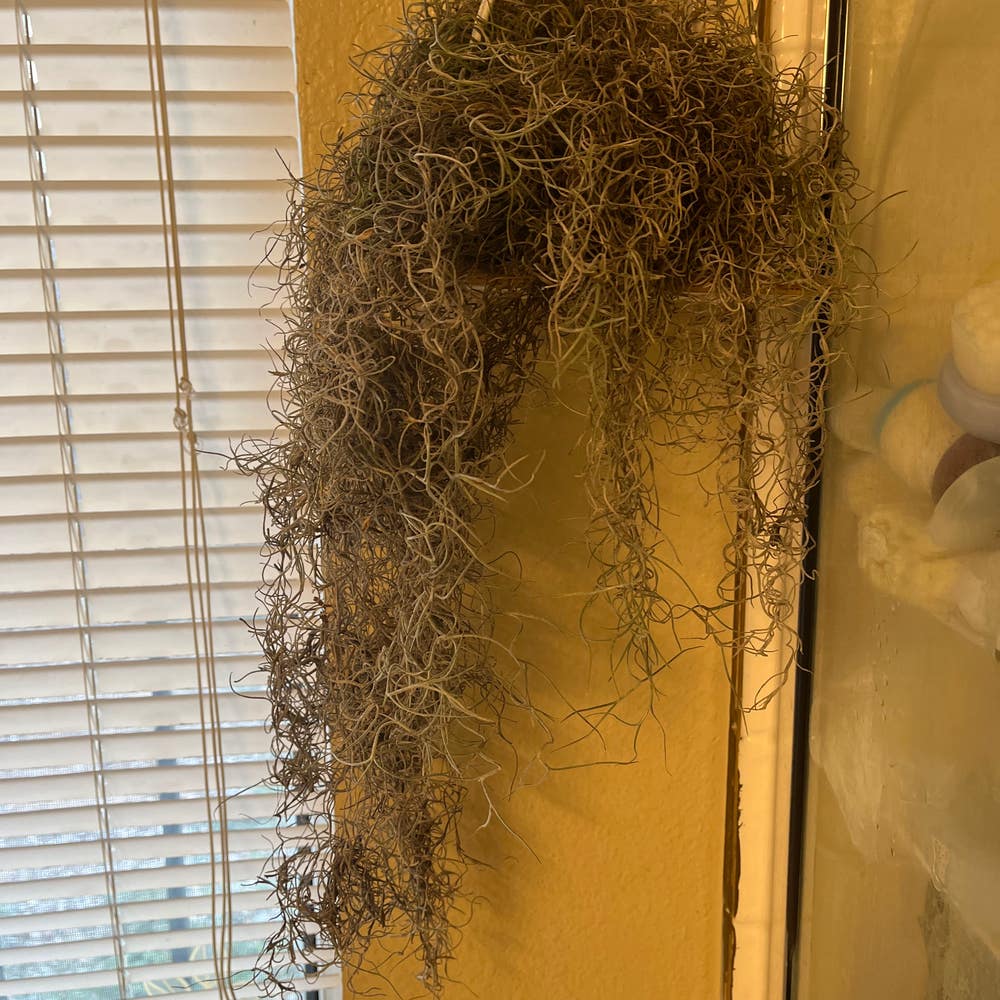
🕸️ Step-by-Step Guide to Understanding Spanish Moss Lifecycle
Tillandsia usneoides
By the Greg Editorial Team
Sep 30, 2024•5 min read
This article was created with the help of AI so we can cover more plants for you. May contain errors. See one? Report it here.
Uncover the captivating lifecycle of Spanish moss 🌱 and transform your garden with its unique beauty!
- 🌱 Spanish moss thrives in 20°C to 30°C with humidity above 60% for germination.
- 🌼 Lifecycle stages include germination, growth, flowering, and seed production over 2-3 years.
- 🌍 Spanish moss enhances biodiversity, providing habitat and adapting to various environments.
Stages of the Lifecycle
🌱 Germination Stage
Conditions for Germination
Spanish moss thrives under specific conditions. The optimal temperature range for germination is between 20°C to 30°C (68°F to 86°F), with high humidity levels above 60% being crucial.
Indirect sunlight is preferred, as it provides the right light exposure without overwhelming the delicate seedlings.
Duration of Germination
Typically, germination takes about 2 to 4 weeks. Success during this stage largely depends on moisture levels and temperature stability.
🌿 Seedling Stage
Characteristics of Seedlings
In the seedling stage, Spanish moss appears as small, green, hair-like structures. These seedlings develop trichomes, which help them absorb moisture from the air.
Growth is slow initially, but this stage is vital for establishing a solid foundation for future development.
Duration of the Seedling Stage
This stage lasts an average of 3 to 6 months. Key milestones include the development of initial leaves and root-like structures that allow for attachment to surfaces.
🌳 Vegetative Growth Stage
Growth Patterns and Changes
During the vegetative growth stage, Spanish moss experiences moderate growth. You'll notice an increase in biomass and length, with a transition to a more robust, gray-green color as it matures.
Duration of Vegetative Growth
This stage typically lasts between 1 to 3 years. Environmental factors such as light availability, humidity, and nutrient access significantly influence growth rates.
🌸 Flowering Stage
Description of Flowering Process
Flowering occurs in response to environmental triggers like temperature and light changes. The flowers are small and tubular, usually appearing in clusters.
Duration of Flowering
The flowering period lasts about 2 to 4 weeks, generally occurring in late spring to early summer. This is a critical time for the plant's reproductive cycle.
🌾 Seed Production Stage
How Seeds are Produced
Seeds are produced primarily through pollination by wind and insects. These seeds are tiny, lightweight, and easily dispersed by air currents.
Duration of Seed Production
The seed production period spans 4 to 6 weeks post-flowering. Factors such as environmental conditions and pollinator activity can significantly influence seed viability.
Understanding these stages provides insight into the fascinating lifecycle of Spanish moss. Each phase plays a crucial role in its growth and survival, setting the stage for the next topic: growth rate and maturation.
Growth Rate and Maturation
How Long Until Fully Grown? 🌱
Spanish moss typically reaches full maturity in 2 to 3 years. This timeline can vary based on environmental conditions and the care it receives.
Factors Affecting Growth Rate 🌤️
Several factors can influence how quickly Spanish moss grows:
- Light Availability: Optimal indirect sunlight is crucial for faster growth.
- Humidity Levels: Higher humidity levels significantly enhance growth rates.
- Nutrient Access: Being close to nutrient-rich environments, like tree canopies, supports robust growth.
Average Lifespan ⏳
The typical lifespan of Spanish moss ranges from 5 to 10 years. However, this can be affected by environmental conditions, disease, and competition from other plants.
Understanding these growth dynamics not only helps in appreciating the resilience of Spanish moss but also highlights its adaptability in various environments. As we delve deeper into its lifecycle, we’ll explore the notable changes that occur throughout its stages.
Notable Changes Throughout Lifecycle
🌱 Physical Changes During Each Stage
The lifecycle of Spanish moss is marked by distinct physical transformations.
During the germination stage, tiny, fragile structures emerge, signaling the start of life.
As it progresses to the seedling stage, these structures develop trichomes and initial leaves, enhancing their ability to absorb moisture.
In the vegetative stage, the moss experiences increased length and density, becoming more robust and visually striking.
Finally, during the flowering stage, small, tubular flowers appear, leading to the formation of seeds.
🌍 Environmental Adaptations
Spanish moss showcases remarkable adaptability throughout its lifecycle.
It can absorb moisture and nutrients directly from the air, a crucial survival trait in its natural habitat.
Additionally, its color changes based on humidity levels; it appears gray-green in dry conditions and takes on a greener hue when humidity is high.
These adaptations not only enhance its resilience but also contribute to its unique aesthetic appeal.
Understanding these notable changes helps appreciate the intricate lifecycle of Spanish moss, setting the stage for a deeper exploration of its reproductive cycle.
Reproductive Cycle
Overview of the Reproductive Cycle 🌱
The reproductive cycle of Spanish moss is a fascinating journey that encompasses flowering, pollination, and seed production. This cycle is crucial for ensuring the species' survival and maintaining genetic diversity.
Importance for Species Survival 🦋
Spanish moss plays a vital role in its ecosystem, providing habitat for various wildlife and contributing to overall biodiversity. Its ability to reproduce in diverse environmental conditions enhances its resilience, allowing it to thrive in different habitats.
Adaptation Strategies 🌍
This adaptability is key to its survival. By effectively utilizing available resources, Spanish moss can flourish even in challenging environments, ensuring its continued presence in the ecosystem.
As we explore the next section, we will delve into the notable changes throughout the lifecycle of Spanish moss, highlighting its remarkable transformations.
⚠️ Safety First
This content is for general information and may contain errors, omissions, or outdated details. It is not medical, veterinary advice, or an endorsement of therapeutic claims.
Always consult a qualified healthcare professional before using any plant as food, medicine, or supplement.
Never eat any plant (or feed one to pets) without confirming its identity with at least two trusted sources.
If you suspect poisoning, call Poison Control (800) 222-1222, the Pet Poison Helpline (800) 213-6680, or your local emergency service immediately.
Spotted an error? Please report it here.
Explore the fascinating lifecycle of Spanish moss 🌿 and let Greg guide you with tailored care tips and reminders to help your plant thrive beautifully in your home!