


Philodendron billietiae
About Philodendron billietiae
Philodendrons grow aerial roots that grip the bark of trees, allowing them to grow over 20 feet tall! Their leaves change shape as they climb and can grow larger than a dinner plate. Fossils show Philodendrons growing as far back as 30 million years ago when South America was still connected to Antarctica! ❄️
Taxonomy

Philodendron billietiae
Philodendron
Araceae
Alismatales
Also known as
Billie

How to care for Philodendron billietiae
How often to water your Philodendron billietiae

every 7
Philodendron billietiae needs 0.5 cups of water every 7 when it doesn’t get direct sunlight and is potted in a 5" pot.
Use our water calculator to personalize watering recommendations to your environment or download Greg for more advanced recommendations for all of your plants.

Water 0.5 cups every
7
Finding light for Philodendron billietiae in your home

a window
Philodendron billietiae may have difficulty thriving, and will drop leaves 🍃, without ample sunlight.
Place it less than 3 feet from a south-facing window to maximize the potential for growth.
Select your region to see how the current weather in your area affects the placement of Philodendron billietiae in your home 🏡.
How to fertilize Philodendron billietiae

Most potting soils come with ample nutrients which plants use to produce new growth.
By the time your plant has depleted the nutrients in its soil it’s likely grown enough to need a larger pot anyway.
To replenish this plant's nutrients, repot your Philodendron billietiae after it doubles in size or once a year—whichever comes first.
-
It's new leaf season in my jungle! Here's a new *huge* leaf coming in on Baphomet, my #philodendronbillietiae Check it, it just popped out of its sheath last night! I can't wait to see how big it gets! #philoflock #philodendron #jesssjungle #happyplants #newgrowth #plantaddict
-
New leaf on my #PhilodendronBillietiae 🤗 She’s one of my very favorite plants and was one of my first! She’s always happy and pushing out foliage. I love her crazy petioles growing every which way. Just a true stunner like her namesake 😍🪴 and Mia wanted to say hi to all her friends! #HappyPlants #PlantsMakePeopleHappy #PlantAddict #NewGrowth #PlantTherapy #PLANTMAFIA #PlantSpotLight #Philodendron #PhiloFlock #babevila #GregGang #FreshLeafFriday #PetsAndPlants #PetsOfGreg #DogsOfGreg #MiaTheChihuahua
-
My Philo Billie hasn't given me a new leaf in quite some time. He has a little sheath that's been there and not growing for months. I have him in bright indirect light near a West window and I water when the soil is dry in the top 2 inches, usually when Greg tells me to. Should I be watering more? More light? He got repotted when I got him, which was quite some time ago but not too long, so he should not be rootbound or anything. He seems healthy just not much new growth! Any care tips for this guy are appreciated!! 💚 #philodendron #philoflock #philodendronbillietiae #happyplants #plantaddict #planttherapy #jesssjungle
-
#FreshLeafFriday #PhilodendronBillietiae #Philodendron @HeraMonstera
-
Plant News: #PhilodendronBillietiae looking like an absolute queen 👸🏻 and giving me yet another leaf! Pretty new begonia I got for cheap at Home Depot, and my Hoyas and BBB loving the skylight 😇🤗🌿💖 #HappyPlants #PlantsMakePeopleHappy #PlantAddict #NewGrowth #Begonia #BegoniaBunch #Philodendron #PhiloFlock #HoyaPubicalyx #BabyBunnyBellies #RexBegonia #babevila
-
Baphomet has a new leaf coming out!! It startled me this morning on my rounds. I knew it was coming but it is always exciting when they first emerge! #newleafalert #freshleaffriday #happyplants #philoflock #philodendron #philodendronbillietiae #plantaddict #plantsmakepeoplehappy #jesssjungle #theamigos
-
What’s wrong with my billietiae? My #billietiae has multiple yellow leaves and does not look happy. I water when the soil is dry and I have move locations multiple times to see if it would perk up but nothing. It was happy all summer. What should I do?
-
This leaf is *almost* unfurled! I'd say another day or two it'll be finished in all its glory! 😜 The new leaf has grown so fast and it's gonna be big. #philodendron #philoflock #philodendronbillietiae #happyplants #plantsmakepeoplehappy #plantaddict #newgrowth #newleafalert #jesssjungle #theamigos
-
#NewPlantAlert! I have been wanting a #philodendronbillietiae ever since I saw pics of one and now I have a beautiful baby. I got him from one of my fave local plant shops. I needed the name to be an alliteration with Billietiae, and Baphomet was weirdly enough the first B name that came to mind. 😈 #philodendron #philoflock #happyplants #plantsmakepeoplehappy #plantaddict #planttherapy #plantlove #theamigos #jesssjungle
-
Beautiful, perfect new leaf on my #PhilodendronBillietiae 🌿🤗♥️ #HappyPlants #NewGrowth #Philodendron #PhiloFlock #PlantsMakePeopleHappy #babevila


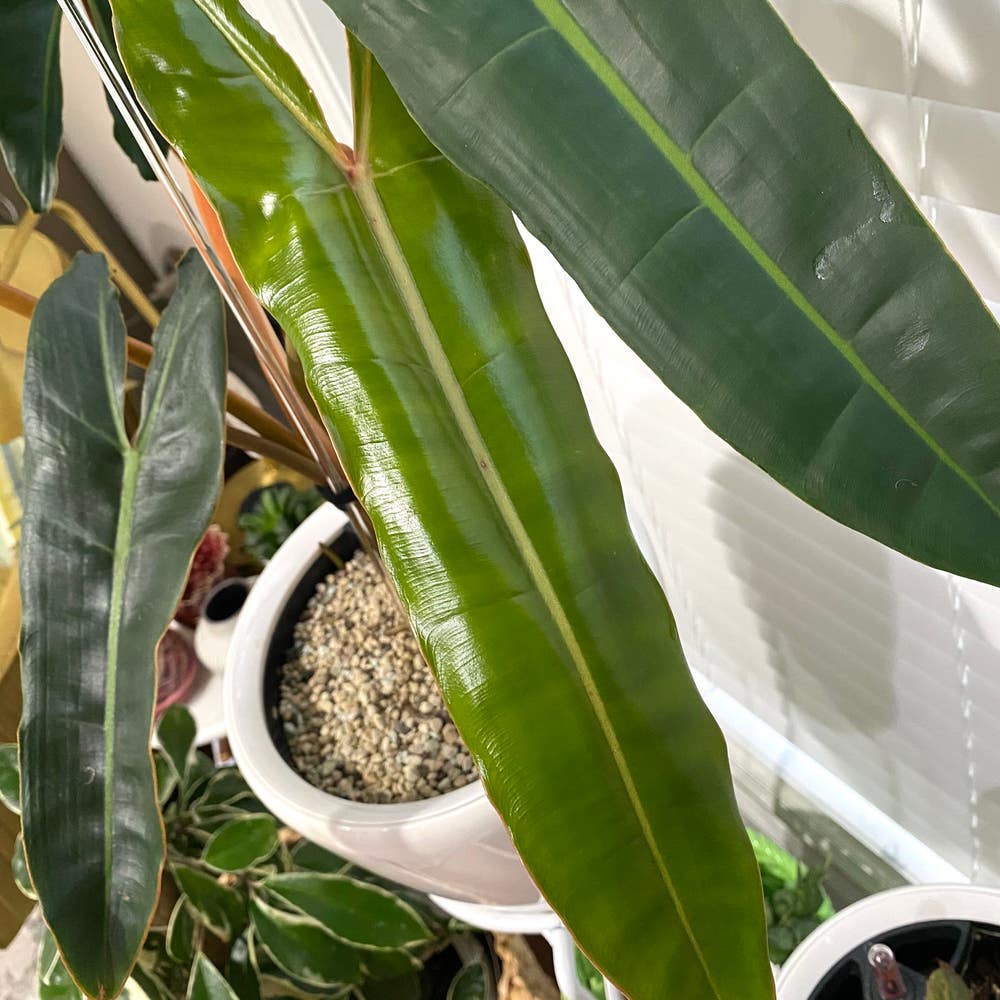


Care Summary for Philodendron billietiae

Philodendron billietiae
 Greg recommends:
 Water
Water
0.5 cups every 7 days
 Placement
< 3ft from a window
 Nutrients
Repot after 2x growth
Based on the 4” pot your plant is in, and that it doesn’t get direct sunlight.
 Trending in your area









 Similar to Philodendron billietiae


✨ Discover rare plants
Phalaenopsis schiller…

Milky Widow's Thrill

Stomatium acutifolium

Red Mistletoe Cactus

Sedeveria 'Blue Elf'

Tuber Fleeceflower

Sedum 'White Diamond'

Croton Nervia

Graptoveria 'Douglas …
Carolina Reaper

Vatricania guentheri

Hoya kalimantan

Large Leaf Elephant B…

Philodendron 'Glorius'

Anthurium 'Fantasy Lo…

Lavandula Pedunculata
White Apple Moth Orch…
