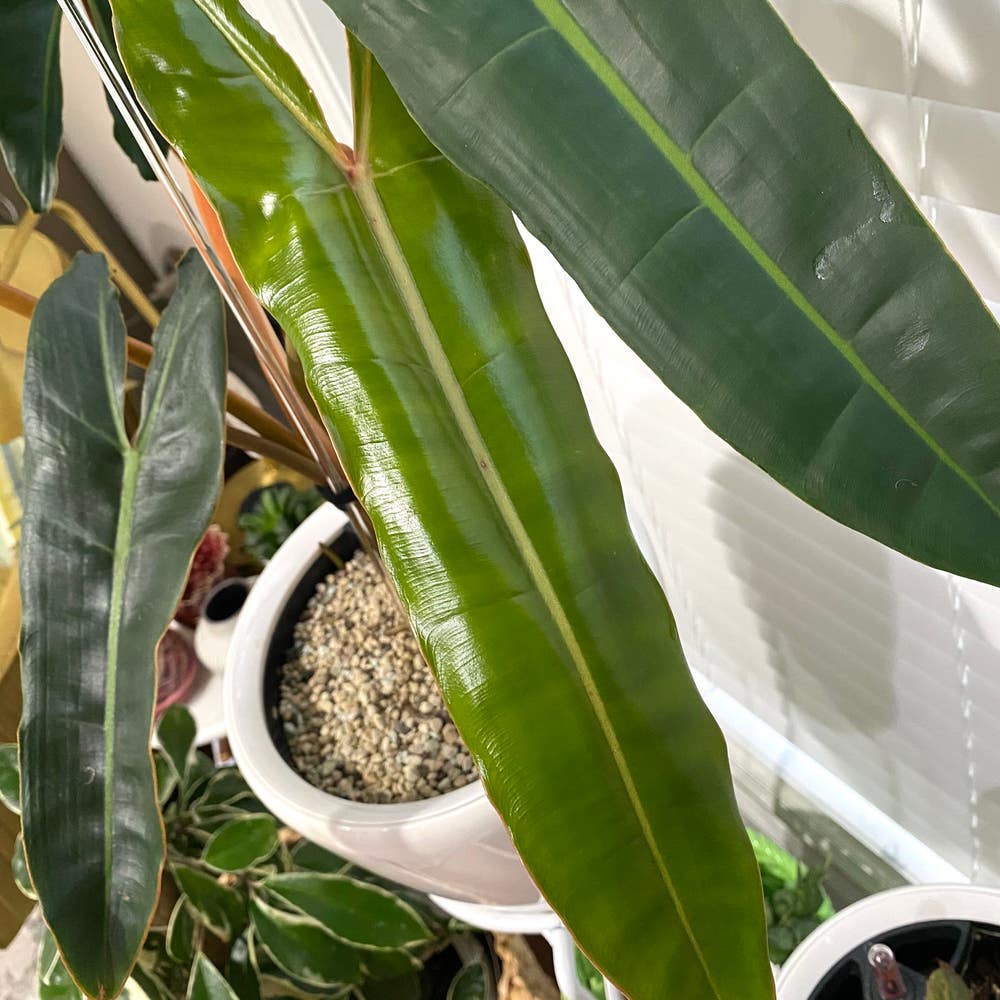
Why Is My Philodendron billietiae Not Doing Well?
Philodendron billietiae
By the Greg Editorial Team
Jun 18, 2024•5 min read
This article was created with the help of AI so we can cover more plants for you. May contain errors. See one? Report it here.
- Over/underwatering? Yellow leaves, brown tips, musty odor, or soil shrinkage.
- 🌡️🌞 Light and temperature stress? Aim for bright, indirect light, stable temps.
- 🕷️ Pests and diseases? Use neem oil, improve airflow, and prune affected areas.
When Water Works Against You
💧 Signs of Water Woes
Overwatering can turn your Philodendron billietiae's home into a swampy mess. Look out for yellow leaves, brown tips, and a musty odor. These are distress flares, signaling that your plant's roots are drowning. Fungal growth on the soil is another red flag, indicating too much moisture and not enough air.
Underwatering has its own SOS signals. Drooping leaves, yellowing, and soil pulling away from the pot's edge are cries for hydration. If your plant's leaves are more crisp than a fresh dollar bill, it's time to up your watering game.
Fine-Tuning Your Watering Technique
To strike the perfect watering balance, monitor the soil moisture. Your Philodendron billietiae likes its soil like a wrung-out sponge—moist but not wet. When the top inch of soil feels like a dry martini, it's time to water.
Avoid the temptation to give your plant a full-on shower. Instead, water near the soil to keep the leaves dry and happy. And remember, consistency is your new best friend. Set a schedule, use reminders, or get a moisture meter to avoid turning your green haven into a plant ICU.

Light and Temperature: The Balancing Act
⚠️ Reading the Leaves: Light and Temperature Stress Signals
Yellowing leaves on your Philodendron billietiae are like a distress signal flaring up; it's lighting up a problem. Browning leaf tips? They're screaming, "I'm cooking over here!" These are the plant's ways of saying the current conditions are less than ideal.
💡 Creating the Ideal Environment
To create a haven for your Philodendron billietiae, think of yourself as a DJ of light and temperature. You're mixing the tracks of sunlight and warmth to find that perfect groove. Aim for bright, indirect light—direct sun is a no-no, as it's akin to sunbathing without sunscreen. As for temperature, consistency is your best friend. Avoid placing your plant near drafty windows or heaters to prevent those temperature swings that plants despise. Rotate your plant occasionally to ensure each side gets its fair share of light, preventing lopsided growth and a one-sided leafy tan.

The Unseen Invaders: Pests
🐜 Common Culprits: Identifying Pests on Your Philodendron billietiae
Philodendron billietiae, with its lush foliage, can become a magnet for pests. Spider mites are tiny, but their presence is betrayed by fine webbing on the leaves, especially the undersides. They suck the life out of your plant, leaving telltale speckles. Mealybugs, the fluffy white squatters, congregate in leaf nooks and crannies. Scales, the masters of disguise, appear as immobile bumps on stems and leaves. Vigilance is key—inspect your plant regularly for these freeloaders.
🪲 Pest Control: Saving Your Philodendron billietiae
When pests crash your Philodendron billietiae's party, it's time for eviction. Start with a neem oil or insecticidal soap spray; these natural remedies are tough on pests but gentle on your plant. For a heavy infestation, prune away the worst affected areas. Repeat treatments every few days until you've sent the pests packing. Don't forget, good air circulation and optimal humidity make your plant less inviting to pests. Keep a watchful eye—early detection is the best defense.

Fungal Foes and Scorched Leaves
🍄 Symptoms of Fungal Issues and Leaf Scorch
Fungal invaders on your Philodendron billietiae are stealthy, but they leave clues. White or gray fuzz on the leaves or soil screams mold. Discolored spots or powdery residue? You've got a fungal party. And don't ignore the crispy, brown edges of leaves; that's scorch, a telltale sign your plant's been sunbathing too long.
Restoring Health: Combating Fungus and Scorch
To combat fungus, think like a breeze—improve airflow. Cut out the affected areas with the precision of a surgeon and consider a fungicide as your plant's personal bodyguard. For scorch, it's relocation time. Move your plant to a spot where the sun is a gentle friend, not a scorching enemy. And remember, hydration is key. Keep the soil moist, not soggy, to avoid a repeat fungal rave.
The Dreaded Root Rot and Other Pitfalls
🕵️ Spotting Root Rot Early
Root rot is the stealthy adversary of Philodendron billietiae, often lurking unseen until it's almost too late. Yellowing leaves and a base that feels more like a horror movie swamp creature than a plant are your cues to take action. Regular root check-ups can catch the disease before it declares total war on your plant.
🚑 Rescue and Recovery: Addressing Root Rot
When root rot strikes, it's time for a plant ER. First, isolate the patient—your Philodendron billietiae needs to be away from other plants to prevent spreading the infection. Next, trim the affected roots with sterilized scissors; think of it as surgery to remove the infected parts. Repot in fresh, airy soil that drains like a dream, and ensure your pot has drainage holes that could make a colander jealous.
Watering discipline is key post-op. Only water when the top inch of soil feels like the Sahara. And remember, your plant is recovering, so go easy on the fertilizer—it's not a buffet. Keep the light bright but not scorching, like a mildly sunny day in spring. With these steps, your Philodendron billietiae might just make a comeback worthy of a blockbuster movie.
⚠️ Safety First
This content is for general information and may contain errors, omissions, or outdated details. It is not medical, veterinary advice, or an endorsement of therapeutic claims.
Always consult a qualified healthcare professional before using any plant as food, medicine, or supplement.
Never eat any plant (or feed one to pets) without confirming its identity with at least two trusted sources.
If you suspect poisoning, call Poison Control (800) 222-1222, the Pet Poison Helpline (800) 213-6680, or your local emergency service immediately.
Spotted an error? Please report it here.
Avoid the pitfalls of plant care and ensure your Philodendron billietiae flourishes with Greg's tailored watering schedules and environment tips 🌿.